
Your drawings stay confidential. We sign NDAs.

+91 9145700873 +91 8625919717 WhatsApp

Market · Switchgear parts

MCB Enclosure & Switchgear Part Moulds

Compression moulds for the thermoset parts inside and around switchgear: MCB enclosures and panel boxes, insulators, busbar supports, terminal blocks, breaker and contactor housings, in DMC, BMC and Bakelite.

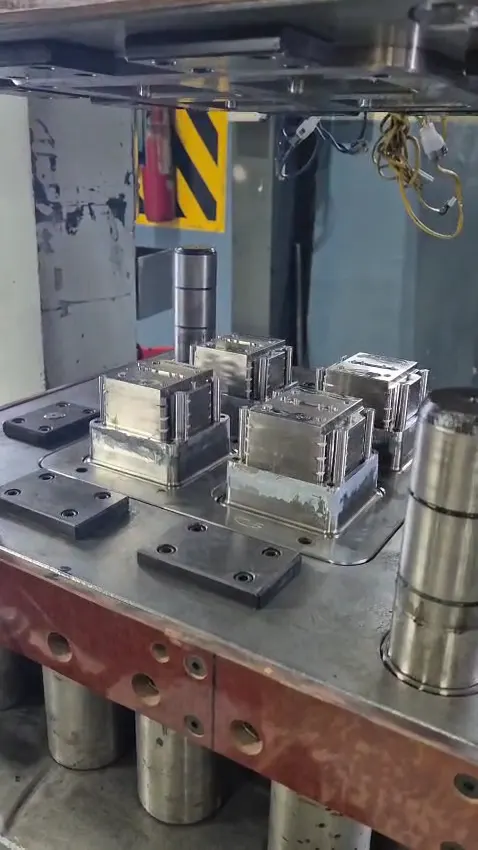
Four-cavity thermoset compression mould on the press for small switchgear parts
A four-cavity compression mould on the press
Parts
Insulators · Busbar supports · MCB boxes
Materials
DMC · BMC · Bakelite · SMC
Cavities
Single to multi-cavity
Inserts
Brass, moulded-in

Switchgear parts: what buyers need from the mould

Switchgear parts are the insulating components that hold and separate live conductors in breakers, panels and distribution boards: insulators, busbar supports, terminal blocks, MCB enclosures and breaker housings. They are usually compression moulded from DMC, BMC or Bakelite because these thermosets resist heat, arcing and tracking and keep their shape under load.

Switchgear makers need parts that pass dielectric, glow-wire and tracking tests every batch, with brass inserts and threads that line up with the busbars. That depends on dense, void-free moulding, which depends on the mould.

Most switchgear parts are small and made in large numbers, so multi-cavity moulds with balanced heating and individual loading wells are common. Larger parts such as MCB panel boxes and MCB enclosures are often SMC.

Switchgear part moulds we build

  • Busbar supports
  • Insulators and stand-off insulators
  • Terminal blocks
  • MCB enclosures and MCB boxes
  • MCB panel box and MCB DB box
  • Breaker and contactor housings
  • Arc chutes and barriers
  • Motor junction boxes and terminal boxes

What a switchgear part mould must deliver

Dense, void-free parts

Correct charge, venting and pressure so parts pass dielectric and tracking tests without porosity.

Insert accuracy

Brass inserts and threads held square by pins and pockets, so busbars and screws line up on assembly.

Creepage ribs and barriers

Thin ribs and barriers that keep creepage distances, cut by EDM so DMC and BMC fill them cleanly.

Multi-cavity balance

Every cavity at the same temperature and charge, so parts are identical across the mould.

Materials and mould design

Small switchgear parts are mostly DMC, BMC or Bakelite; larger MCB enclosures and panel boxes are often SMC. We help you choose the compound in the DFM.

Every mould starts with a free DFM review: draft, wall section, shear edge, charge placement and press tonnage are checked before steel is cut. Read more about compression moulds and the moulding process.
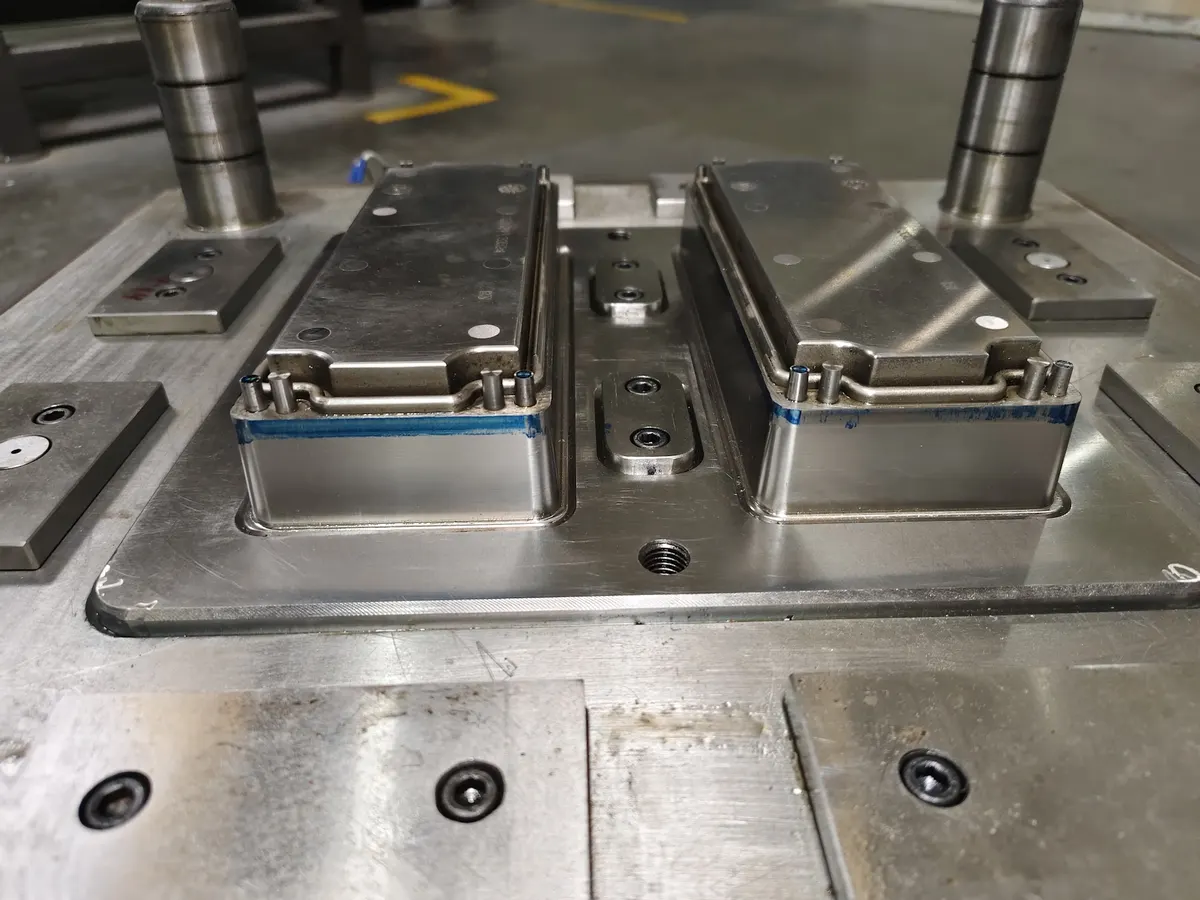
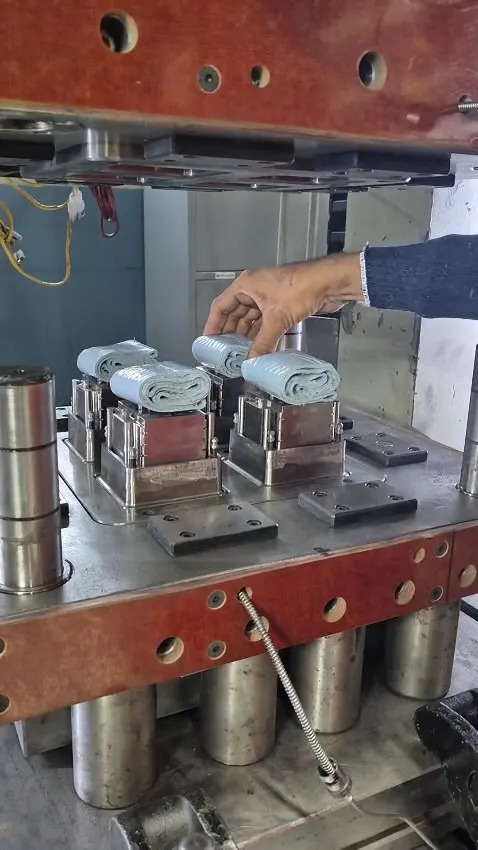
Hardened cavity inserts for a multi-cavity thermoset mould Multi-cavity compression mould on the press during trial
Cavity inserts and a multi-cavity mould at trial, from our tool room.

Before steel is cut

Free DFM review on your drawing

Send your drawing or 3D model. We check draft, wall section, shear edge, charge and press tonnage, and send a report you can act on before you commit to a mould.

Switchgear parts mould FAQ

Which material is best for busbar supports and insulators?

DMC or BMC is the usual choice for strength, arc and track resistance; Bakelite suits lower-cost parts where heat resistance matters most. We recommend a compound in the DFM based on your test standard.

Can you mould brass inserts into terminal blocks?

Yes. Insert pockets and holding pins are designed in the DFM so brass inserts and terminals stay square under moulding pressure.

Do you build multi-cavity moulds for small switchgear parts?

Yes. Small insulators, supports and terminal blocks are usually made in multi-cavity moulds with balanced heating and loading wells.

Do you make MCB enclosure moulds?

Yes. MCB enclosures, MCB boxes and MCB panel boxes are usually SMC compression moulded, and we build those moulds too.

Send your part for a free DFM review

  1. Send your part. 3D model or drawing, plus material and annual volume.
  2. Free DFM review. A report on draft, walls, flow, venting and ejection risks.
  3. Quotation. Mould price, steel and a lead time we commit to.
  4. Mould build. Typically 6–8 weeks, with progress updates.
  5. Trial and handover. Trial and first-off parts for your approval.