Junction & distribution boxes: what buyers need from the mould
A junction box is an enclosure that protects electrical connections where cables meet or branch. A distribution box, or DB box (distribution board box), houses the MCBs and busbars that split incoming power into circuits. For outdoor, industrial and utility use, both are commonly compression moulded from SMC or FRP, because the material insulates, resists fire and UV, and does not rust.
Electrical junction boxes and distribution boxes are bought in huge numbers by contractors, panel builders, utilities and infrastructure projects. Buyers compare boxes on IP rating, impact strength, fit of the lid and price, and every one of those starts in the mould.
A good junction box mould gives a flat sealing face and a consistent gasket groove, clean cable-entry knockouts and mounting bosses that do not crack when screws go in. A DB box mould adds DIN rail and busbar mounting points, door hinges and earthing positions that must line up with the electrical parts.
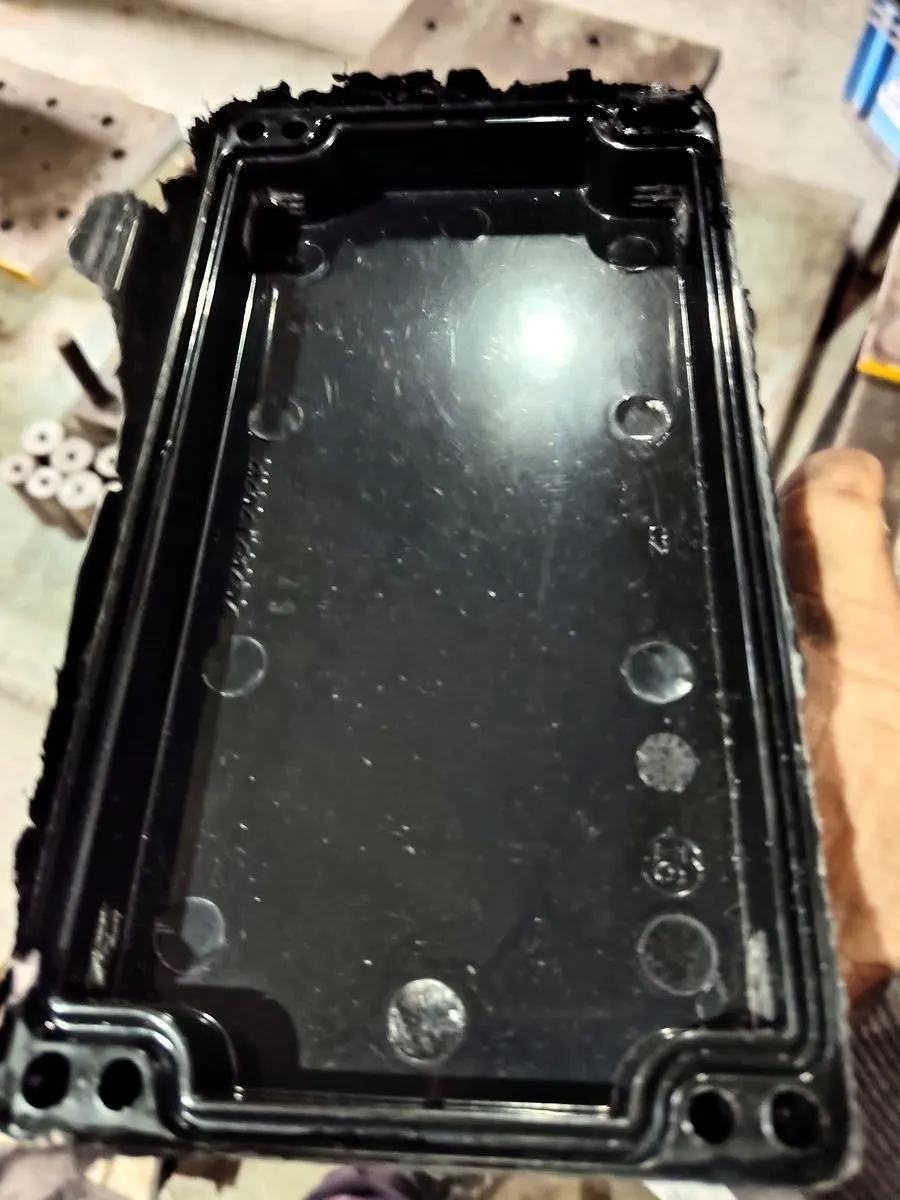
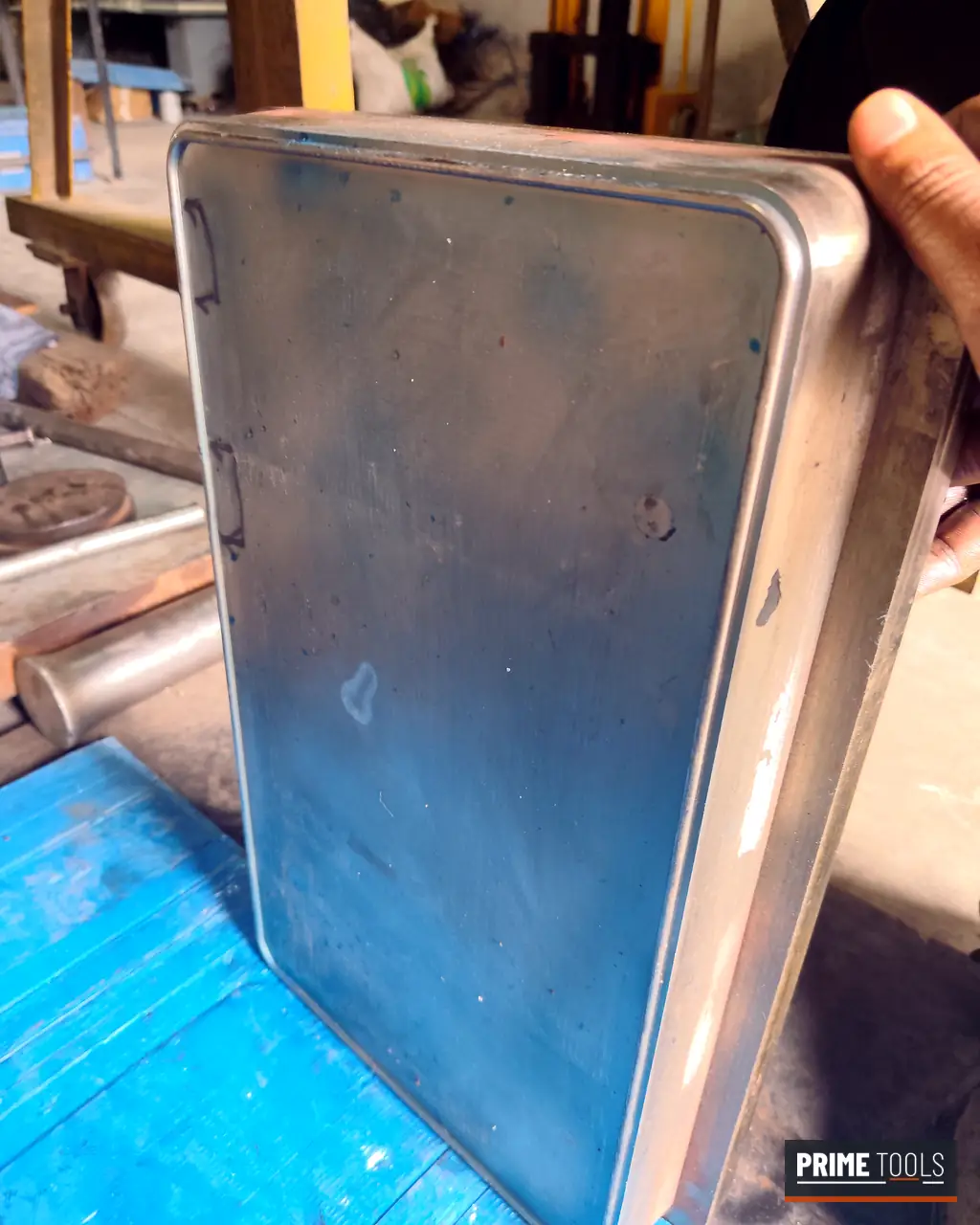
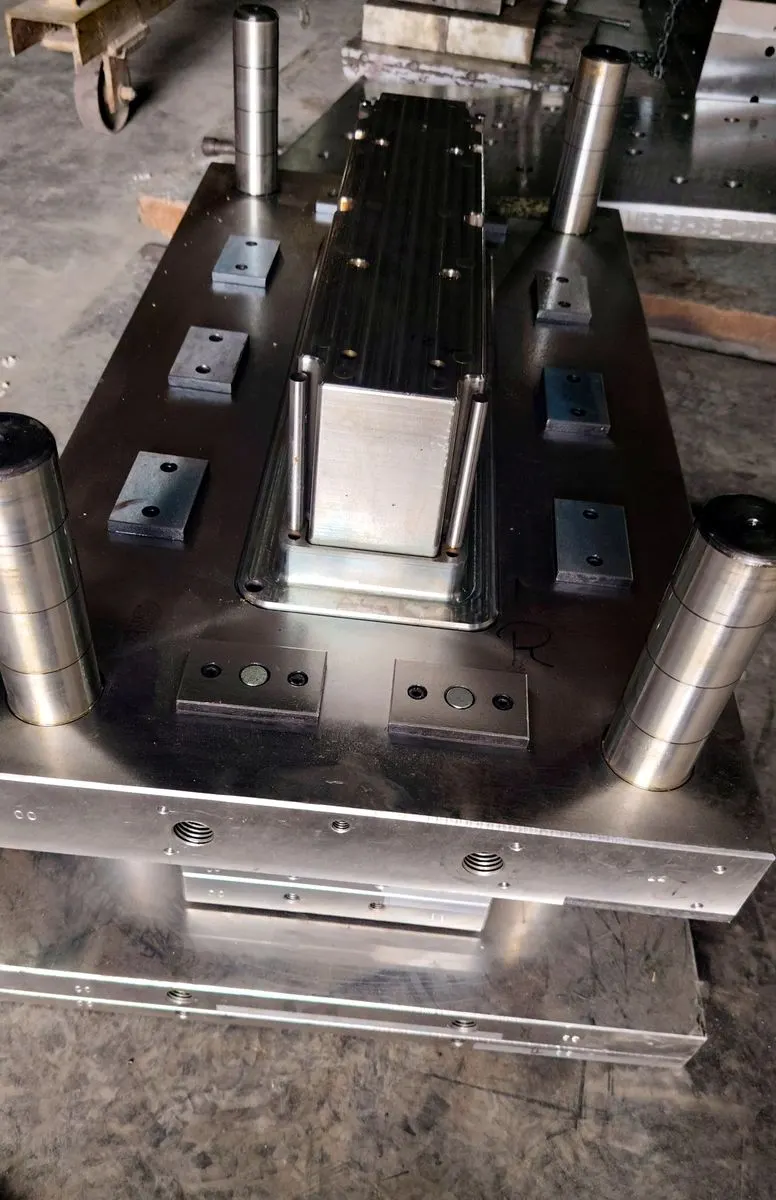
Junction box and distribution box moulds we build
What a junction box mould must deliver
IP65 / IP66 sealing
A flat mating face and a consistent gasket groove all round, so the box passes its water and dust test with the specified gasket.
Cable entries and knockouts
Knockouts and gland bosses that break out cleanly and in the right place, without weakening the wall.
Mounting and DIN rail bosses
Bosses for DIN rails, busbars, terminal blocks and wall lugs, with brass inserts where screws must hold for years.
Earthing points
Moulded-in brass earthing inserts positioned to the drawing, so the electrical fit-out is quick and safe.
Hinges, doors and lid fit
Hinges and lid lips that close square on every box, so screws line up and the gasket compresses evenly.
Impact strength and flatness
Even heating and the right charge pattern keep large DB box walls flat and strong, without warping or thin spots.
Junction box vs DB box vs feeder pillar
| Junction box | DB box / MCB box | Feeder pillar | |
|---|---|---|---|
| What it does | Protects cable joints and branches | Houses MCBs and busbars that split power into circuits | Outdoor street cabinet that feeds a group of connections |
| Typical size | Small to medium | Medium, 4 to 12 way and more | Large, floor standing |
| Key mould features | Gasket groove, knockouts, lid screws | DIN rail bosses, door hinges, earthing inserts | Large flat panels, ribs, door frames |
| Usual mould | Single or multi-cavity | Single cavity base and door | Separate moulds for panels, roof and door |
DB box full form: distribution board box. Sizes, IP ratings and features follow your product standard and customer specification; we design the mould around your drawing.
Materials and mould design
Outdoor and industrial junction boxes and DB boxes are mostly moulded in SMC, also sold as FRP or GRP boxes. Small terminal parts can be DMC. Flameproof junction boxes for hazardous areas are usually cast aluminium; for those we repair and modify the die casting dies and machine new inserts.
Every mould starts with a free DFM review: draft, wall section, shear edge, charge placement and press tonnage are checked before steel is cut. Read more about compression moulds and the moulding process.