What is SMC (sheet moulding compound)?
SMC, or sheet moulding compound, is a ready-to-mould sheet of polyester resin, chopped glass fibre and mineral filler. Cut pieces of the sheet are stacked in a heated steel mould and pressed, so the compound flows, fills the cavity and cures into a strong, rigid, flame-retardant part.
SMC belongs to the family of glass-reinforced plastics, which is why SMC parts are also called GRP (glass reinforced plastic) or FRP (fibre reinforced plastic). The glass fibre gives stiffness and impact strength; the cured resin gives heat resistance, electrical insulation and a surface that does not rust or rot outdoors.
Because the material is a thermoset, an SMC part keeps its shape in sun, heat and rain for decades. That is why SMC is the standard material for outdoor electrical boxes in India and for GRP electrical enclosures worldwide, and why the quality of the SMC mould decides the quality of every box it makes.
SMC box: full form and uses
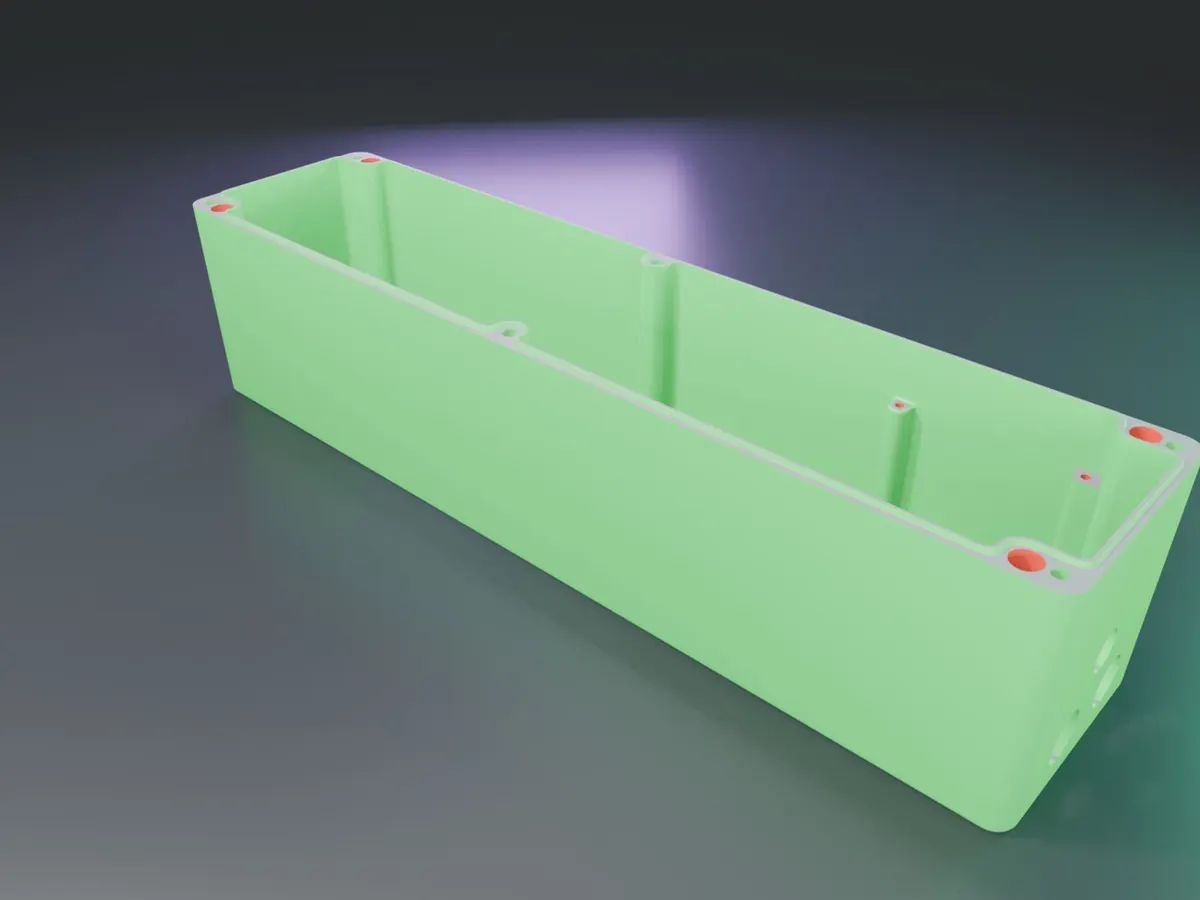
SMC box full form: Sheet Moulding Compound box. An SMC box is an electrical box or enclosure compression moulded from SMC. Utilities, contractors and panel builders use SMC boxes because they insulate, resist fire and corrosion, and survive outdoor installation without painting.
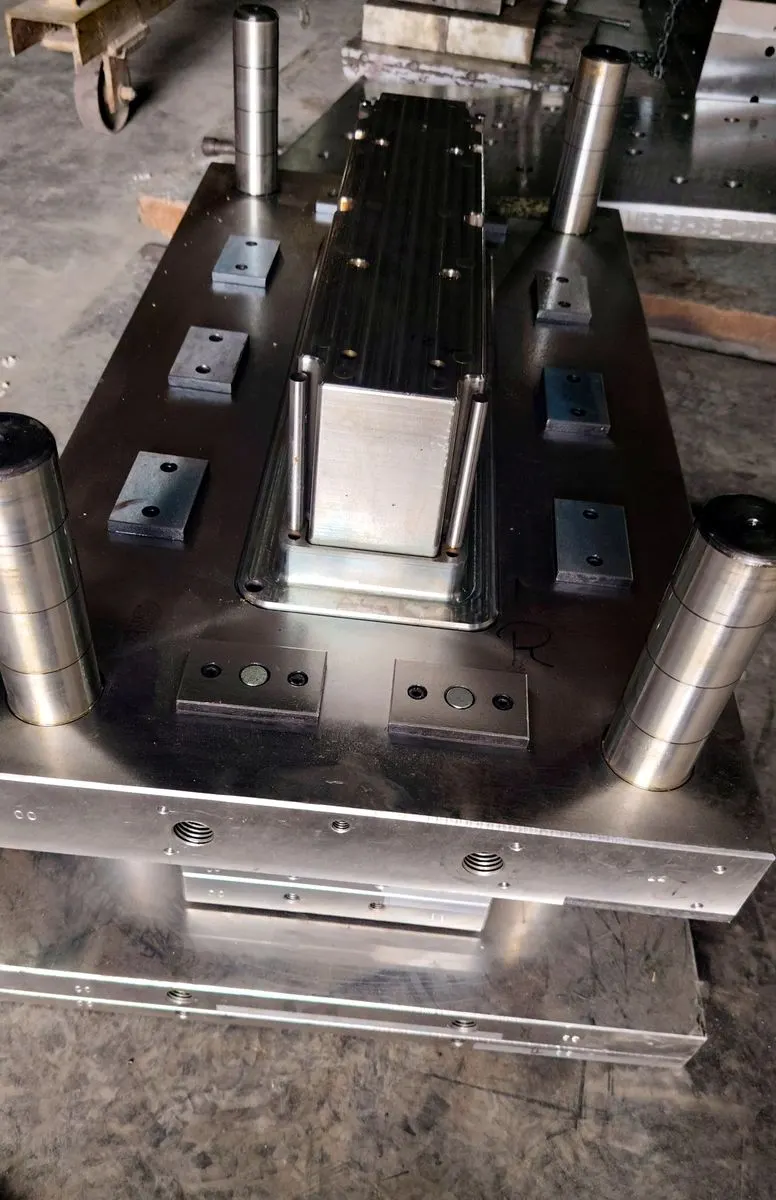
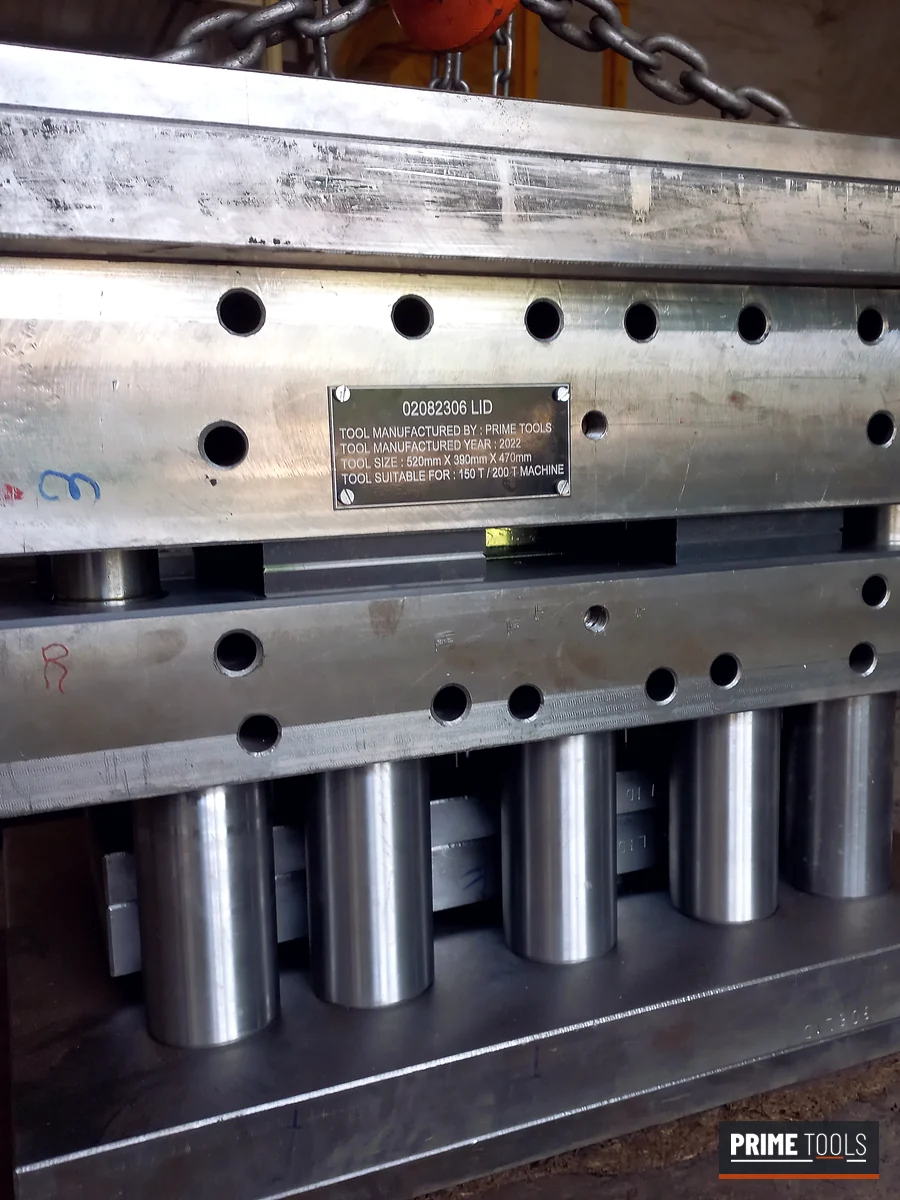
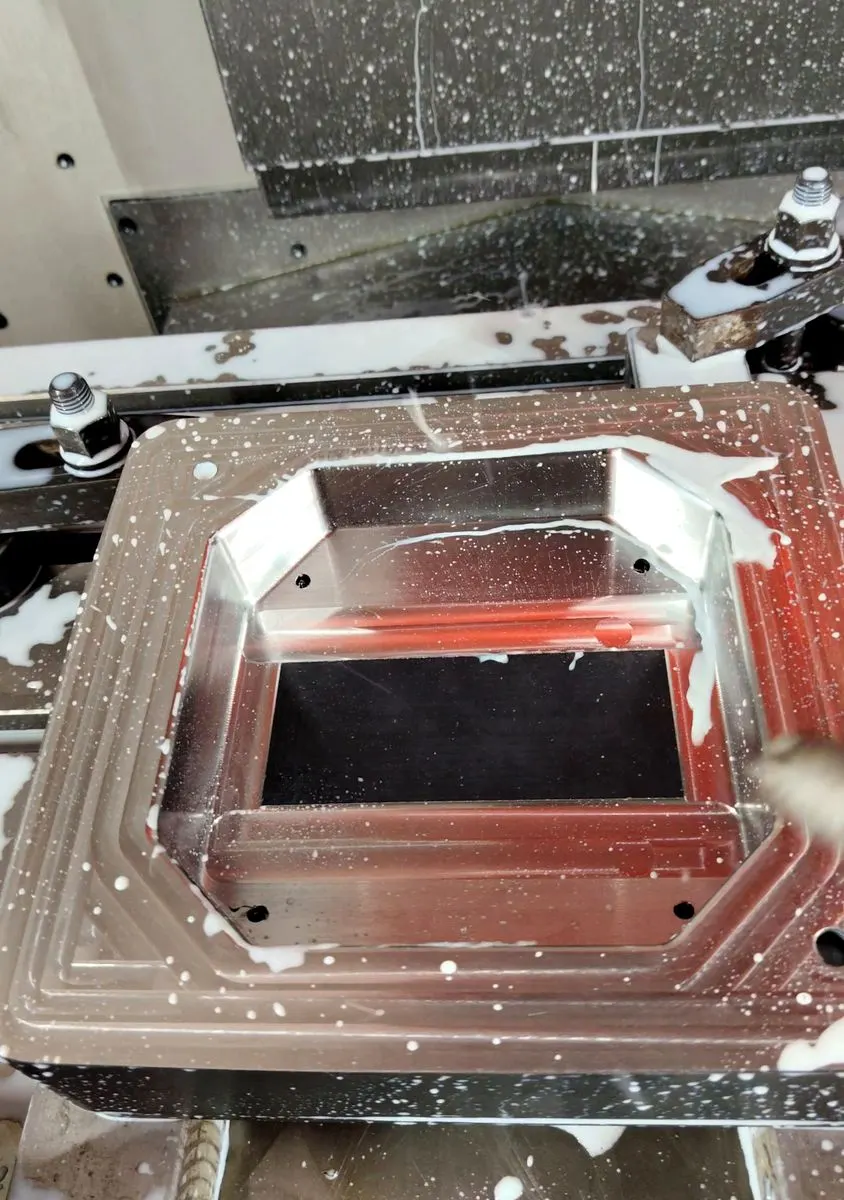
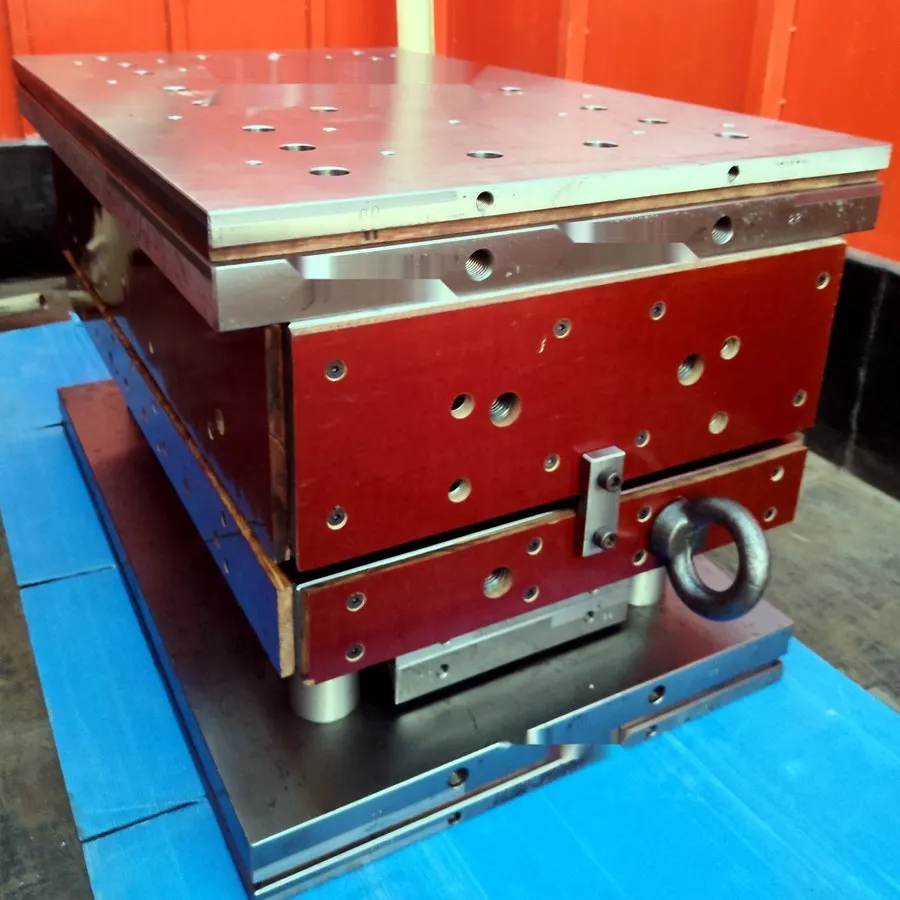
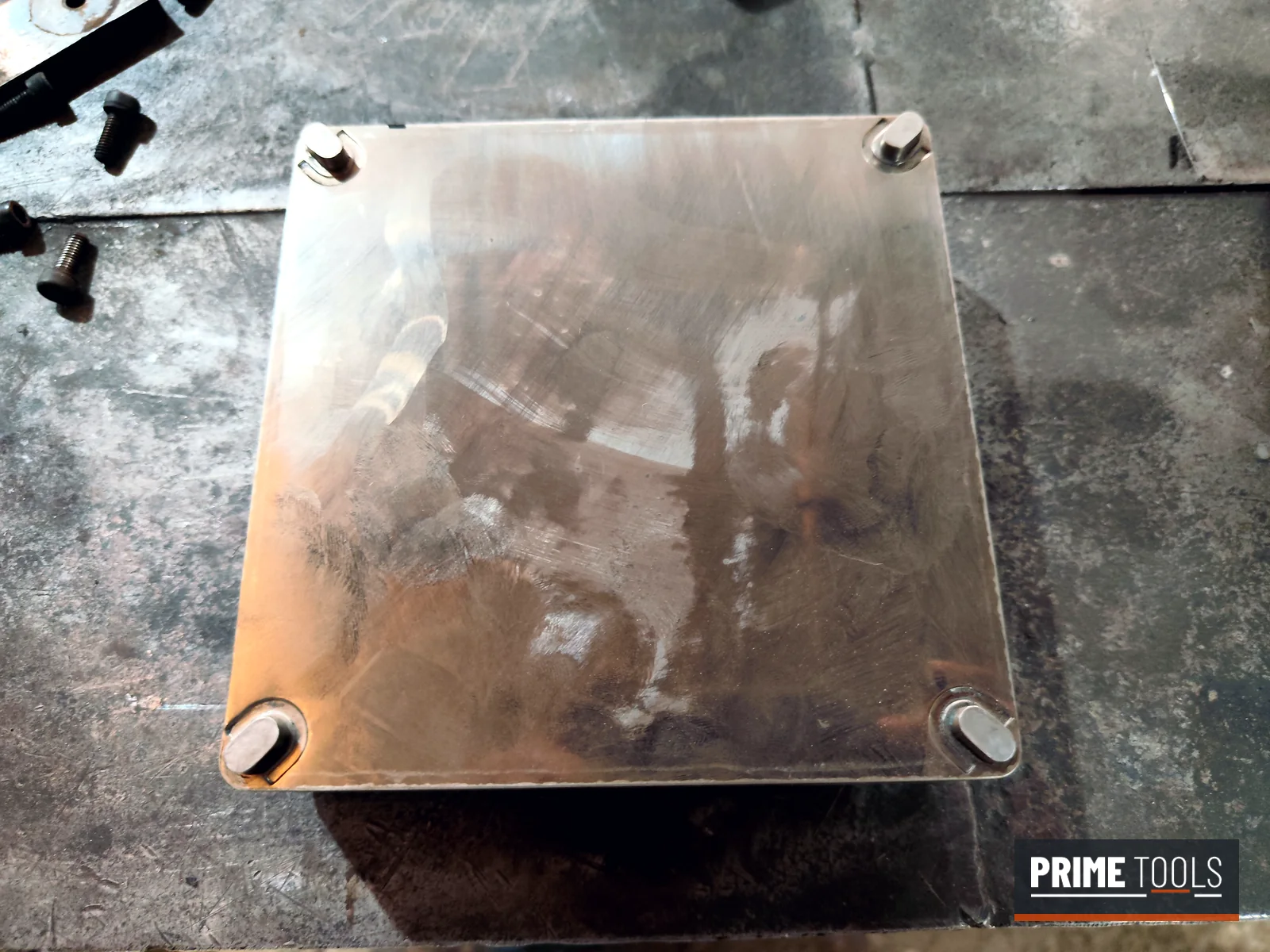
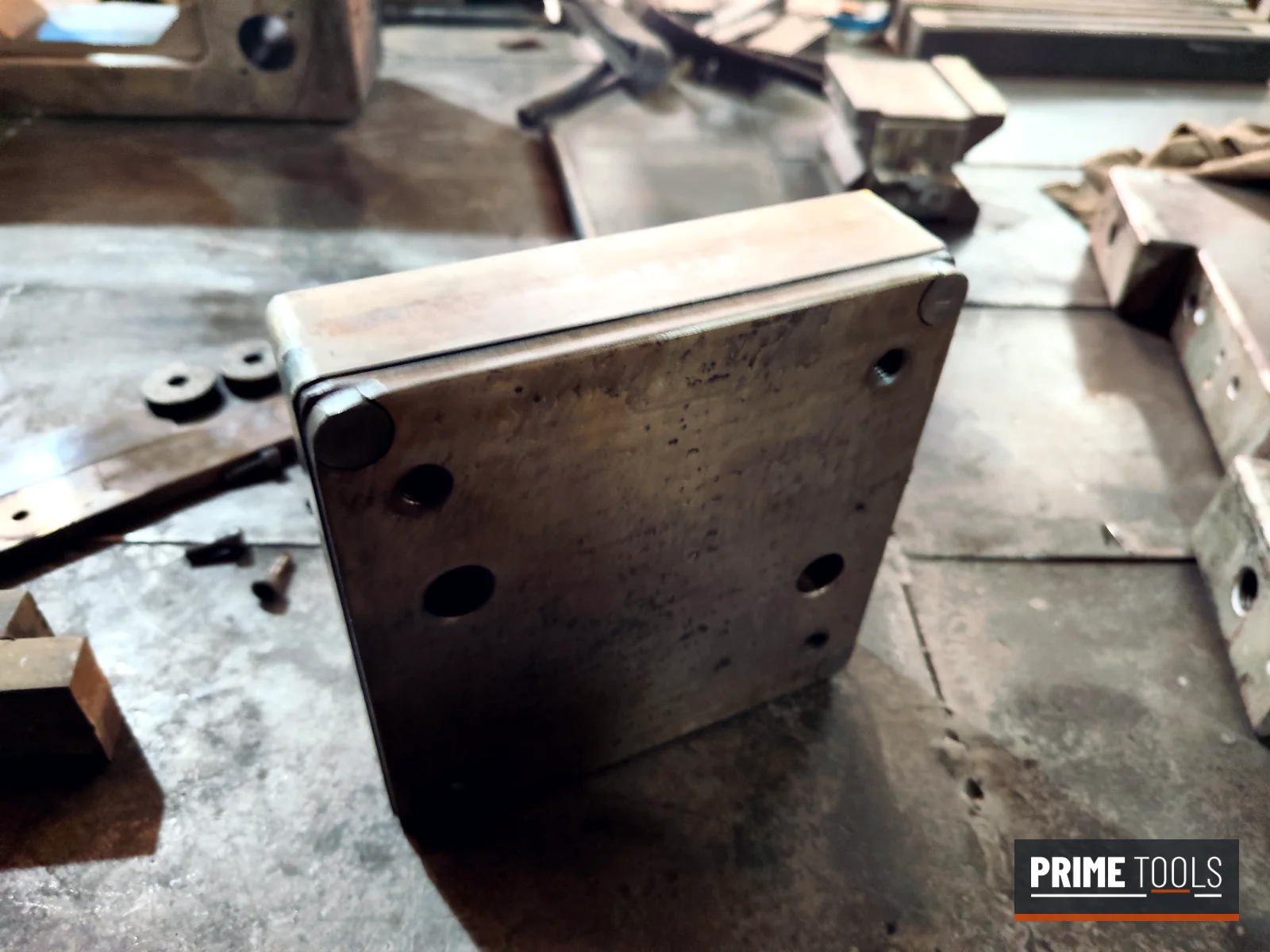
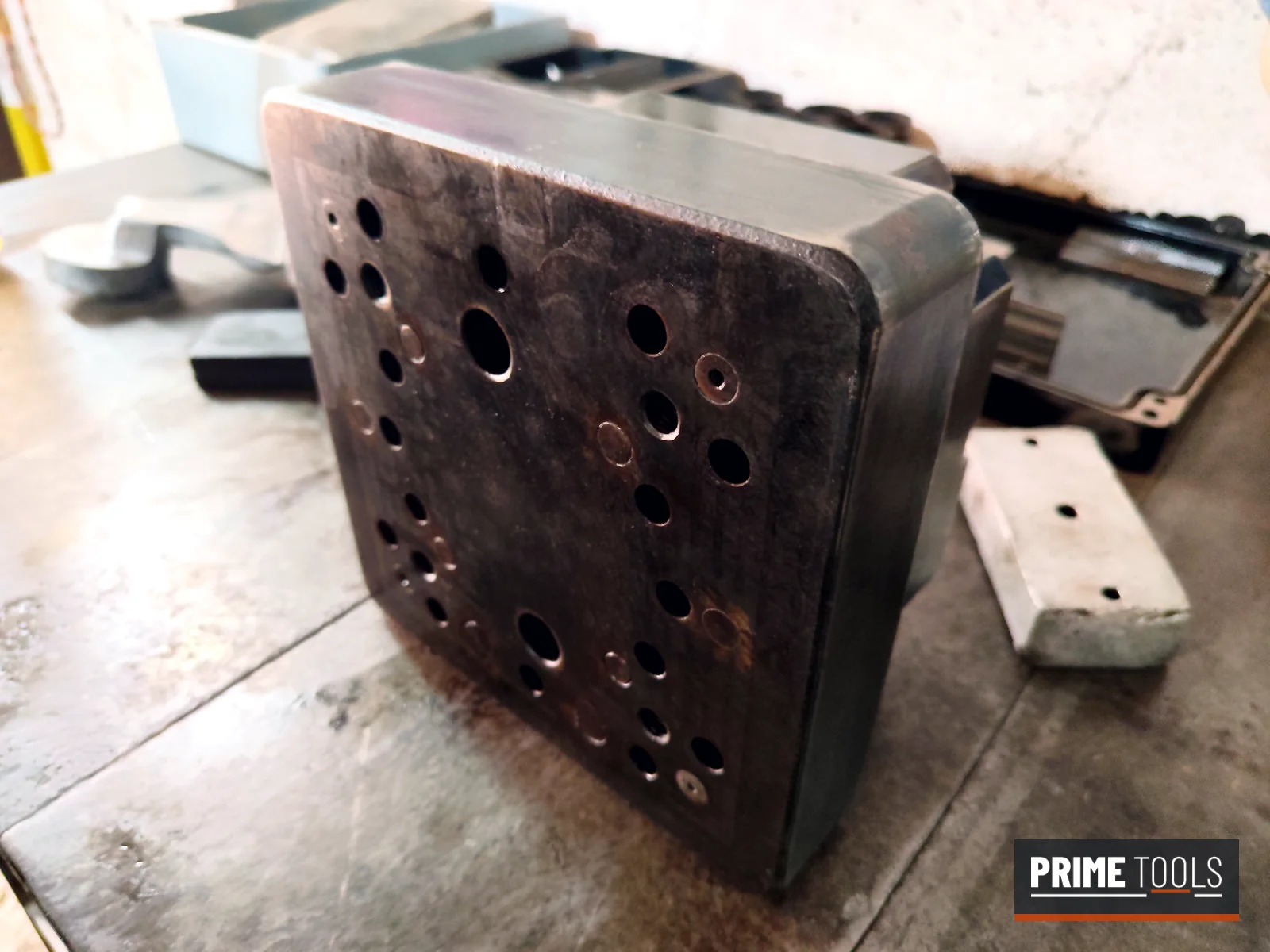
Every one of these boxes starts as an SMC mould: a core and cavity pair that has to produce the same wall, the same seal groove and the same mounting bosses, shot after shot, for years.
SMC moulds we make
SMC junction box moulds
Base and lid moulds for junction boxes with sealing grooves, knock-outs, cable-entry bosses and moulded-in brass inserts. Junction & distribution boxes
SMC meter box moulds
Single-phase and 3-phase meter box bodies, window frames and covers, with seal points and hinge details. Energy meter boxes
Enclosure base and lid moulds
Deep enclosure bases with ribs and screw bosses, and matching lids, built in the same visual and dimensional standard so they fit every time.
GRP electrical enclosure moulds
Moulds for GRP enclosures, cabinets and kiosk panels made by compression moulding, for enclosure makers in India and abroad.
Multi-cavity SMC moulds
Two- and four-cavity moulds for smaller parts such as covers and terminal parts, so you get more parts from every press stroke.
Mould repair and modification
Worn shear edges, flash problems, re-polishing, re-chroming and design changes on existing SMC moulds, including moulds from other tool rooms.
How SMC is moulded: the sheet moulding compound process
- The SMC sheet is cut and weighed. The compound arrives as a rolled sheet between carrier films. Pieces are cut, the films removed, and the pieces stacked to a set charge weight.
- The charge is placed in the heated mould. The stack goes in at the position planned in the DFM, usually covering 40–70% of the part's projected area, with the mould at about 140–160 °C.
- The press closes and the compound flows. Under roughly 40–100 kgf/cm² the SMC flows out to the walls, ribs and bosses, while the shear edge traps it and air escapes.
- The part cures in the mould. The polyester resin cross-links in a minute or two, depending on wall thickness.
- The part is ejected and deflashed. Ejectors push the part out and the thin flash at the shear edge is trimmed.
For the full process, the diagram and the general rules for every thermoset, see our guide to compression moulds and compression moulding.
What an SMC mould needs
SMC is abrasive, flows a long distance and cures fast. A mould that works for Bakelite or melamine will not last on SMC unless it is designed for it. These are the points we settle in every SMC mould design.
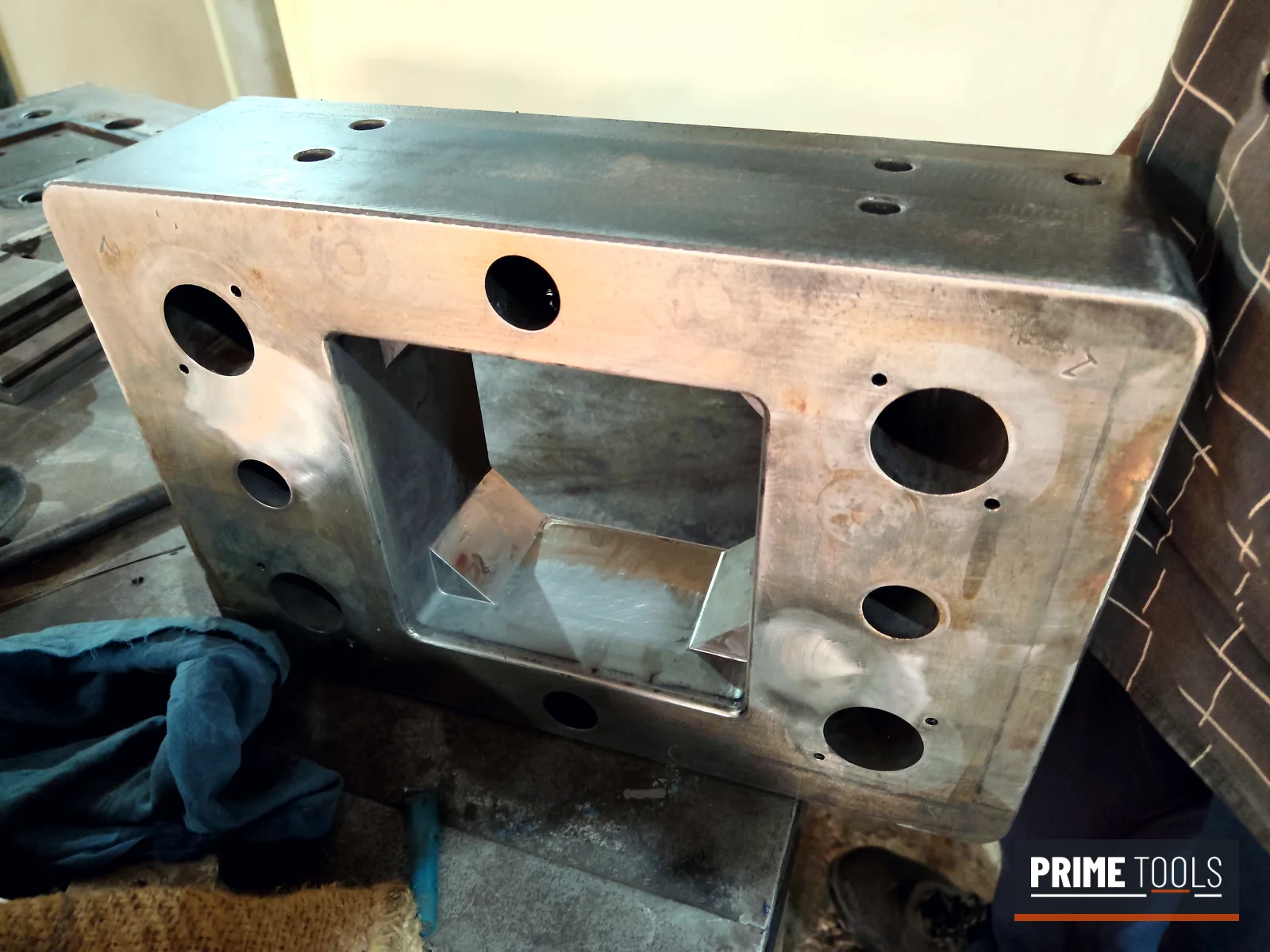
Tight vertical shear edge
The shear edge clearance is held to a few hundredths of a millimetre, so the glass-filled compound is trapped, flash stays thin and the edge does not wash out.
Hardened, polished cavities
Glass fibre wears soft steel quickly. Cores and cavities are made in hardened H13 or Böhler W302 ESR, polished, and hard chromed where needed.
Charge pattern and flow length
We plan where the charge sits and how far it must flow, so fibres reach every rib and boss without dry spots, knit lines or porosity.
Draft and wall section
Every wall, rib and boss gets draft, and the wall map is checked for thick spots that slow the cure and cause sink or blisters.
Even mould temperature
Heater and thermocouple layout keeps the whole surface within a few degrees, so a large enclosure cures evenly and does not warp.
Inserts, engraving and seal grooves
Brass insert pockets, logos, ratings and sealing grooves are planned in the DFM so they mould cleanly every shot.
SMC vs other enclosure materials
Buyers often compare SMC (GRP) enclosures with polycarbonate, ABS and sheet-metal boxes. This is how they usually stack up for outdoor electrical use.
| SMC / GRP | Polycarbonate | ABS | Sheet metal (MS) | |
|---|---|---|---|---|
| Outdoor UV and weather | Excellent | Good, with UV grade | Fair | Needs painting; can rust |
| Heat and fire resistance | High; does not melt | Medium | Low | High |
| Electrical insulation | Yes | Yes | Yes | No; needs earthing |
| Stiffness for large boxes | High | Medium | Low | High |
| Corrosion | None | None | None | Rusts if coating fails |
| Moulding process | Compression moulding | Injection moulding | Injection moulding | Sheet metal fabrication |