Wiring devices: what buyers need from the mould
Wiring devices are the switches, sockets, plates and fuse carriers in every building. Their bases and housings are often compression moulded from thermosets such as Bakelite (phenolic), melamine or urea-formaldehyde, because these do not soften with heat, resist tracking and give a hard, glossy surface.
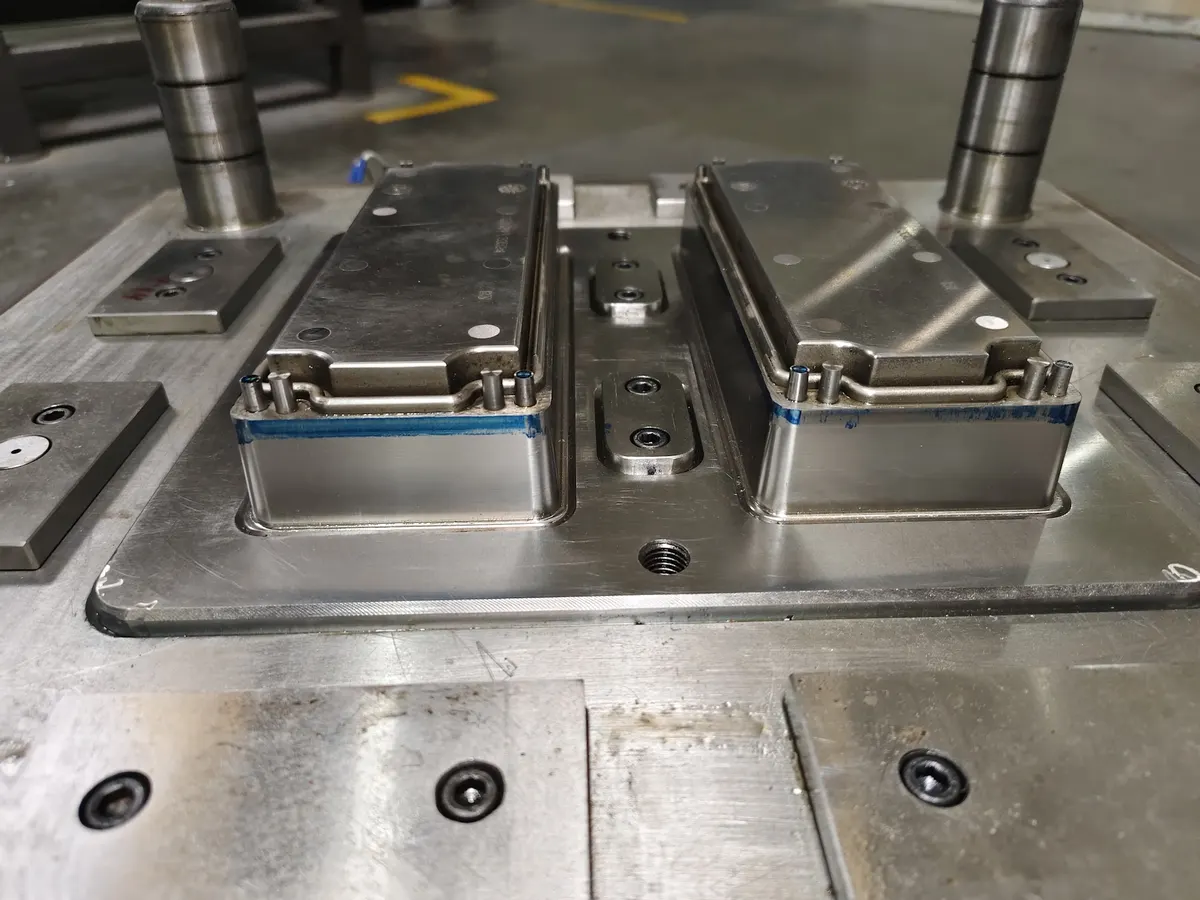
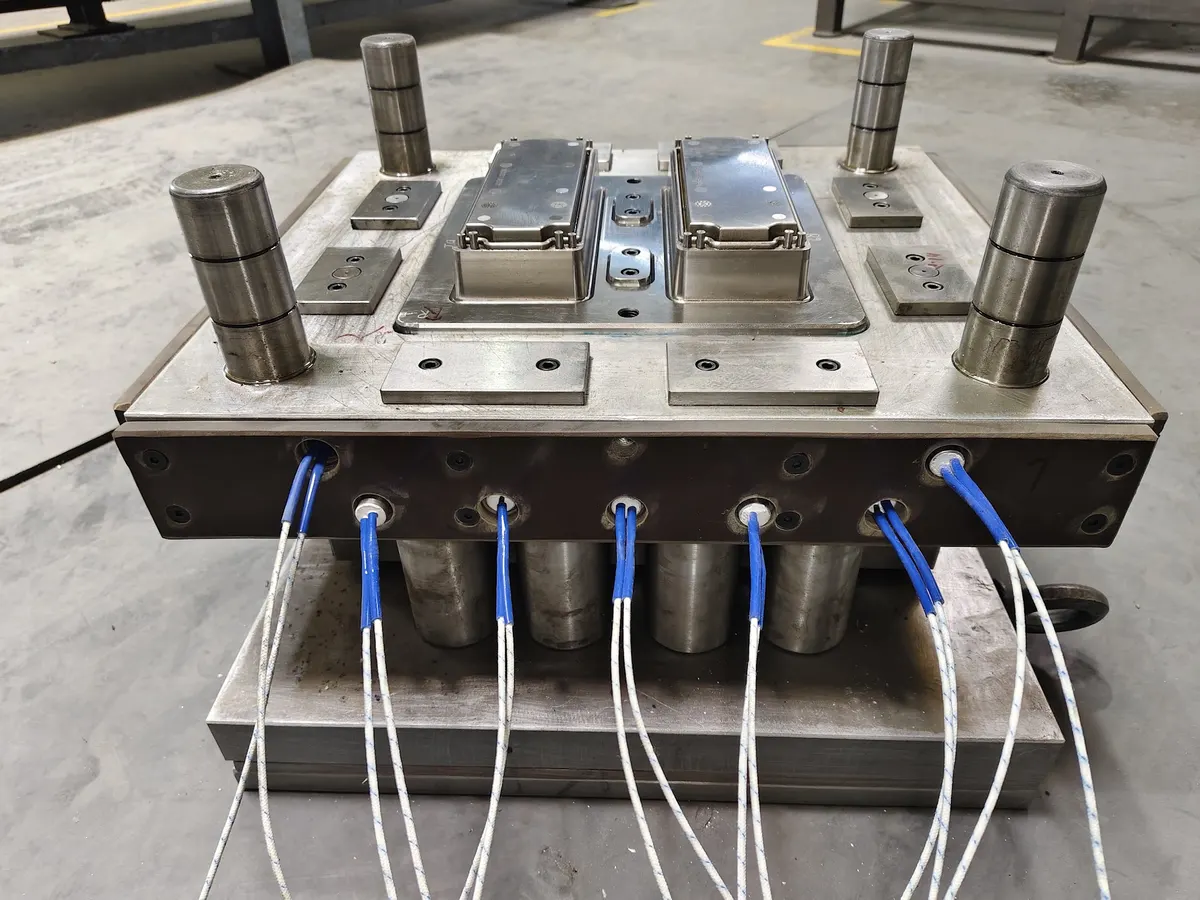
Wiring device parts are small, made in very high numbers and judged by how they look. That calls for multi-cavity moulds with polished, chromed cavities, even heating and loading trays that put the same charge in every cavity.
Terminal and contact positions must be exact, so brass parts and screws fit without rework on the assembly line.
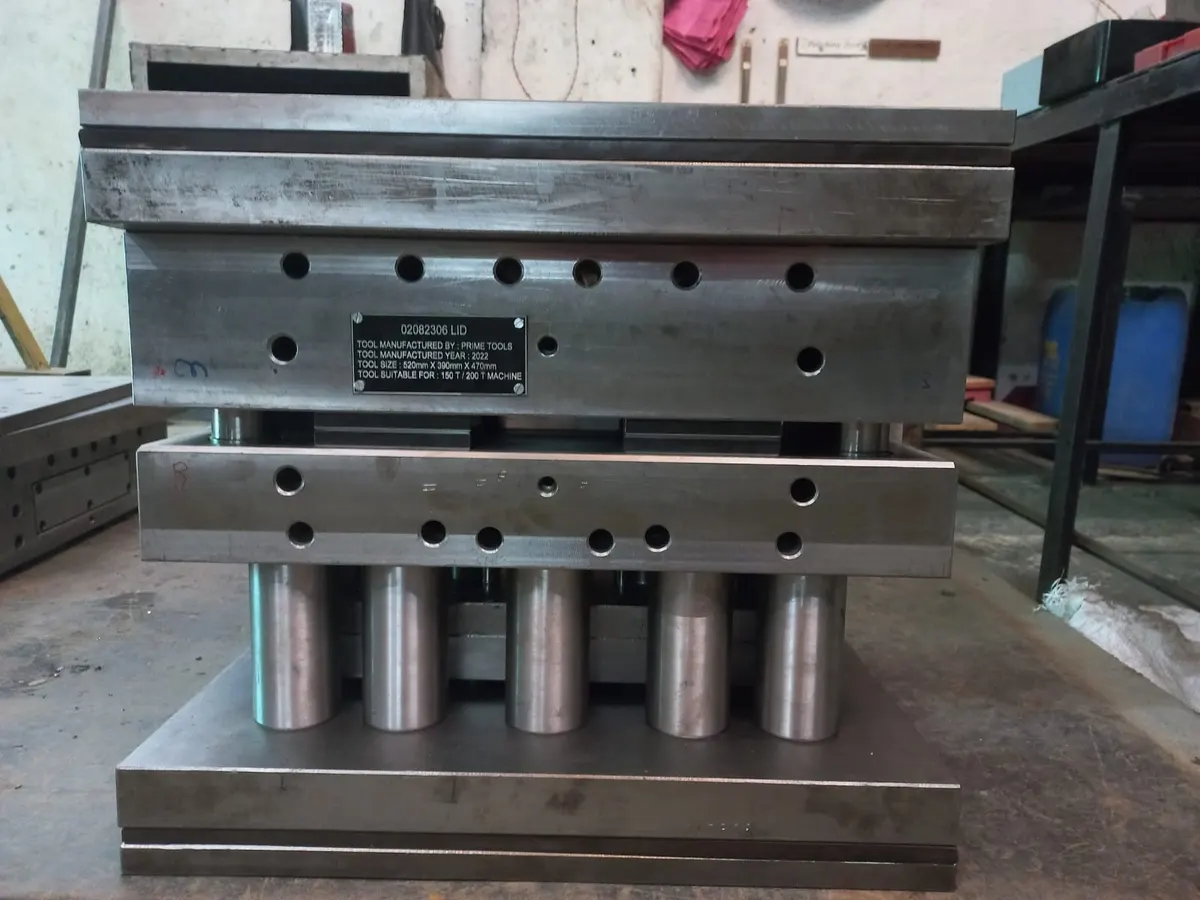
A switch socket mould for a modular switch range is usually a multi-cavity tool, with one mould per part: the base, the cover, the plate and the fuse carrier. A Bakelite switch base needs heat resistance and stable terminals; a melamine or UF part needs a mirror finish and even colour.
Electrical switch moulds and wiring device moulds we build
What a modular switch mould must deliver
Gloss and colour
Mirror-polished, hard-chromed cavities so melamine and UF parts come out glossy and even in colour.
Exact terminal positions
Pins and pockets that hold contact and terminal positions to the drawing, cavity after cavity.
Balanced multi-cavity heating
Even temperature across all cavities so every part cures the same and looks the same.
Powder and preform loading
Loading trays and preform pockets designed with the mould, for consistent charge in every cavity.
Materials and mould design
Wiring device parts are usually Bakelite, melamine or urea-formaldehyde; some bases use DMC for higher strength. Thermoplastic plates and frames are injection moulded and are outside our work.
Every mould starts with a free DFM review: draft, wall section, shear edge, charge placement and press tonnage are checked before steel is cut. Read more about compression moulds and the moulding process.