
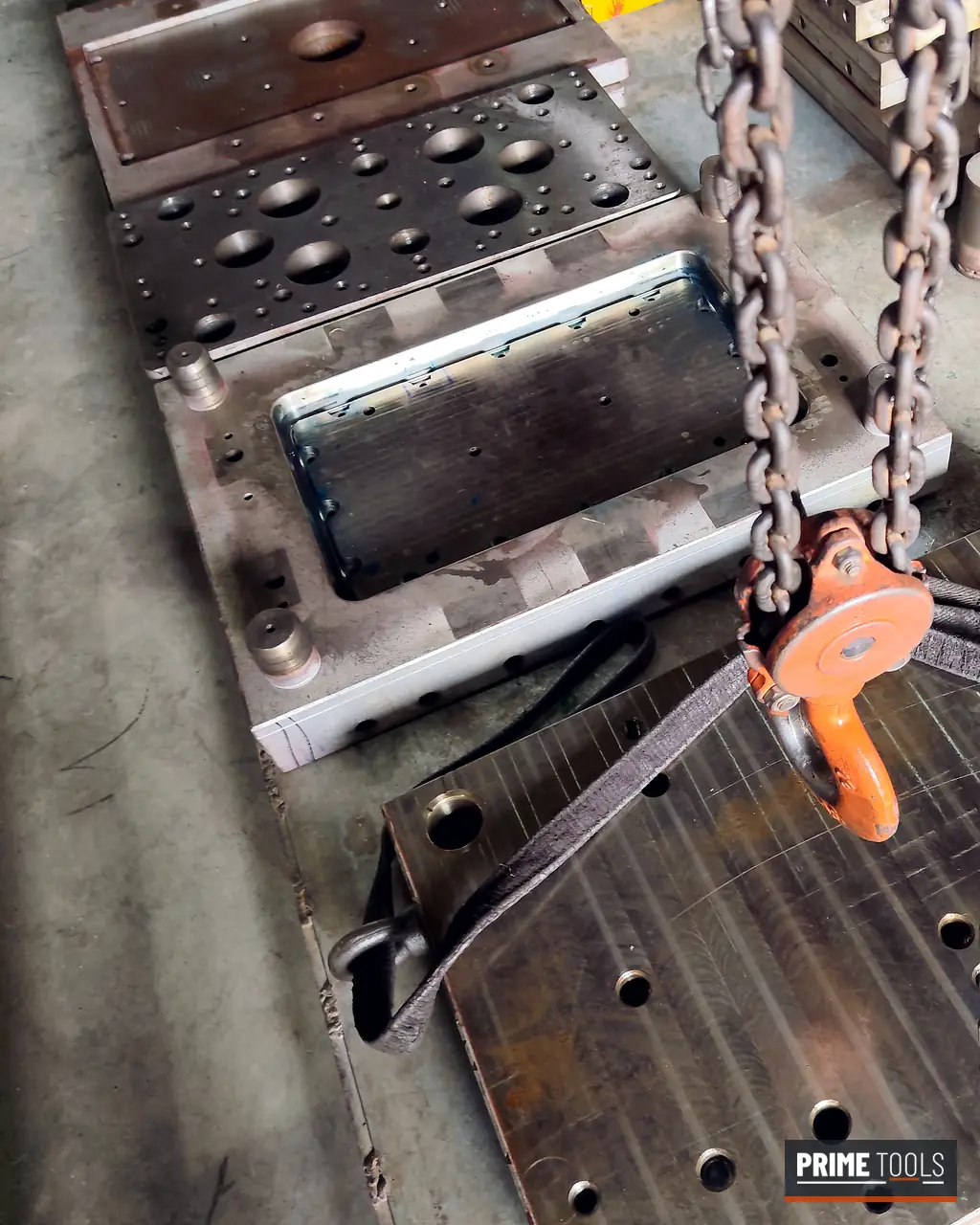
A manhole cover mould is a heated steel compression mould that presses SMC (sheet moulding compound) into a ribbed cover with its anti-skid pattern, logo and load-class marking in one shot. We design and build these moulds for cover and frame manufacturers.
What we build
Cover moulds
Round, square and rectangular covers, with the top pattern, text and ribs moulded in one shot.
Frame moulds
Matching frames in SMC or BMC, so cover and frame seat without rocking.
Logo and marking inserts
Interchangeable inserts for client logos, load class and year, so one mould serves many tenders.
Modifications
New inserts, rib changes or class upgrades on your existing cover moulds.
Designed around the load class
The load class decides the rib depth, wall section and charge weight, and those decide the mould. We check the design against your target class and your press before quoting, so the mould makes covers that pass the load test, not just covers that look right.
| EN 124 class | Test load | Typical use |
|---|---|---|
| A15 | 15 kN | Pedestrian and cycle areas |
| B125 | 125 kN | Footways, car parks |
| C250 | 250 kN | Kerbsides, road shoulders |
| D400 | 400 kN | Roads and carriageways |
Heavier classes (E600, F900) are usually ductile iron. Read our FRP manhole cover guide for sizes, classes and FRP vs cast iron vs RCC.
What makes a good manhole cover mould
- Rib design that fills. Deep ribs give strength without weight; the mould needs enough draft and venting to fill and release them cleanly.
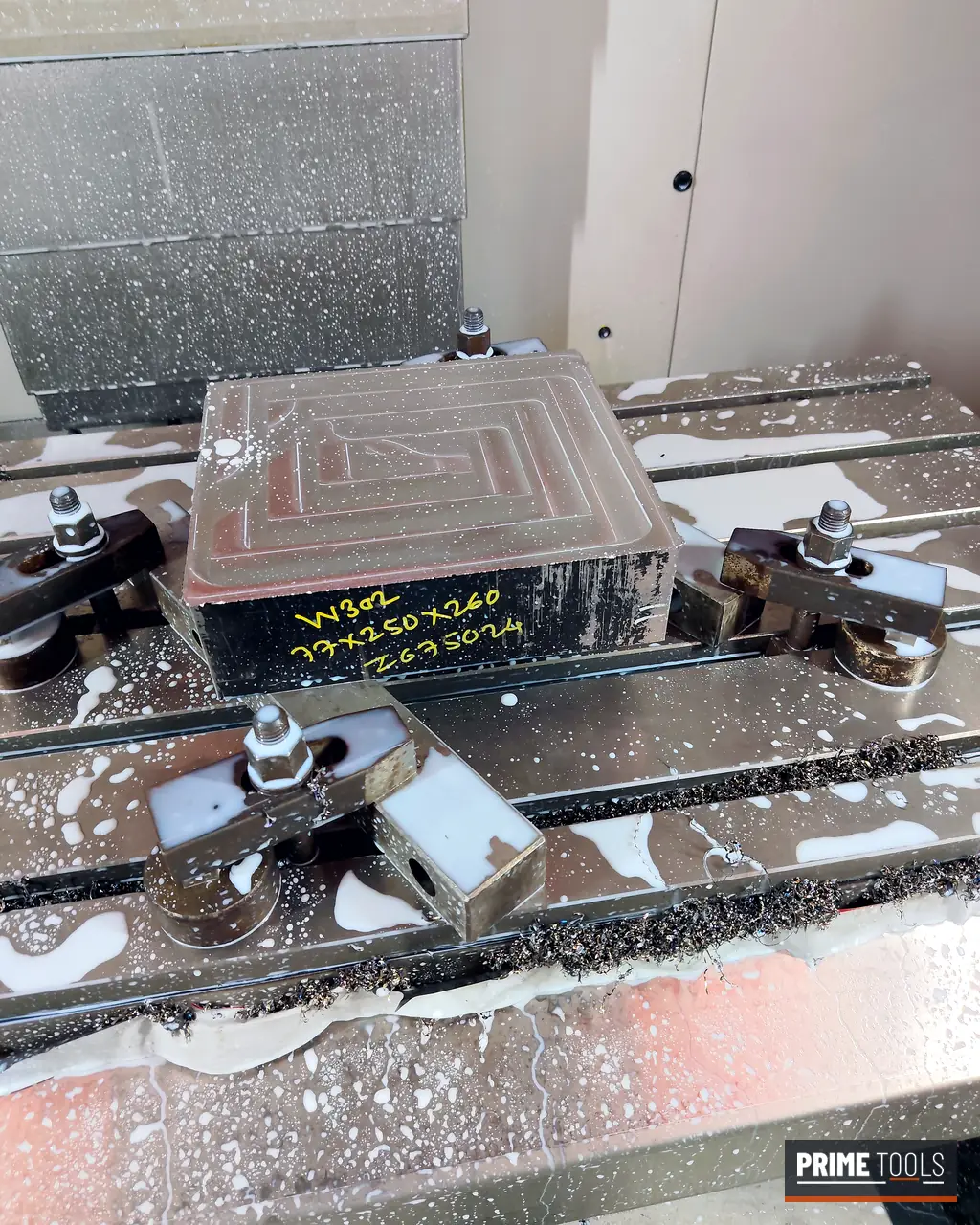
- Hardened shear edges. A long perimeter shear edge in hardened steel keeps flash thin and deflashing cheap, shot after shot.
- Even heating. Large flat parts warp if one area cures first; heaters and thermocouples are laid out for an even surface temperature.
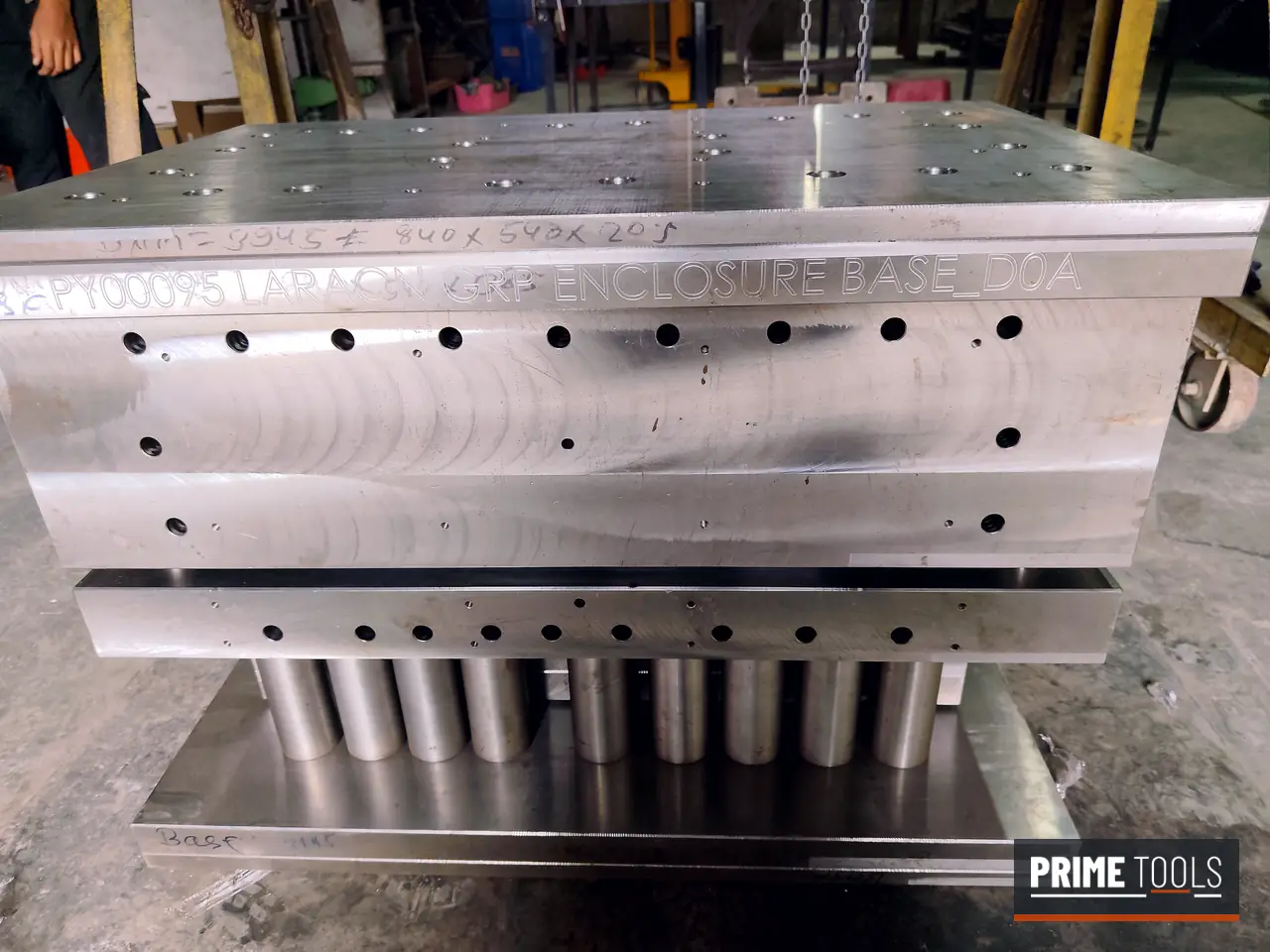
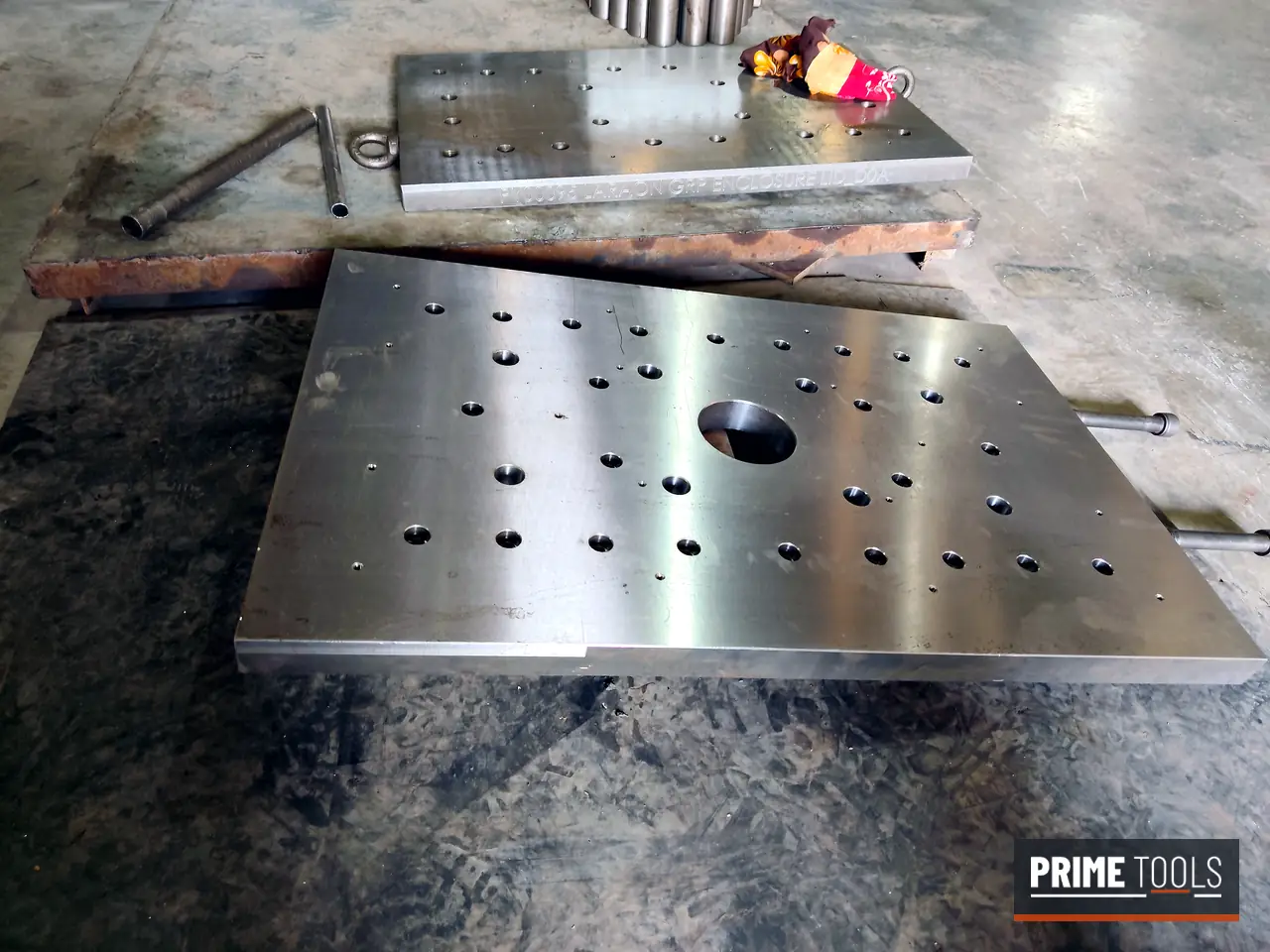
- Stiff construction. High tonnage on a big area must not bend the plates, so plates and support pillars are sized for your press.
- Spread ejection. Covers come out flat when ejection is spread across the ribs, not concentrated in the middle.
What to send for a quote
- Cover drawing or 3D model (or a sample cover)
- Clear opening, overall size and shape
- Target load class and any tender specification
- Logos and markings to mould in
- Press tonnage, platen size and daylight
- Cover only, or cover and frame
Send your part for a free DFM review
3D model or drawing, material and annual volume. We reply within one working day.