
GRP and SMC in Railway Coach Interiors: Toilet Modules, Panels and Fire Safety
GRP (glass-reinforced plastic, also called FRP) is one of the main materials in modern railway coach interiors. Toilet modules, wall and ceiling panels, window surrounds, wash-basin units and equipment covers are made from it because GRP is light, stiff, easy to clean, does not corrode, and can be made in fire-retardant grades that meet railway fire, smoke and toxicity standards such as EN 45545-2. For series production of coaches, many of these parts are compression moulded from SMC (sheet moulding compound) in heated steel moulds.
India is building passenger coaches at a scale it has never seen before, for main-line, semi-high-speed, metro and regional trains. Every one of those coaches needs dozens of interior panels and at least one toilet module. At Prime Tools we build the compression moulds that make SMC panels, so this guide looks at railway interiors from the tool room’s side: which parts are GRP, how they are made, what the fire rules mean for the material and the mould, and how to design a panel that moulds well.
Where GRP is used in a railway coach
Walk through a modern coach and much of what you touch inside is GRP or another composite:
- Toilet modules: wall and ceiling panels, floor and shower trays, wash-basin and vanity units, and complete modular toilet cabins.
- Interior wall and ceiling panels: the lining between the windows, the ceiling panels with light and vent cut-outs, and the end walls.
- Window surrounds (window masks): moulded frames that cover the window cut-out in the body shell.
- Vestibule, partition and door panels: panels at the coach ends and around doors.
- Covers, ducts and boxes: equipment covers, cable ducts and junction boxes behind the panels.
- Seat shells and luggage parts: especially in metro and suburban trains.
Why GRP instead of steel, aluminium or thermoplastic
| Need in a coach | Why GRP / SMC fits |
|---|---|
| Light weight | Lighter than steel panels of the same stiffness, which helps energy use and axle load |
| Stiffness over large areas | Glass fibre plus ribs keeps big panels flat and quiet |
| Corrosion and moisture | Does not rust; ideal for toilets, wet areas and coastal routes |
| Cleaning | Smooth, closed surface that takes harsh cleaning chemicals |
| Fire safety | Fire-retardant resin systems and fillers can meet railway fire standards |
| Complex shapes | Curves, returns, bosses and recesses are moulded in, not fabricated |
| Colour | Colour can be moulded in, so scratches do not show bare material |
Thermoplastics are used for some small interior parts, but large panels must stay stiff and keep their shape near heat, and they must pass strict fire, smoke and toxicity tests. That is where thermoset GRP has the advantage. Read more on the difference in thermoset vs thermoplastic.
Fire safety: what EN 45545 means for GRP parts
Fire is the first question for any material inside a passenger coach. The European standard EN 45545-2 sets fire, smoke and toxicity requirements for railway materials, and Indian Railways production units increasingly call it up in their coach and component specifications.
In simple terms:
- Hazard levels (HL1, HL2, HL3) depend on how the train runs (for example, underground sections or long tunnels) and how the coach is designed. HL3 is the strictest.
- Requirement sets (R1, R2 and so on) say which tests apply to which part. Interior wall and ceiling surfaces have their own set.
- The tests cover how fast flame spreads, how much heat the material releases, how dense the smoke is, and how toxic the smoke gases are.
What this means in practice:
- The material grade passes the fire test, not the mould. Fire-retardant SMC and GRP resin systems (including phenolic and specially filled polyester or vinyl ester grades) are tested and certified by the material supplier for a given requirement set and hazard level.
- The mould must suit that grade. Highly filled fire-retardant SMC flows and cures differently from a standard grade. Heating, charge placement, venting and shear edges must be designed for the grade the moulder will actually run.
- Process control matters. A well-moulded part with consistent thickness and full cure behaves as the test samples did. Thin spots, voids or under-cure do not.
If you are specifying a new railway part, ask your SMC supplier for the fire certificate for the exact requirement set and hazard level in your coach specification, and share it with your mould maker before the DFM review.
How railway interior parts are made
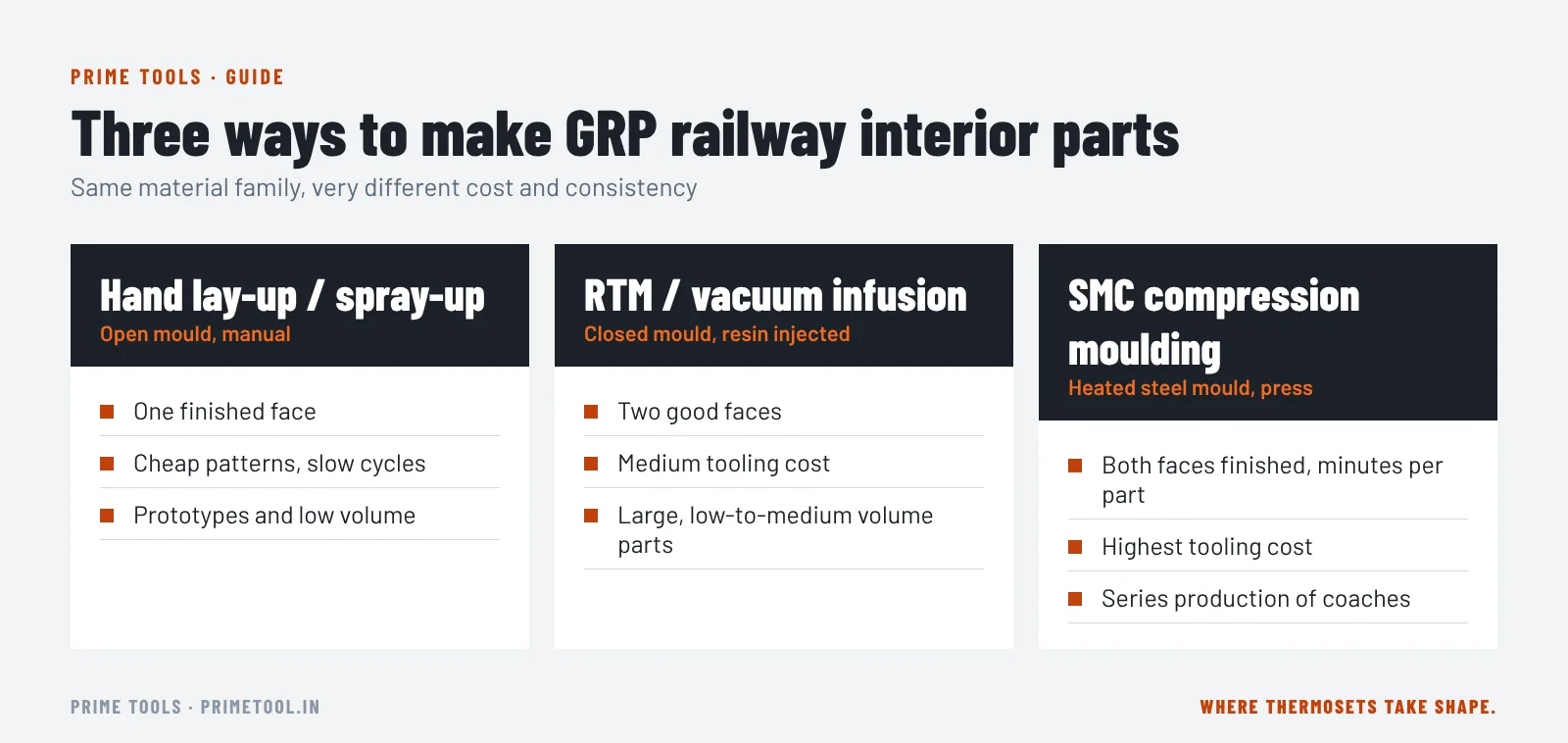
Hand lay-up and spray-up use an open mould and manual layers of glass and resin. Tooling is cheap and quick, so it is common for prototypes, low volumes and very large one-off parts. But only one face is finished, thickness depends on the operator, and each part takes hours.
RTM and vacuum infusion use a closed mould and inject or draw resin through dry glass. Both faces are good, and it suits large parts at low-to-medium volume.
SMC compression moulding places a weighed charge of sheet moulding compound in a heated, hardened steel mould and presses it closed. The part cures in minutes, with both faces finished, consistent thickness and weight, and holes, ribs, bosses and fixings formed in the mould. It needs the biggest investment in tooling, but for series production of coaches it gives the lowest cost per part and the most repeatable fit. Read how the SMC process works step by step.
What a railway panel mould must get right
Railway panels are large and visible, and they have to fit with the panels around them. That puts the demand on the mould:
- Surface: polished, often hard-chromed cavities, so the visible face comes out ready for the coach.
- Flatness: balanced heating and a well-planned charge so long panels cure evenly and do not bow.
- Fit: tight, hardened shear edges that hold their size over long runs, so every panel lines up with the next.
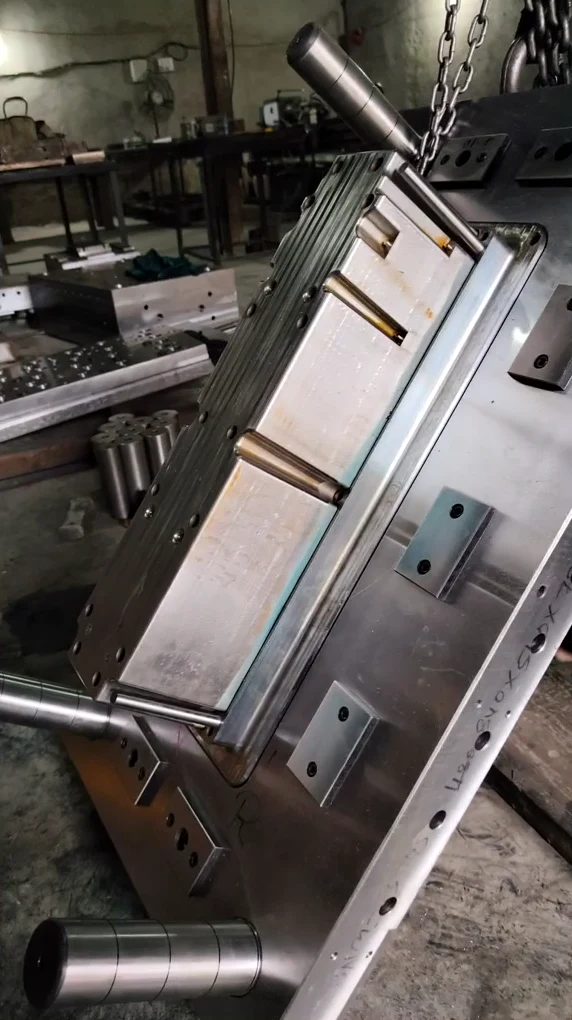
- Fixings: threaded inserts moulded in on locating pins, so there is no drilling or bonding after moulding.
- Strength where it is needed: ribs and edge returns on the back face, designed with draft so the part releases cleanly.
Our GRP mould case study shows the same approach on a long, deep SMC enclosure base with 16 moulded-in inserts, approved at the first trial.
Designing an SMC railway panel: a DFM checklist
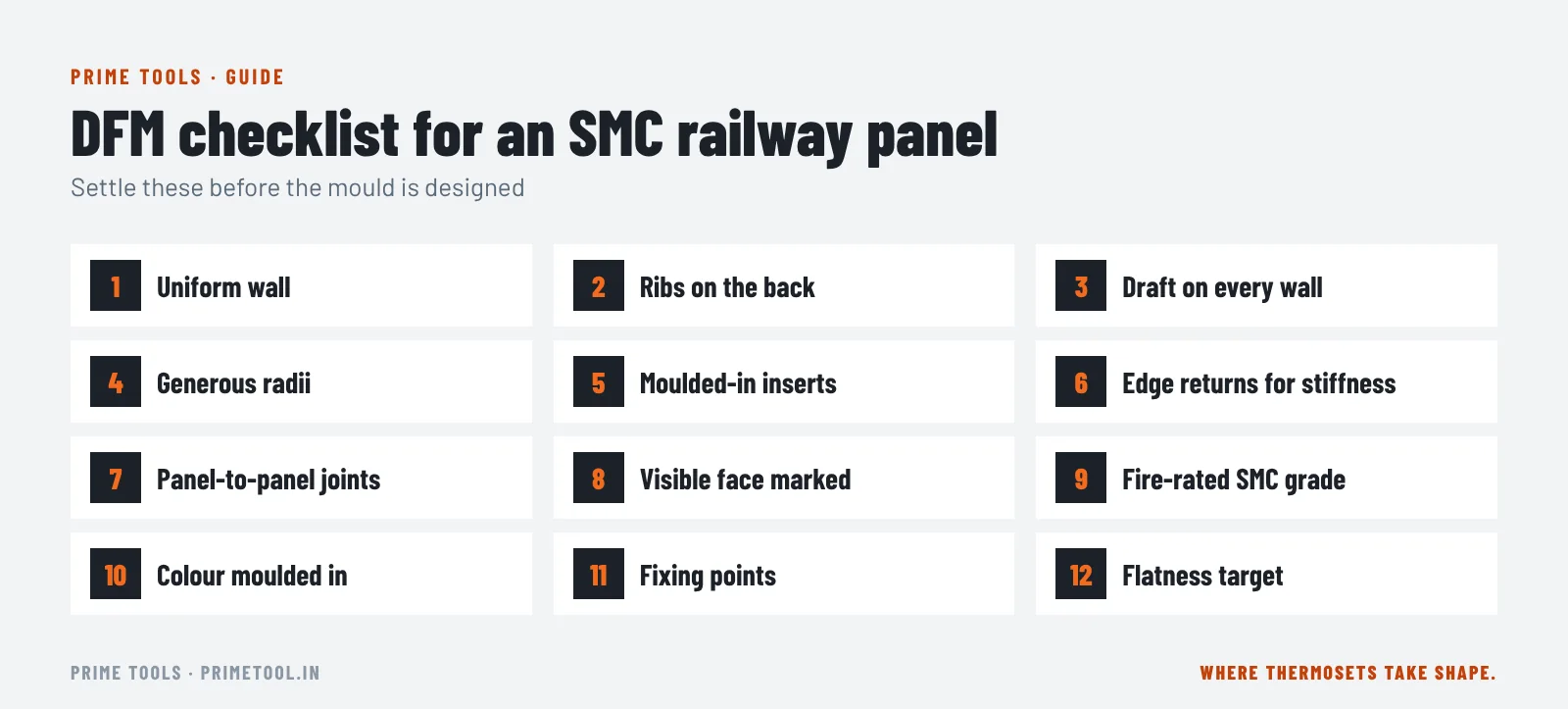
- Keep the wall uniform. Thick and thin areas cure at different rates and cause sink, warp and blisters.
- Put ribs on the back face to stiffen large panels, not extra wall thickness.
- Give every wall draft, especially deep returns and recesses.
- Use generous radii at corners so the material flows and the part is stronger.
- Plan fixings as moulded-in inserts with clear locating features.
- Add edge returns to stiffen panel edges and hide joints.
- Design the panel-to-panel joints together with the panel, not afterwards.
- Mark the visible face so the parting line and ejector pins go elsewhere.
- Choose the fire-rated SMC grade early, because it affects flow, shrinkage and cure.
- Decide on colour: moulded-in colour or painting after moulding.
- Agree the flatness target for long panels and how it will be measured.
- Plan cut-outs for lights, vents and speakers: moulded-in where possible, machined where not.
Our DFM and mould design team reviews all of these on your 3D model before steel is cut. The review is free for new parts.
Free DFM review
Planning a mould for this part?
Send your 3D model or drawing, material and annual volume. Our engineers reply within one working day.
Toilet modules: the part that tests everything
A railway toilet module is the hardest-working interior assembly in the coach. It must be watertight, easy to clean, resistant to cleaning chemicals and constant moisture, fire-safe, and installed quickly through the coach door or as a pre-assembled cabin. That is why it is usually built from moulded GRP panels: wall and ceiling panels, a one-piece floor tray with an upstand to contain water, and a moulded wash-basin or vanity unit.
For the moulder, the floor tray and basin are deep, three-dimensional parts with drainage features. The wall panels are large, flat and visible. Each needs a different mould strategy, and each needs to fit the others. See the moulds we build for railway interior panels.
When does SMC moulding pay off?
The answer is volume. A hardened steel compression mould costs much more than an FRP pattern for hand lay-up. But each SMC part takes minutes instead of hours, needs little finishing, and is the same every time. When a panel is needed for hundreds of coaches, the lower cost per part, the reduced finishing labour and the consistent fit usually pay back the tooling. For prototypes and short runs, hand lay-up or RTM is often the better first step, with SMC tooling following once the design is fixed.
Frequently asked questions
Which material is used for railway toilet modules?
Most modern railway toilet modules use GRP / FRP panels, often SMC or other moulded composites, in fire-retardant grades chosen to meet the fire, smoke and toxicity standard of the train.
What is EN 45545-2?
It is the European standard for the fire behaviour of materials and components in railway vehicles. It sets hazard levels HL1 to HL3 and tests for flame spread, heat release, smoke density and smoke toxicity.
Can SMC meet railway fire standards?
Yes. Fire-retardant SMC grades are available that are tested to EN 45545-2 for specific requirement sets and hazard levels. Always check the supplier’s certificate against your coach specification.
Is SMC better than hand lay-up FRP for railway panels?
For series production, usually yes: both faces are finished, thickness is consistent and cycle times are minutes. Hand lay-up is better for prototypes and very low volumes because the tooling is cheaper.
How large can an SMC railway panel mould be?
It depends on the press. We build and trial moulds up to about 850 × 650 × 550 mm on presses up to 400 tonnes; for larger panels, send the drawing and we will advise honestly.
Can you build moulds for railway interior panels?
Yes. Prime Tools designs and builds SMC compression moulds for railway interior panels, toilet parts and covers. Send your 3D model for a free DFM review.

Written by the Prime Tools engineering team
Compression mould makers in MIDC Ahilyanagar, Maharashtra, since 2015. We design and build moulds for SMC, DMC/BMC, Bakelite, melamine and urea parts, and repair die casting dies. About us
Keep reading
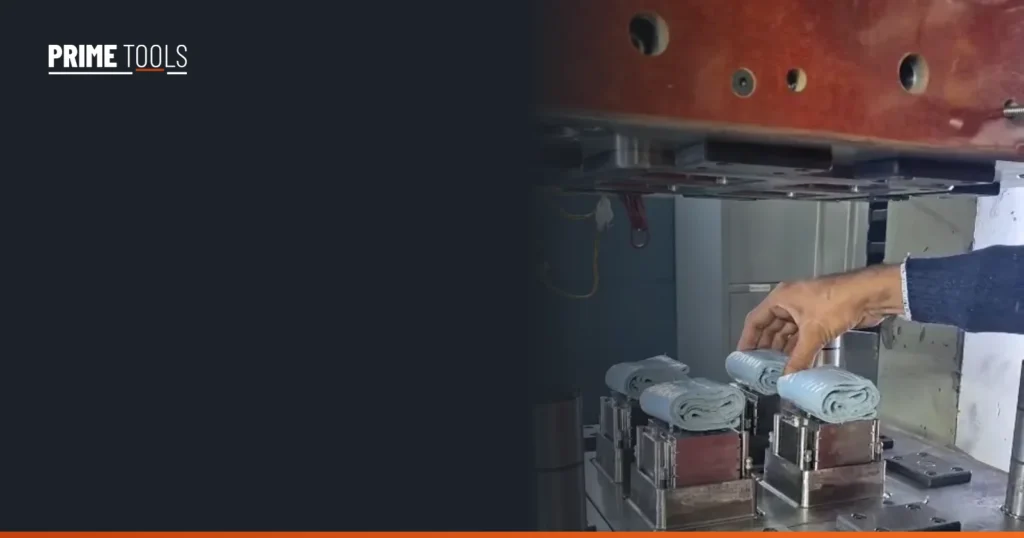
Processes
Compression Moulding Explained: Process, Advantages and Limitations
How compression moulding works step by step, the materials it uses, its advantages and disadvantages, and what makes a good compression mould.
6 min read · Read article →
Products
FRP Manhole Covers: How They Are Made, Load Classes, Sizes and FRP vs Cast Iron vs RCC
FRP manhole covers explained: how SMC covers are moulded, EN 124 load classes, common sizes, price factors, and FRP vs cast iron vs RCC…
6 min read · Read article →
Materials
Thermoset vs Thermoplastic: Which Material Is Right for Your Part?
Thermoset vs thermoplastic explained: how they differ, properties, examples, moulding processes, cost and how to choose the right one for your part.
6 min read · Read article →