
High Pressure vs Gravity Die Casting: Process, Dies, Inserts and Maintenance
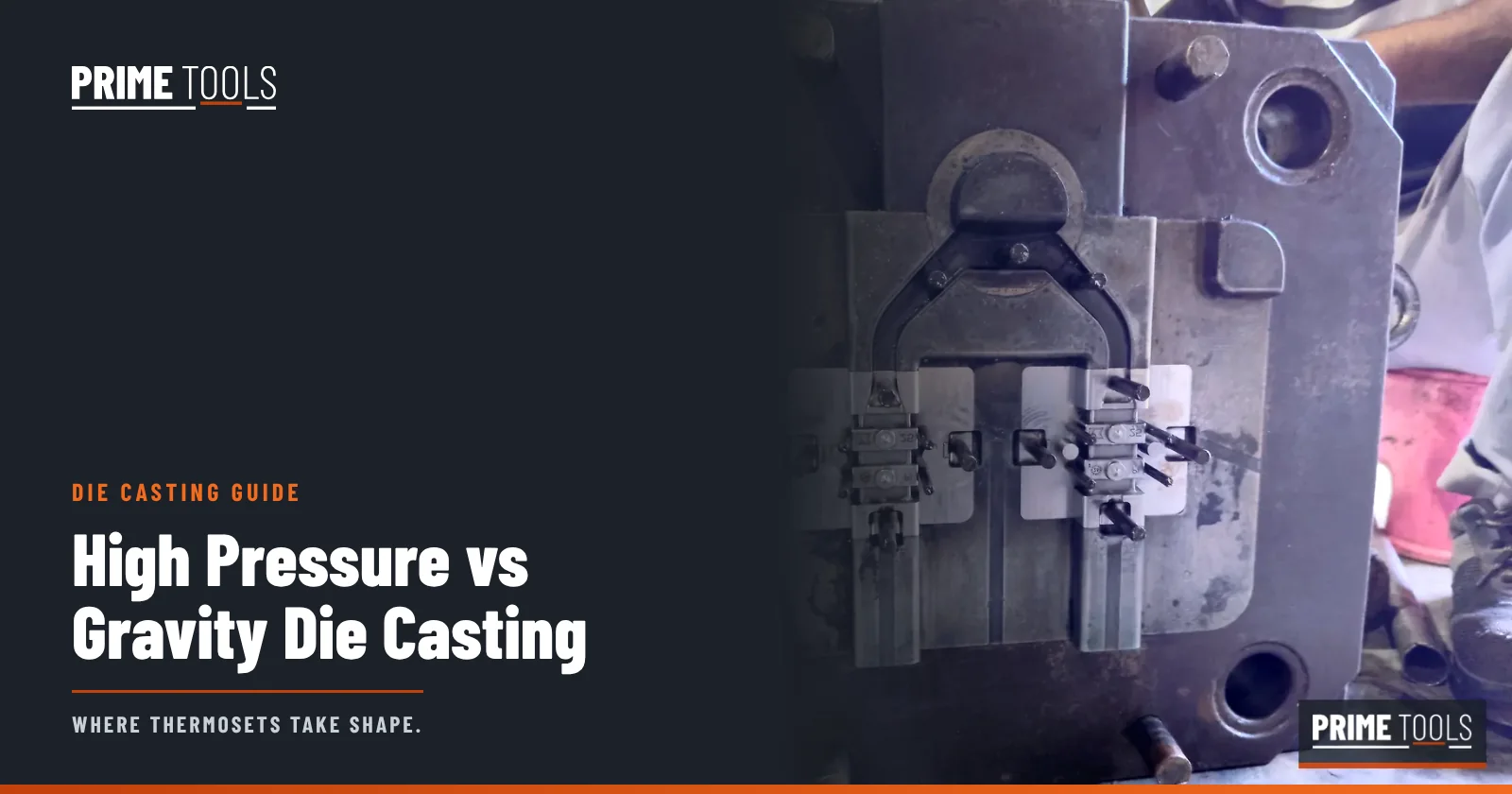
High pressure die casting (HPDC) injects molten metal, usually aluminium or zinc, into a steel die at high speed and pressure, making thin-walled, detailed parts in seconds. Gravity die casting (GDC) pours molten metal into a permanent steel or cast iron die using only gravity, making denser, thicker parts that can be heat treated, at slower cycles. Both rely on dies that wear, crack and erode, so die inserts and planned maintenance decide how long production runs without problems.
At Prime Tools, our die casting work is die repair, modification and new replacement inserts for HPDC and GDC dies, alongside our main compression mould business. We do not claim to build complete new die casting dies; we keep existing ones running. This guide explains both processes and, from our repair bench, what wears and how to look after a die.
How high pressure die casting works
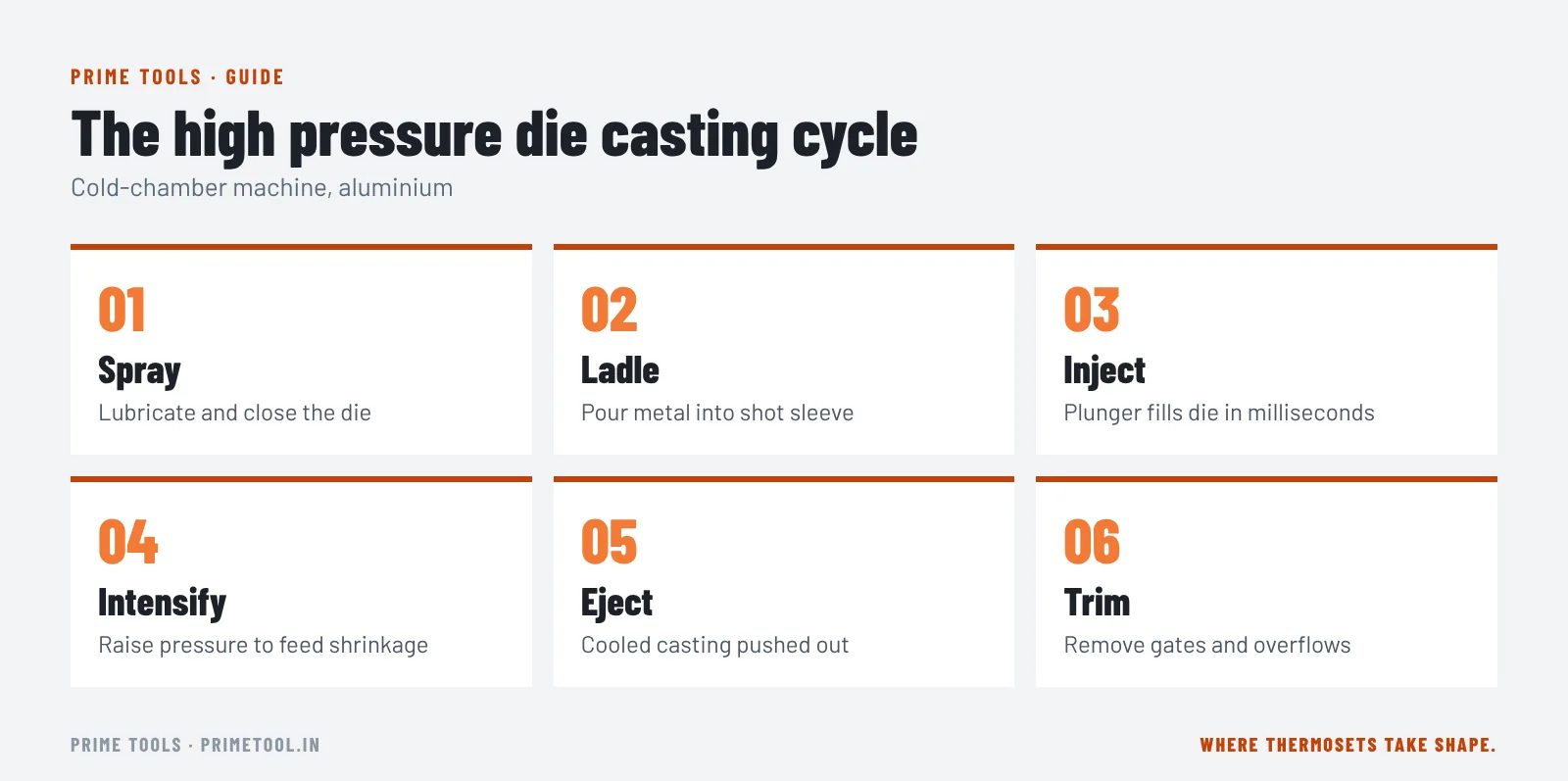
- Die preparation: the two die halves are sprayed with die lubricant and closed in the die casting machine.
- Metal shot: molten aluminium is ladled into the shot sleeve (cold-chamber machines; zinc uses hot-chamber machines).
- Injection: a plunger forces the metal into the die at high speed, filling the cavity in milliseconds.
- Intensification: pressure is raised to feed shrinkage as the metal solidifies.
- Solidification and ejection: the casting cools in the water- or oil-cooled die and is ejected.
- Trimming: gates, overflows and flash are trimmed off in a trim press.
Typical HPDC parts: gearbox and transmission housings, motor housings, lighting bodies, electrical enclosures and heat sinks, brackets, two-wheeler parts and many automotive components.
How gravity die casting works
Molten metal is poured from a ladle into a pre-heated permanent die, often tilted to reduce turbulence. Sand cores can be used for internal passages. After solidification the die is opened and the casting removed.
Typical GDC parts: alloy wheels, pistons, cylinder heads, pump bodies, valve bodies and other thicker, structural parts that may be heat treated. Low pressure die casting (LPDC) is a related process that fills from below under low gas pressure.
HPDC vs GDC: comparison
| High pressure die casting (HPDC) | Gravity die casting (GDC) | |
|---|---|---|
| Filling | High speed, high pressure | Gravity only |
| Wall thickness | Thin, down to a few mm or less | Thicker |
| Detail and finish | Excellent | Good |
| Porosity | Higher (gas entrapment) | Lower |
| Heat treatment | Limited (blistering risk) | Yes, commonly |
| Cycle time | Seconds | Minutes |
| Die cost | High | Lower |
| Best volume | High | Low to medium |
| Typical metals | Aluminium, zinc, magnesium | Aluminium, copper alloys |
What wears in a die casting die
Die casting dies face extreme thermal cycling and molten metal flow. From our repair work, the main failure modes are:
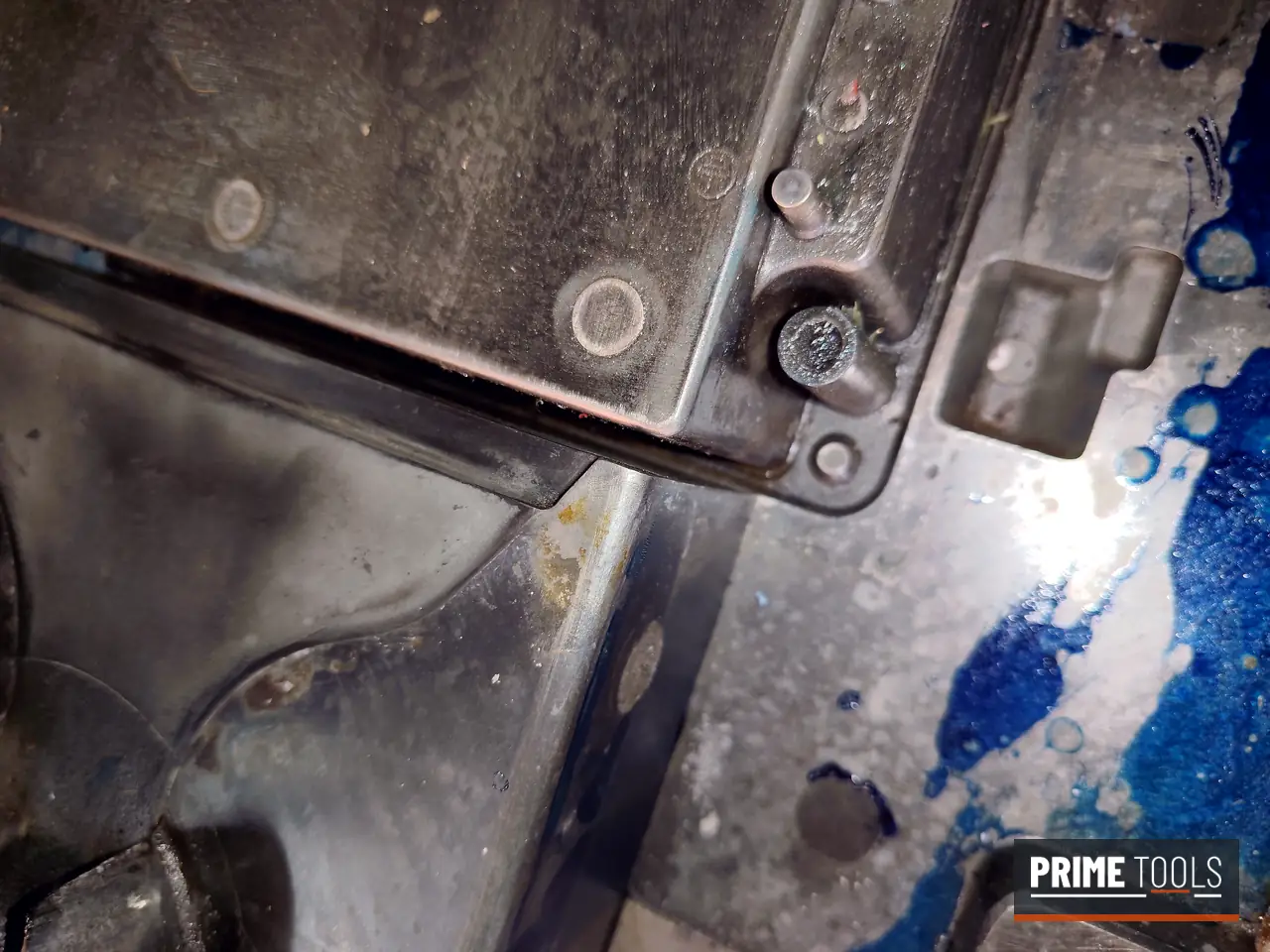
- Heat checking: a network of fine surface cracks caused by repeated heating and cooling. It shows on castings as raised veins.
- Erosion and washout: high-speed metal wears away the steel at gates and in front of them.
- Soldering: aluminium sticks and bonds to the die surface, tearing the casting and the die.
- Gross cracking: larger cracks from thermal stress or mechanical overload, often at sharp corners or cooling lines.
- Wear on moving parts: slides, cores and ejector pins wear and start flashing.
Why dies use inserts
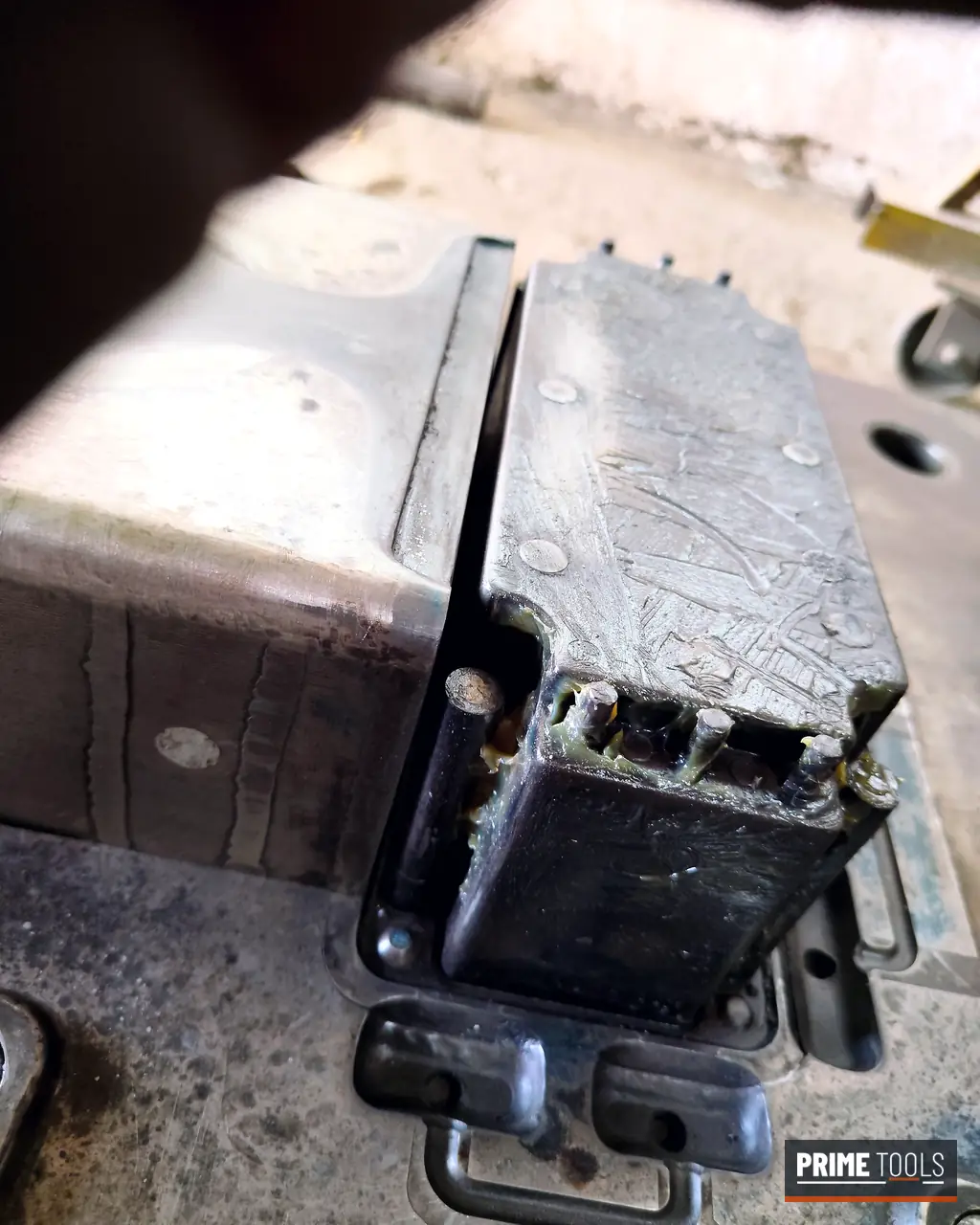
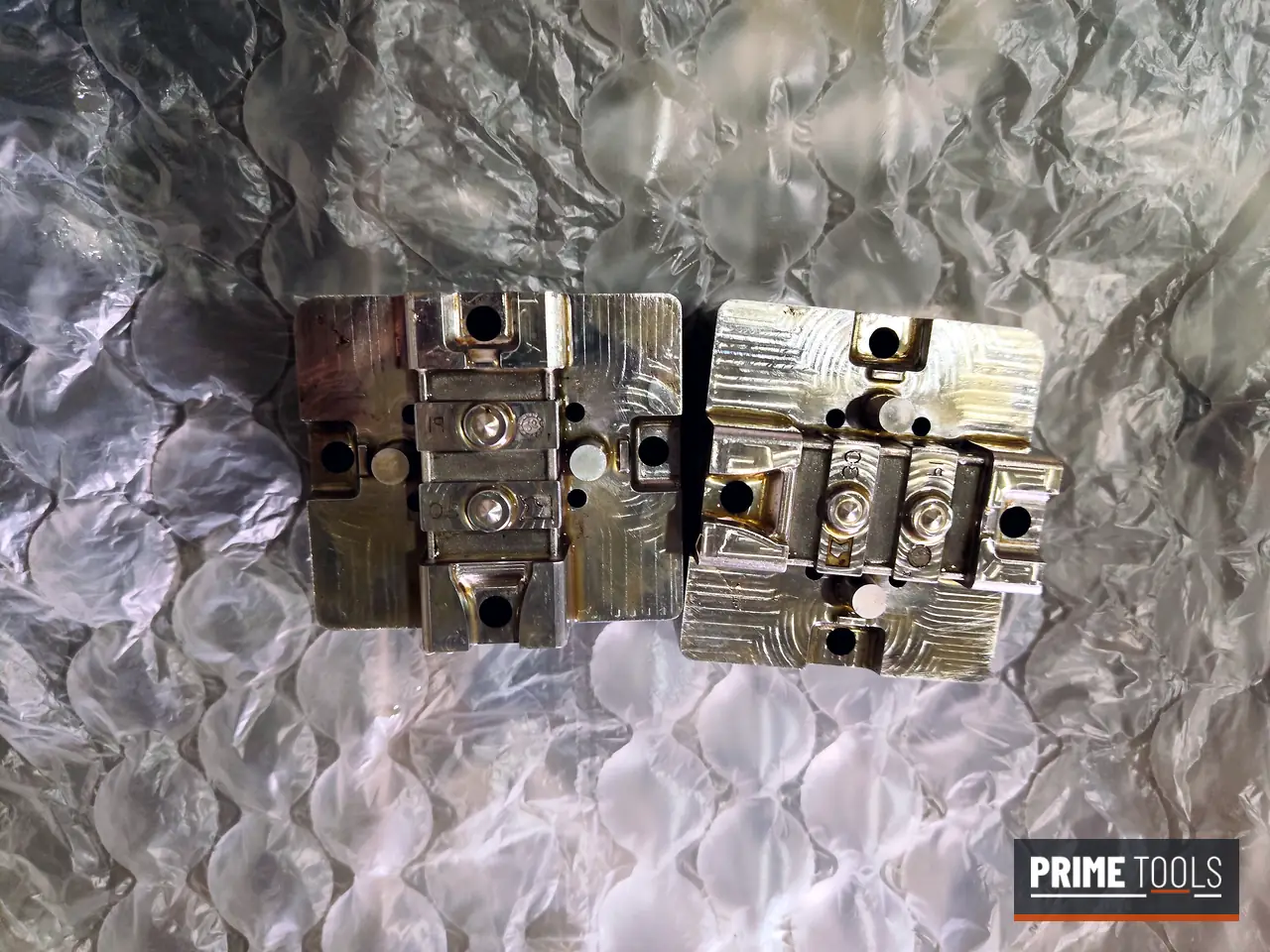
Most die casting dies are built as a holder (bolster) with replaceable cavity and core inserts. When the moulding surface wears out, the insert is replaced instead of the whole die. Inserts are made from hot-work tool steel (such as H13 / 1.2344 grades), hardened and often surface treated.
New inserts must match the original geometry, fit precisely into the holder, have correct cooling channels and be heat treated properly. That is the work we do: die casting moulds and inserts.
Die maintenance that extends life
- Pre-heat the die before production; cold dies crack faster.
- Control die temperature with proper thermal control units and cooling.
- Use the right die lubricant and spray pattern.
- Stress relieve the die after a set number of shots to reduce heat checking and cracking.
- Inspect regularly for heat checks, soldering and erosion, and polish or repair early.
- Keep spares for high-wear inserts, cores and ejector pins.
- Record shot counts and repairs so you can predict when inserts need replacing.
When to repair and when to replace an insert
Repair (welding, re-machining, polishing) makes sense for local damage: small cracks, erosion near gates, soldering marks. Replace the insert when heat checking covers large areas, when cracks run deep or into cooling channels, or when repeated weld repairs have weakened the steel. We assess each die honestly from photos, castings and inspection. Read about our approach on the mould repair page.
Signs your die needs attention
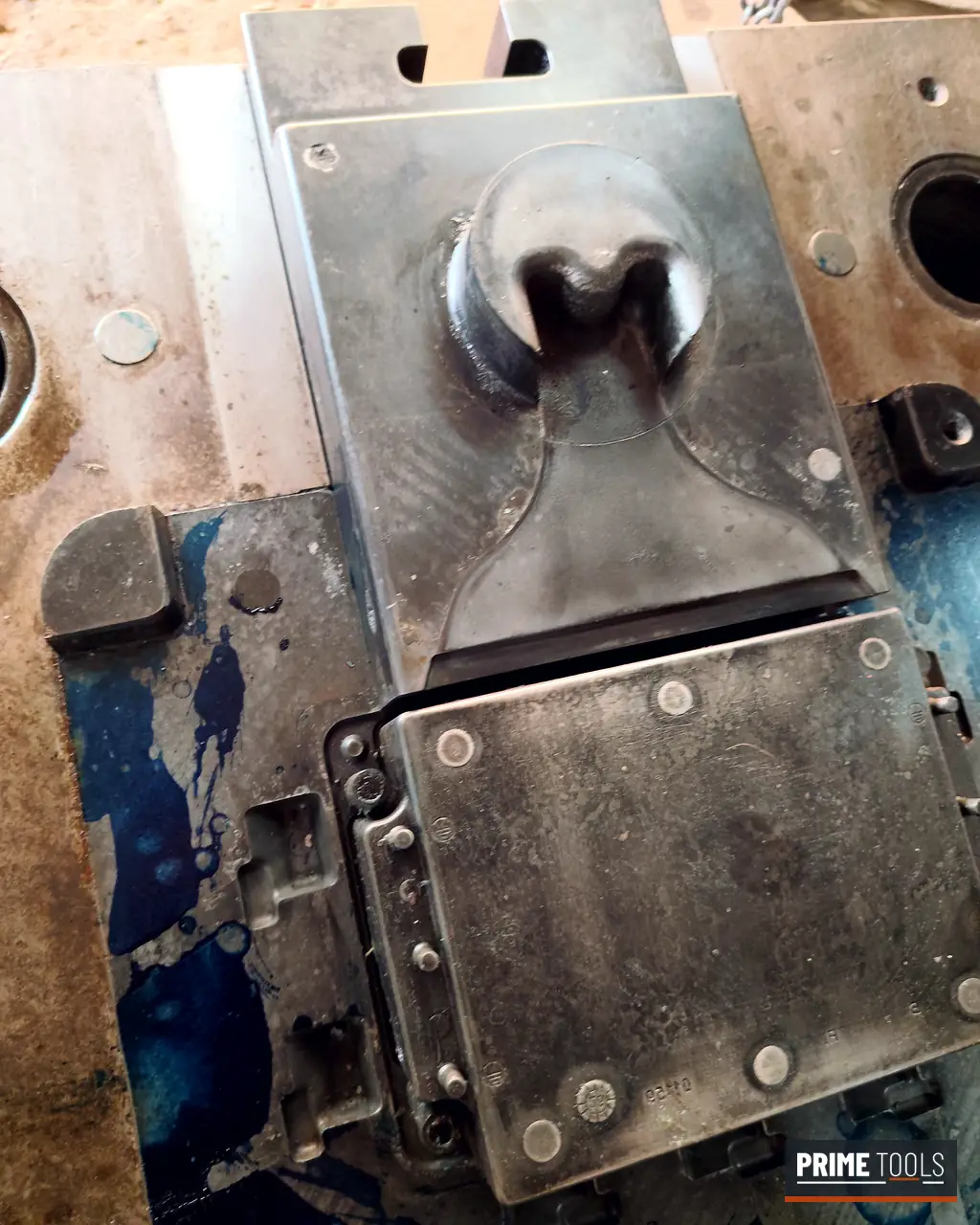
Watch the castings, not just the die. These signs usually mean maintenance or an insert change is due:
- Raised veins or a crazed pattern on the casting surface (heat checking on the die).
- Torn or rough areas where aluminium has soldered to the die.
- Flash growing at parting lines, slides or ejector pins.
- Dimension drift on features formed by worn cores or inserts.
- Rising scrap from porosity near eroded gates.
- Water in the casting area, which may point to a crack reaching a cooling line (stop and inspect immediately).
What to send for a die repair quote
Photos of the damaged areas, a few defective and good castings, the shot count if known, the die drawing or model if available, and details of past repairs. With this we can tell you whether a local repair is enough, or whether new inserts will save money over repeated repairs. Our recent die casting jobs show the kinds of repairs and inserts we handle.
Free DFM review
Planning a mould for this part?
Send your 3D model or drawing, material and annual volume. Our engineers reply within one working day.
Frequently asked questions
What is the main difference between high pressure and gravity die casting?
HPDC injects metal at high speed and pressure for thin, detailed parts and fast cycles. GDC pours metal by gravity for thicker, denser, heat-treatable parts at slower cycles.
Which is better, HPDC or GDC?
Neither is better overall. HPDC suits high-volume thin-walled parts; GDC suits structural parts needing low porosity and heat treatment.
What steel is used for die casting dies?
Hot-work tool steels such as H13 (1.2344) and premium variants, hardened and often nitrided or coated.
What is heat checking in a die casting die?
A network of fine surface cracks caused by repeated heating and cooling. It appears as raised lines on castings and is a main cause of die replacement.
Can a die casting die be repaired?
Yes. Local damage can often be welded, re-machined and polished. Badly worn inserts are replaced with new ones.
Does Prime Tools build complete die casting dies?
Our die casting work is repair, modification and new replacement inserts for existing HPDC and GDC dies.

Written by the Prime Tools engineering team
Compression mould makers in MIDC Ahilyanagar, Maharashtra, since 2015. We design and build moulds for SMC, DMC/BMC, Bakelite, melamine and urea parts, and repair die casting dies. About us
Keep reading
Products
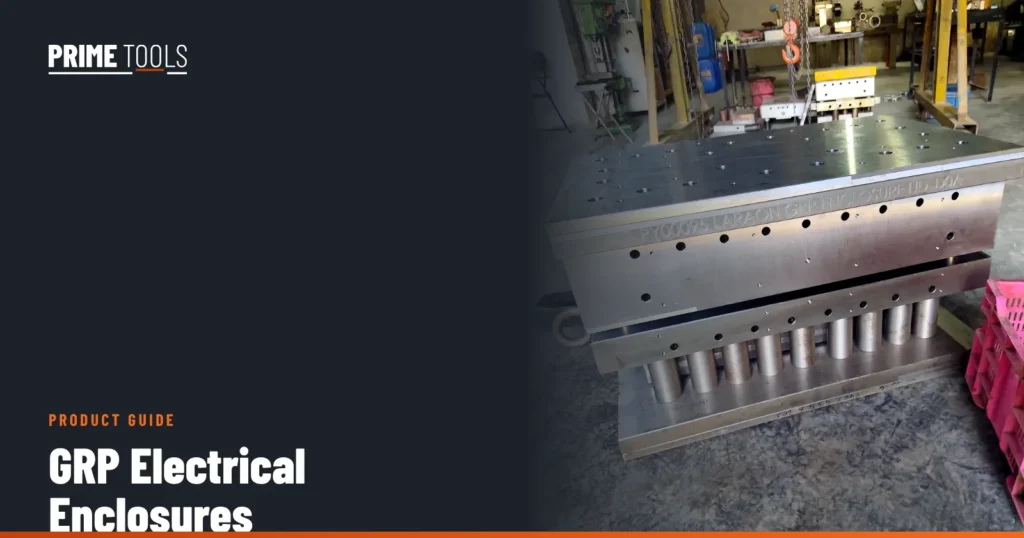
GRP Electrical Enclosures: Why Utilities Choose SMC, and How They Are Made
GRP electrical enclosures explained: what GRP and SMC are, benefits over steel, IP and IK ratings, kiosk and cabinet types, and how GRP enclosures…
6 min read · Read article →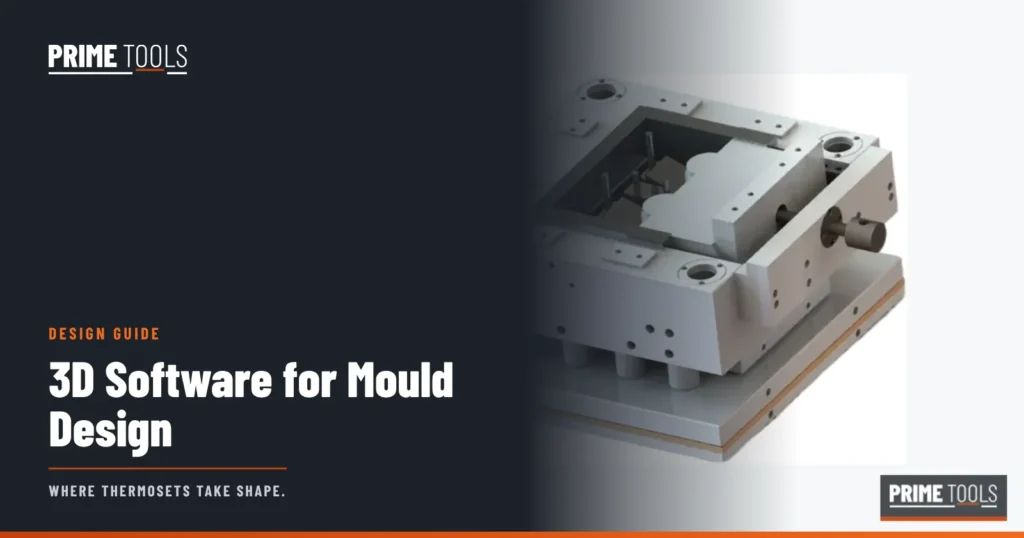
Design
3D Software for Mould Design: What Toolmakers Actually Use
The 3D CAD, CAM and simulation software toolmakers use for mould design: NX, SolidWorks, Creo, CATIA, Fusion, Mastercam, flow simulation and what files to…
5 min read · Read article →
Products
FRP Manhole Covers: How They Are Made, Load Classes, Sizes and FRP vs Cast Iron vs RCC
FRP manhole covers explained: how SMC covers are moulded, EN 124 load classes, common sizes, price factors, and FRP vs cast iron vs RCC…
6 min read · Read article →