
Battery Box for Inverters: Why SMC and BMC Are Used, and What to Look For
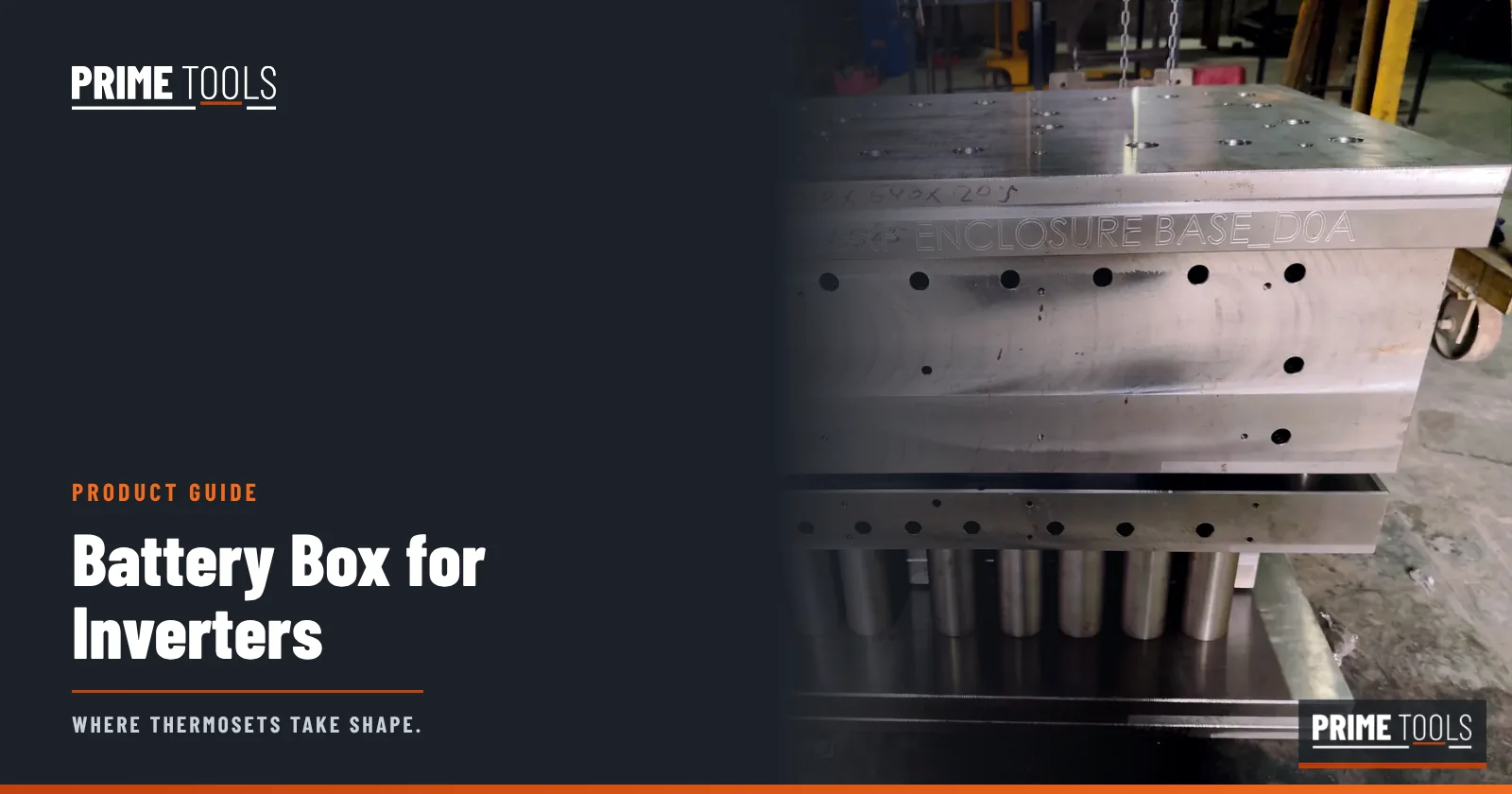
A battery box for an inverter is an enclosure or trolley that holds the battery, protects people and floors from acid and heat, and keeps the battery ventilated and stable. Battery boxes are made from moulded plastic (PP or ABS), sheet metal, or thermosets such as SMC and BMC. For outdoor, telecom, solar and high-heat installations, SMC battery enclosures are often preferred because they resist acid, heat, fire and UV, do not rust and insulate electrically.
Home inverter battery boxes and trolleys are a big search in India. Larger battery enclosures for telecom towers, solar streetlights, UPS and EV systems are an engineering product. At Prime Tools we build compression moulds for SMC enclosures and housings, so this guide focuses on materials, design features and how a moulded battery box is made.
Types of battery boxes
- Home inverter battery trolley: a wheeled base or cabinet for one or two tubular batteries, often branded by inverter makers. Usually PP or ABS.
- Inverter cabinet / battery box with cover: encloses the battery to protect children and pets, and keeps the area tidy.
- Outdoor battery enclosure: for solar streetlights, telecom sites and remote equipment, exposed to sun and rain.
- Underground or pole-mounted battery boxes: for solar streetlights, sealed against water and theft.
- Industrial and UPS battery cabinets: large racks or cabinets, often steel with insulating liners.
Battery box materials compared
| SMC / BMC (thermoset) | PP / ABS (thermoplastic) | Powder-coated steel | |
|---|---|---|---|
| Acid resistance | Very good | Very good (PP best) | Poor if coating is damaged |
| Heat resistance | Very high, does not melt | Moderate, can soften | High |
| Fire behaviour | Flame-retardant grades available | Can burn and drip unless FR grade | Does not burn |
| UV / outdoor | Very good with UV grade | PP/ABS degrade without UV stabiliser | Paint dependent |
| Electrical | Insulating | Insulating | Conductive |
| Strength / rigidity | High, keeps shape under heavy batteries | Medium, can creep | High |
| Corrosion | None | None | Rusts if coating fails |
| Cost | Medium | Low | Medium |
For a home inverter indoors, a PP trolley is usually enough. For a solar streetlight battery box on a pole in the sun, a telecom site or an EV application, SMC’s heat and UV resistance, rigidity and fire performance make a real difference over years.
What to look for in a battery box
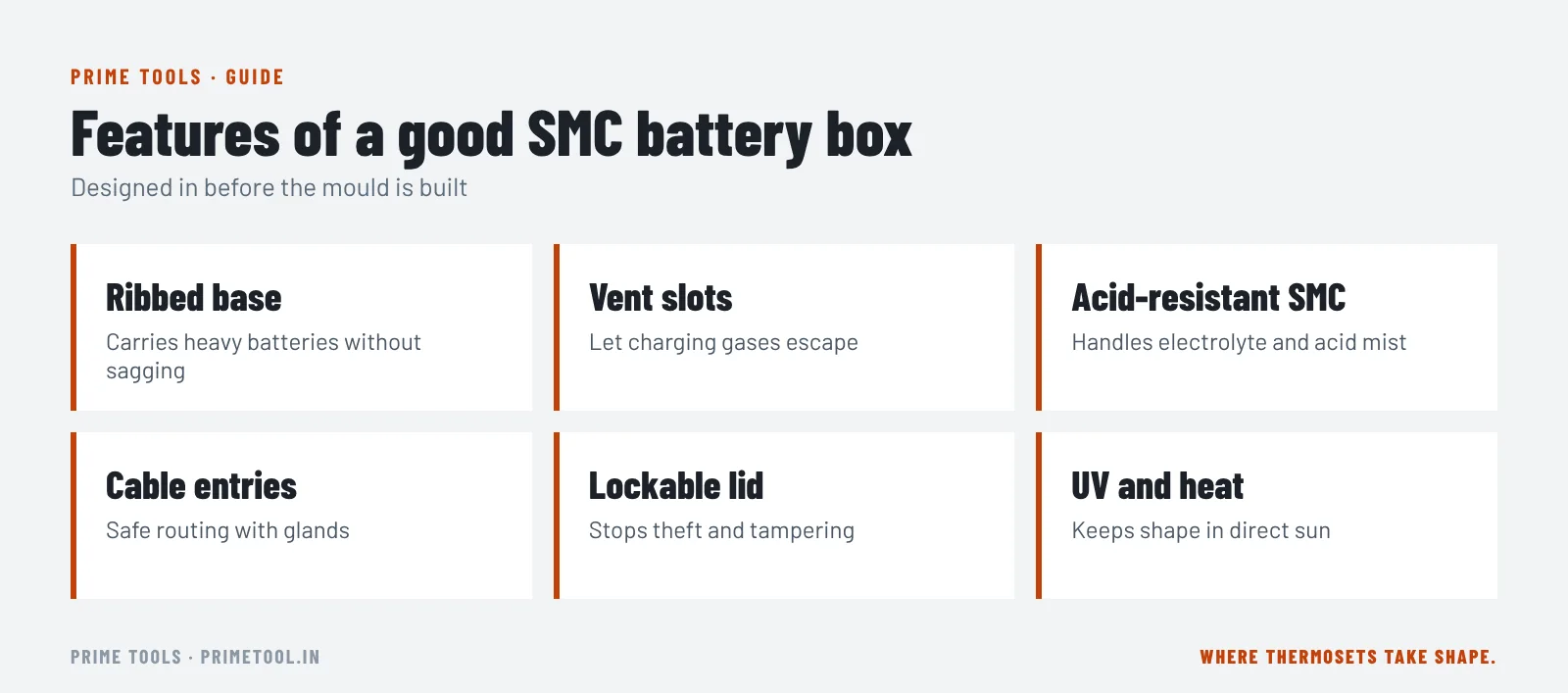
- Acid and electrolyte resistance: lead-acid batteries can leak or vent acid mist.
- Ventilation: lead-acid batteries release hydrogen when charging. Vents prevent gas build-up. Lithium systems need thermal management instead.
- Strength for the battery weight: tubular inverter batteries are heavy; the base must not sag or creep.
- Heat: batteries and inverters get warm, and outdoor boxes face direct sun.
- Cable entries and glands: safe routing for battery cables.
- Electrical insulation: prevents accidental short circuits through the box.
- Lockability: for outdoor and streetlight boxes, to prevent theft.
- Drainage or sealing: outdoor boxes need IP protection from rain.
How SMC battery boxes are moulded
SMC battery boxes are compression moulded like other SMC enclosures:
- Design: wall thickness, ribs under the base for load, vent slots, lid fit, cable entries and mounting points.
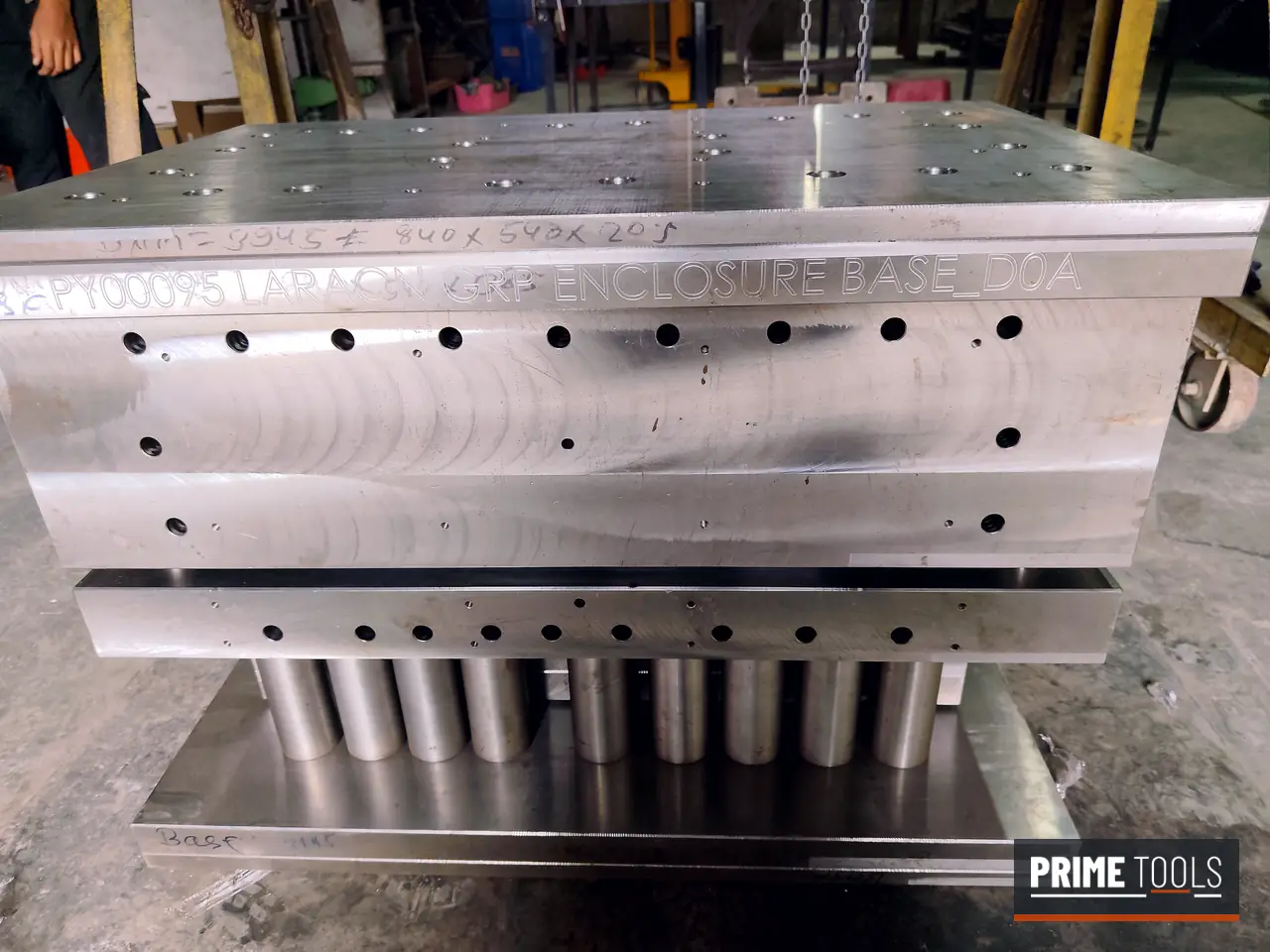
- Mould: a hardened steel cavity and core with shear edges, heating and ejection. Vent slots and entries are formed by core pins or inserts.
- Moulding: a charge of SMC is pressed and cured in a heated press.
- Finishing: flash removal, inserts, gaskets, hinges and locks.
Deep boxes need enough draft to release, even walls to cure evenly and stiff ribs in the base. Our DFM review checks these before a mould is built.
Battery boxes for solar, telecom and EV
The fastest-growing demand for battery enclosures is outside the home:
- Solar streetlights and off-grid systems: pole-mounted or ground boxes exposed to sun, rain and theft.
- Telecom towers: battery backup cabinets at remote sites.
- EV charging and energy storage: enclosures and covers for battery packs and power electronics, where flame retardancy and insulation are critical. See our EV charging and solar and renewables pages.
Common battery box problems and how design prevents them
- Base cracking or sagging: caused by thin walls or no ribs under heavy batteries. A ribbed base with even wall thickness solves it.
- Corrosion of terminals and fixings: caused by trapped acid mist. Vents and non-metallic fixings help.
- Water entry outdoors: caused by poor lid design. A drip edge, gasket groove and sloped top keep rain out.
- Fading and brittleness: caused by non-UV-stabilised plastic in the sun. UV-stable SMC keeps colour and strength.
- Lids that warp and stop closing: caused by uneven cure or thermoplastic creep. A rigid SMC lid with ribs stays flat.
Lithium batteries change the brief
More systems now use lithium-ion batteries. They do not vent hydrogen in normal use like flooded lead-acid batteries, but they need thermal management, fire containment and electrical insulation. Flame-retardant SMC is a strong choice for lithium battery covers and housings because it insulates, does not melt and resists fire. Designs often add internal ribs for cell support and channels for cooling. If you are moving from lead-acid to lithium, review the enclosure design rather than reusing the old box.
Free DFM review
Planning a mould for this part?
Send your 3D model or drawing, material and annual volume. Our engineers reply within one working day.
Frequently asked questions
Which material is best for an inverter battery box?
For indoor home use, PP or ABS plastic is usually enough. For outdoor, hot or industrial use, SMC is better because it resists heat, UV, acid and fire.
Does an inverter battery box need ventilation?
Yes, for lead-acid batteries. They release hydrogen while charging, so the box must allow gas to escape.
Is SMC acid resistant?
SMC has good resistance to battery electrolyte and acid mist. Vinyl ester grades offer even higher chemical resistance.
Can a battery box be made of metal?
Yes, but metal can rust if the coating is damaged and is electrically conductive. Plastic or SMC boxes avoid both issues.
What is a solar battery box?
An enclosure that holds the battery of a solar system, often pole-mounted or underground for streetlights, built to resist sun, rain and theft.
Can you make a mould for my battery box design?
Yes. Prime Tools designs and builds SMC compression moulds for battery boxes, enclosures and lids. Send your model for a free DFM review.

Written by the Prime Tools engineering team
Compression mould makers in MIDC Ahilyanagar, Maharashtra, since 2015. We design and build moulds for SMC, DMC/BMC, Bakelite, melamine and urea parts, and repair die casting dies. About us
Keep reading
Products
FRP vs GI vs SS Cable Trays: Types, Comparison and How to Choose
Cable tray types (perforated, ladder, raceway) and materials (FRP/GRP, GI, SS, aluminium) compared on corrosion, strength, weight, cost and where each is used.
6 min read · Read article →
Products
SMC Junction Boxes and Electric Meter Boxes: Materials, IP Ratings and Mould Design
SMC junction box, FRP, ABS and metal junction boxes and meter boxes compared: IP ratings, single and three phase boxes, and SMC box moulds.
6 min read · Read article →
Products
GRP Electrical Enclosures: Why Utilities Choose SMC, and How They Are Made
GRP electrical enclosures explained: what GRP and SMC are, benefits over steel, IP and IK ratings, kiosk and cabinet types, and how GRP enclosures…
6 min read · Read article →