
Thermoset vs Thermoplastic: Which Material Is Right for Your Part?
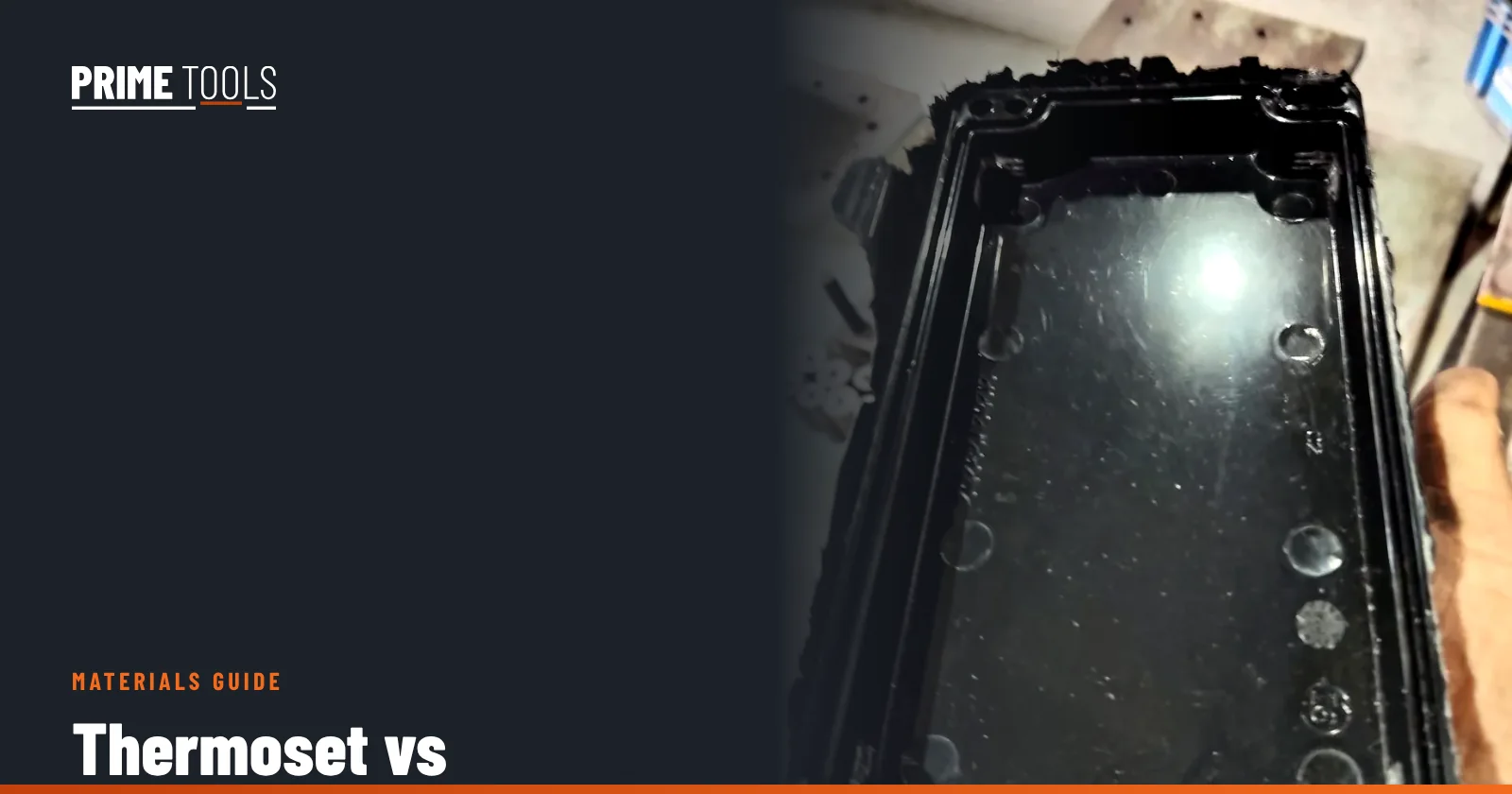
The difference between a thermoset and a thermoplastic is what happens when you heat them. A thermoplastic softens and melts when heated and hardens again when cooled, so it can be remelted and reshaped. A thermoset cures through a chemical reaction (crosslinking) when heated in the mould; once cured it will not melt again, it only chars at very high temperature. That single difference drives everything else: heat resistance, strength, the moulding process, mould design, cost and recyclability.
At Prime Tools we build moulds for thermosets: SMC, DMC/BMC, phenolic (Bakelite), melamine and urea-formaldehyde. Many of our customers come to us after a thermoplastic part failed in heat, in fire tests or outdoors. This guide explains the choice honestly, including where a thermoplastic is the better option.
How thermosets and thermoplastics behave
Think of a thermoplastic like wax and a thermoset like an egg. Wax melts when warm and sets when cool, as many times as you like. An egg, once cooked, stays solid. You cannot “uncook” it.
In a thermoplastic, the long polymer chains are tangled but not chemically linked. Heat lets them slide past each other (melting). Cooling locks them in place again.
In a thermoset, the resin starts as smaller molecules. Heat and a catalyst trigger a reaction that links them into one giant three-dimensional network. That network is permanent.
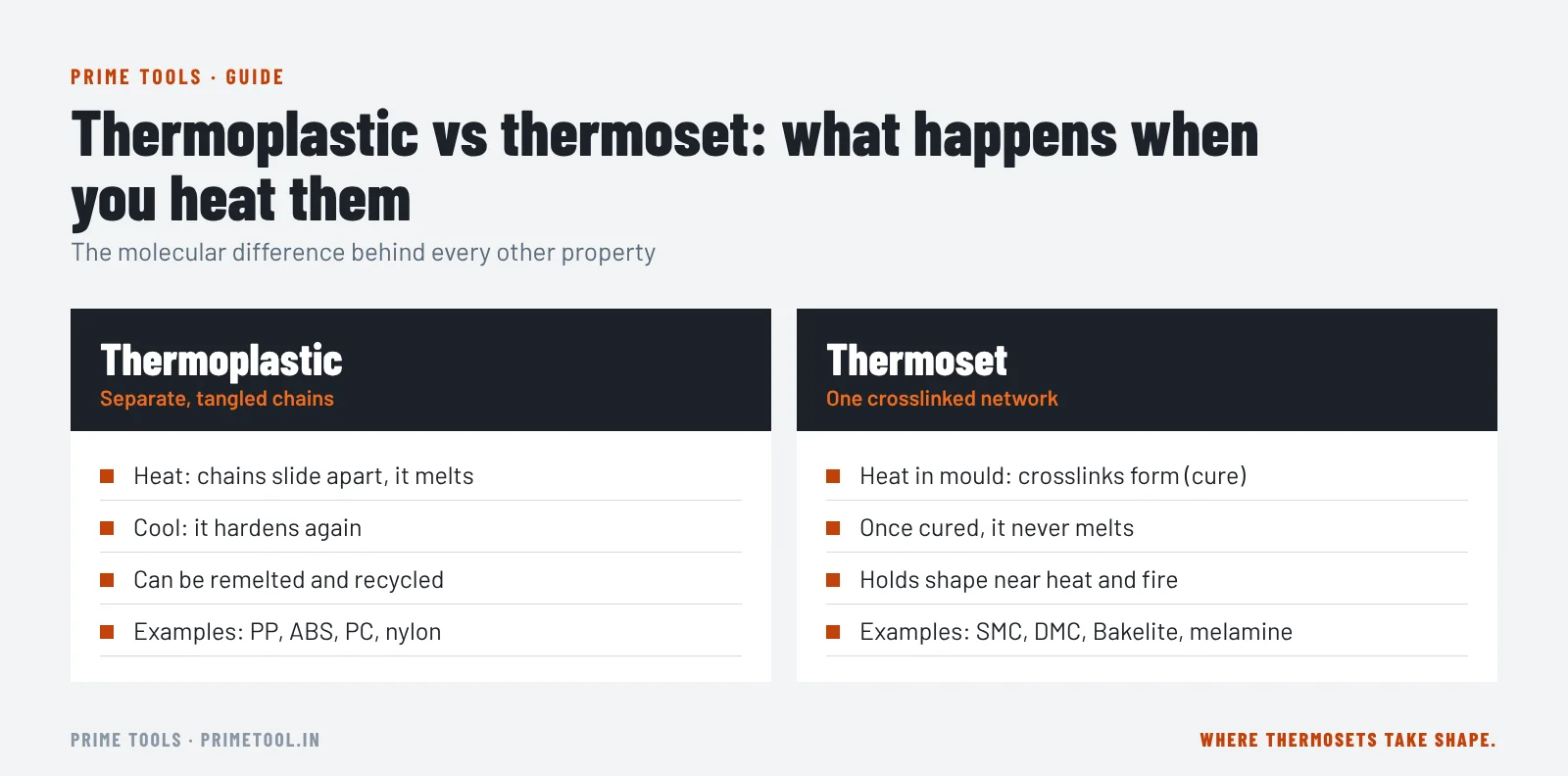
Thermoset vs thermoplastic: comparison table
| Thermoset | Thermoplastic | |
|---|---|---|
| Behaviour on heating | Cures once, does not melt afterwards | Softens and melts, can be remelted |
| Heat resistance | Very high, holds shape near heat | Limited by softening / melting point |
| Flame performance | Many grades are inherently flame retardant, low smoke | Often needs flame-retardant additives |
| Creep and dimensional stability | Excellent | Moderate, can creep under load and heat |
| Electrical insulation | Excellent, high tracking resistance | Good, varies by grade |
| Toughness / impact | Lower, more brittle (unless fibre reinforced) | Often higher, tougher |
| Moulding process | Compression, transfer, thermoset injection | Injection, extrusion, blow moulding |
| Cycle time | Longer (cure time) | Short (cooling time) |
| Mould temperature | Hot mould (cures the part) | Cooled mould (freezes the part) |
| Finishing | Flash removal usually needed | Little or none |
| Recycling | Cannot be remelted | Can be reground and remelted |
Common examples
Thermosets:
- SMC and BMC/DMC (glass-reinforced polyester): enclosures, meter boxes, switchgear, lamp holders. Read SMC vs BMC.
- Phenolic (Bakelite): handles, switch parts, commutators, brake and electrical components.
- Melamine: tableware, wiring accessories, decorative laminates.
- Urea-formaldehyde (UF): switch plates, sockets, closures.
- Epoxy: encapsulation, composites, adhesives.
Thermoplastics:
- Polypropylene (PP), polyethylene (PE): packaging, containers, pipes.
- ABS, polycarbonate (PC): appliance housings, covers, transparent parts.
- Nylon (PA), PBT: connectors, gears, clips.
- PVC: pipes, conduits, profiles.
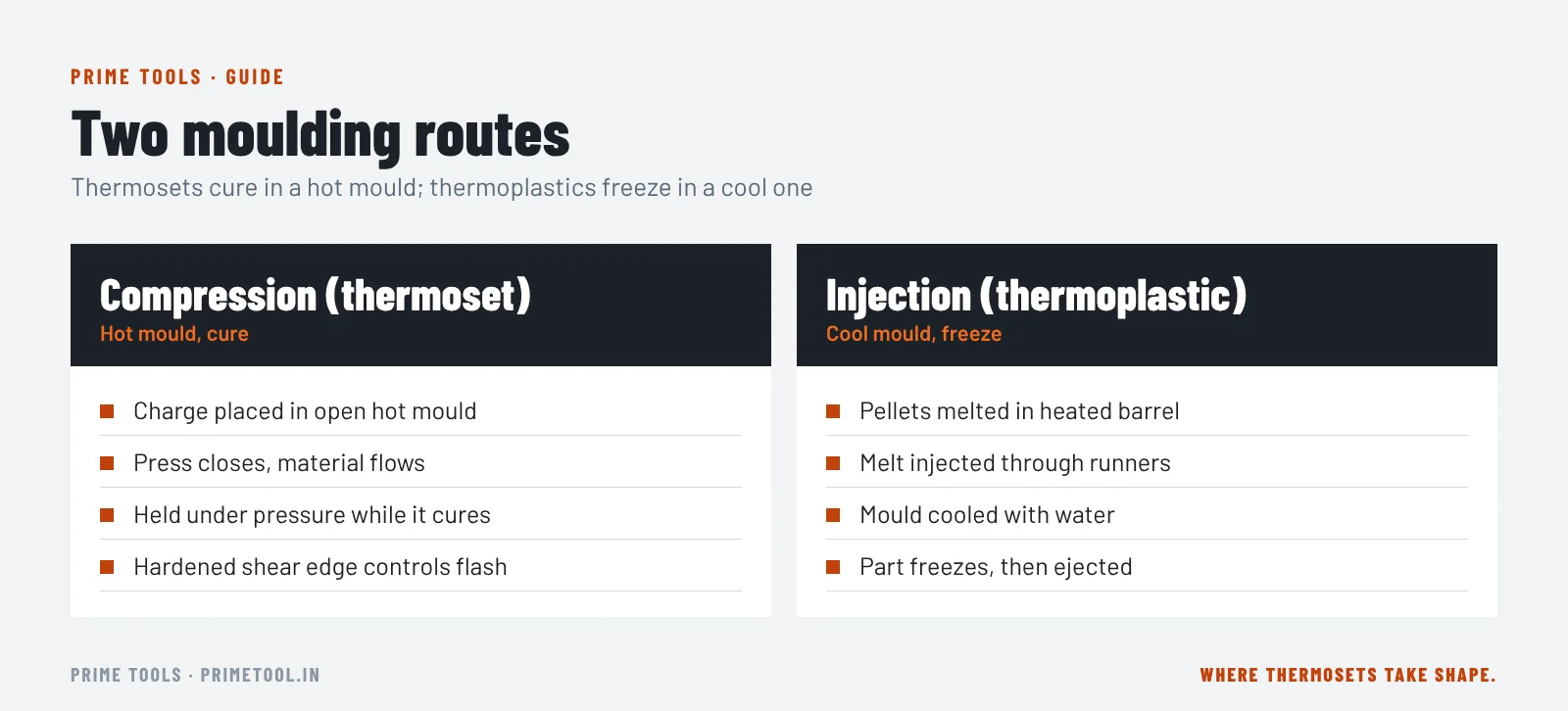
How the moulding process differs
The material choice changes the whole tool.
Thermoplastic injection moulding melts pellets in a heated barrel, injects the melt into a cooled mould, and waits for it to freeze. Cycles can be very short. The mould is kept relatively cool with water channels.
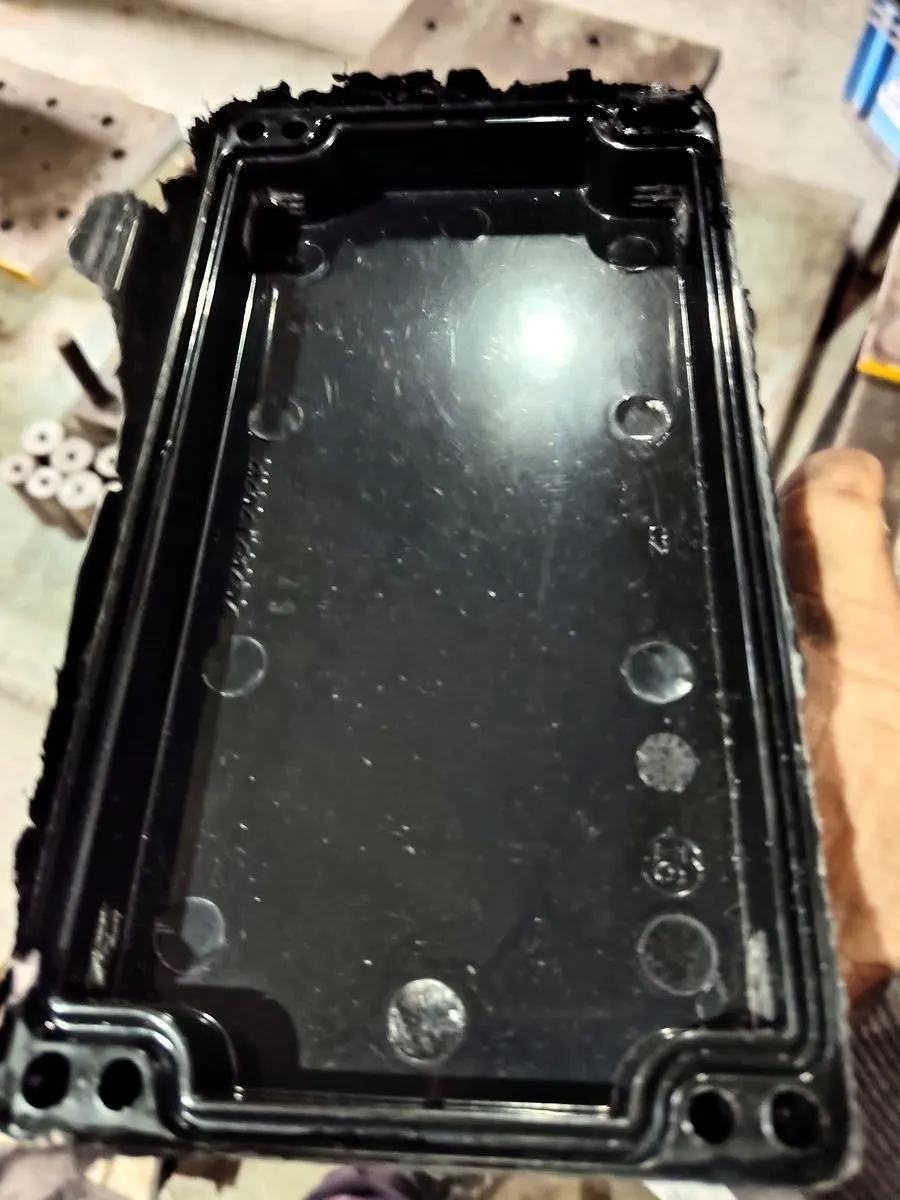
Thermoset compression moulding places a measured charge of compound (sheet or dough) into a hot mould, closes the press, and holds pressure while the material cures. The mould is heated, often with cartridge heaters, to the curing temperature. Shear edges trap the material and control flash. See our step-by-step guide to the compression moulding process.
Because a thermoset mould is hot and the compound is often abrasive (glass fibre and mineral filler), it needs hardened steel, careful heater layout and good polish. You can see how we build them on our compression moulds page.
When to choose a thermoset
Choose a thermoset when your part:
- Sits near heat (lamps, motors, heaters, hot contacts) and must not soften or deform.
- Must pass demanding flame or glow-wire tests for electrical products.
- Carries load at temperature over many years (creep resistance).
- Needs excellent electrical insulation and tracking resistance.
- Is large and outdoors and must keep its shape and strength in sun and rain (SMC enclosures and covers).
- Must hold tight dimensions through heat cycles.
This is why switchgear, energy meter boxes, junction boxes, electrical enclosures, lighting housings and many automotive under-bonnet parts are thermosets.
When a thermoplastic is the better choice
We will tell you honestly when a thermoset is the wrong answer. Choose a thermoplastic when:
- The part needs high toughness or flexibility, for example snap-fit clips or living hinges.
- Volumes are very high and the part is small, so a fast injection cycle wins on cost.
- The part must be transparent (PC, PMMA).
- Recyclability is a priority.
- Operating temperatures are moderate and fire requirements are easily met.
Cost: which is cheaper?
It depends on the part. Thermoplastic injection usually has faster cycles and no deflashing, so for small, high-volume parts it is often cheaper per part. Thermosets have longer cycles and need flash removal, but the raw material can be cheaper, compression moulds are often less complex than injection tools for large parts, and one thermoset part can replace a metal part plus coating. For large parts like enclosures, SMC compression moulding is very cost-competitive.
Our free mould costing guide explains what drives tooling cost: steel, machining, standard parts and risk.
Real-world switch: when parts move from thermoplastic to thermoset
We regularly see three situations where a part moves from a thermoplastic to a thermoset:
- Heat deformation in service. A housing near a lamp, heater or contact softens over months, then warps or cracks around screws. A DMC or phenolic part keeps its shape.
- Failed fire or glow-wire tests. An electrical product fails certification with a standard thermoplastic, and flame-retardant grades become expensive. ATH-filled thermosets often pass with margin.
- Outdoor enclosures that sag or fade. A large thermoplastic box loses stiffness in the sun, and the lid no longer seals. An SMC enclosure stays rigid and flat for decades.
The switch is not free. The part may need redesign for compression moulding: more even walls, draft on all vertical faces, generous radii, no snap fits that rely on flexibility, and a parting line that suits a shear edge. A new compression mould is also needed. That is why we always start with a DFM review: it shows what has to change and what it will cost before you commit.
Thermoset families in brief
- Unsaturated polyester (SMC, DMC/BMC): the workhorse for electrical and outdoor parts.
- Vinyl ester: better chemical and corrosion resistance.
- Phenolic: excellent heat resistance and low smoke, usually dark coloured.
- Melamine and urea: hard, scratch-resistant, light colours, good for wiring accessories and tableware.
- Epoxy: high performance composites, encapsulation and adhesives.
Free DFM review
Planning a mould for this part?
Send your 3D model or drawing, material and annual volume. Our engineers reply within one working day.
Frequently asked questions
What is the main difference between thermoset and thermoplastic?
A thermoplastic melts when heated and can be reshaped. A thermoset cures permanently when heated in the mould and will not melt again.
Is Bakelite a thermoset or thermoplastic?
Bakelite (phenol-formaldehyde) is a thermoset. It was one of the first synthetic thermosets and is still used for heat-resistant electrical and handle parts.
Is SMC a thermoset?
Yes. SMC is a glass-fibre-reinforced polyester or vinyl ester thermoset, moulded by compression in a heated mould.
Which is stronger, thermoset or thermoplastic?
Fibre-reinforced thermosets such as SMC are very stiff and strong and keep their strength at high temperature. Unreinforced thermosets can be brittle. Tough thermoplastics absorb impact better.
Can thermosets be recycled?
They cannot be remelted. Ground thermoset scrap can be used as filler, and research into chemical recycling is ongoing.
Why are electrical parts made from thermosets?
Thermosets combine heat resistance, flame retardancy, tracking resistance and dimensional stability, which electrical safety standards demand.

Written by the Prime Tools engineering team
Compression mould makers in MIDC Ahilyanagar, Maharashtra, since 2015. We design and build moulds for SMC, DMC/BMC, Bakelite, melamine and urea parts, and repair die casting dies. About us
Keep reading
Buyer guides
How to Choose a Mould Maker in India: A 15-Point Checklist
A checklist for choosing a mould maker in India: capability, DFM, steel, machines, trials, quality, export readiness, cost and red flags.
6 min read · Read article →
Die casting
Die Casting vs Sand Casting vs Investment Casting: Which Process Fits Your Part?
Die casting, sand casting and investment casting compared on cost, tooling, volume, tolerances, finish, metals and part size.
5 min read · Read article →
Products
FRP vs GI vs SS Cable Trays: Types, Comparison and How to Choose
Cable tray types (perforated, ladder, raceway) and materials (FRP/GRP, GI, SS, aluminium) compared on corrosion, strength, weight, cost and where each is used.
6 min read · Read article →