
SMC Junction Boxes and Electric Meter Boxes: Materials, IP Ratings and Mould Design
An SMC junction box or meter box is an electrical enclosure moulded from sheet moulding compound, a glass-reinforced polyester thermoset. Compared with metal and many thermoplastic boxes, SMC boxes do not rust, insulate electrically, resist heat and fire, stay rigid in sun and rain, and are hard to tamper with, which is why electricity boards and utilities in India specify them for outdoor meter boxes and junction boxes.
Junction boxes and meter boxes are among the most common parts produced in the moulds we build at Prime Tools. This guide compares materials, explains IP ratings for waterproof boxes, describes single and three-phase meter boxes, and shows what makes a good mould for SMC boxes.
SMC junction box vs other junction box materials
| SMC / FRP | ABS | Polycarbonate (PC) | Metal (MS / GI / aluminium) | |
|---|---|---|---|---|
| Heat resistance | Very high (thermoset) | Moderate | Good | Very high |
| Fire behaviour | Flame-retardant grades, does not drip | Can burn and drip unless FR grade | Self-extinguishing grades | Does not burn |
| UV / outdoor life | Very good (UV-stable grade) | Poor to moderate | Good with UV grade | Paint dependent |
| Electrical | Insulating | Insulating | Insulating | Conductive, must be earthed |
| Corrosion | None | None | None | MS rusts; GI and aluminium better |
| Impact | Good, rigid | Good | Very good | Good, can dent |
| Cost | Moderate | Low | Higher | Varies |
| Best use | Outdoor, utility, heat, fire | Indoor, light duty | Transparent lids, indoor/outdoor | Industrial, flameproof |
FRP junction box vs SMC junction box: most “FRP” junction boxes in India are SMC moulded. The terms overlap.
Metal junction boxes remain the choice for flameproof (Ex d) hazardous areas, where cast aluminium or steel enclosures are certified to contain an internal explosion.
Types of junction boxes
- Waterproof outdoor junction boxes for street lighting, solar and cable joints.
- Extension junction boxes to extend cable runs or connect circuits.
- Lighting junction boxes for poles and ceilings.
- Motor junction boxes (terminal boxes) on electric motors, usually cast metal or thermoset.
- Solar junction boxes on PV modules and combiner boxes in solar plants.
- 4-way and multi-way junction boxes with multiple cable entries.
Electric meter boxes
Electricity boards and housing projects need outdoor meter boxes that protect the meter, prevent tampering and stand up to sun and rain for decades. Common types:
- Single-phase meter box: holds one meter plus MCB, often with a window to read the meter.
- Three-phase meter box: larger, for three-phase meters, CTs and protective devices.
- Multi-meter boxes: for apartment buildings and commercial complexes.
- Water meter boxes: for water utilities, often ground-level.
Key features: transparent or window lid (PC) for reading, seal points for the utility’s seal, cable entries top and bottom, mounting points, ventilation where needed and tamper-proof screws or locks. See our industry page on energy meter boxes.
Waterproof junction boxes and IP ratings
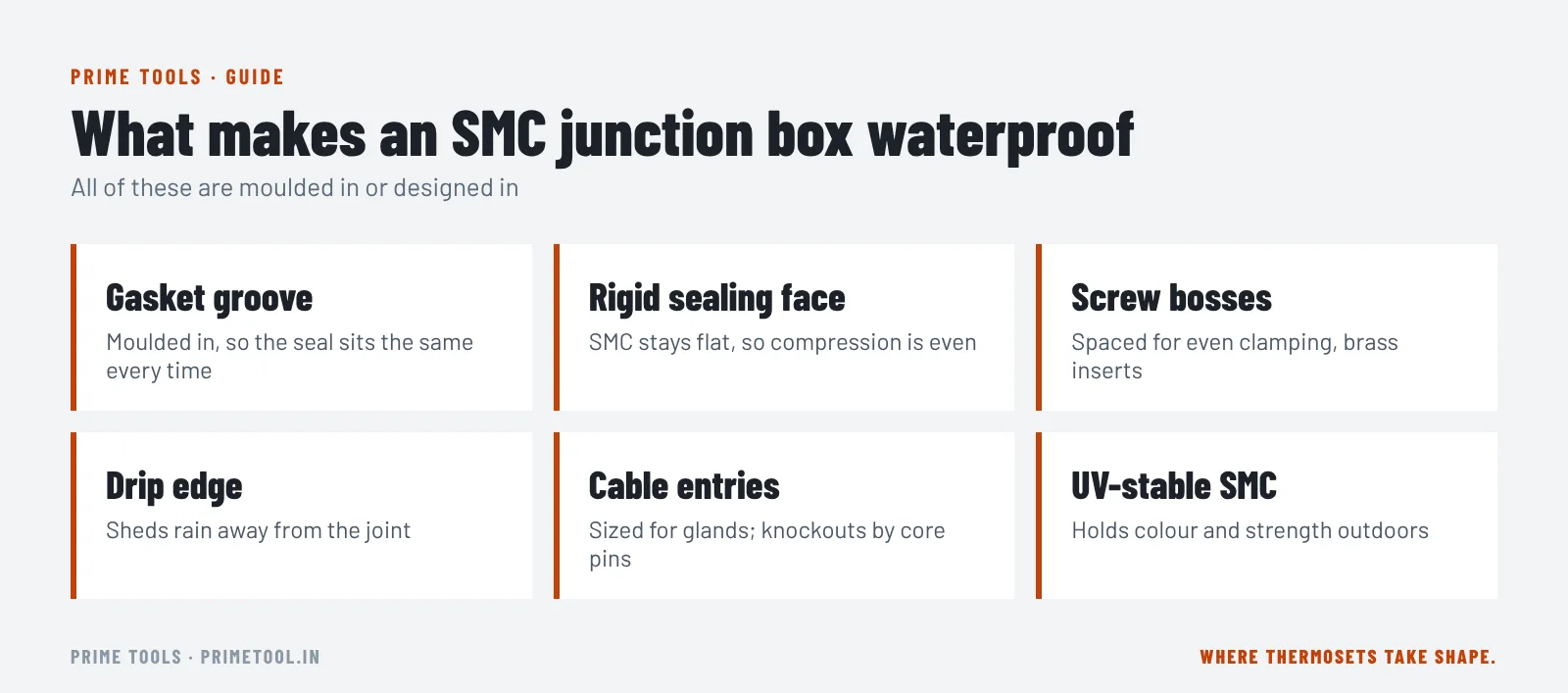
“Waterproof” usually means a rating of IP65 (dust tight, water jets), IP66 (powerful jets) or IP67 (temporary immersion). The box material is rarely the weak point: sealing depends on design.
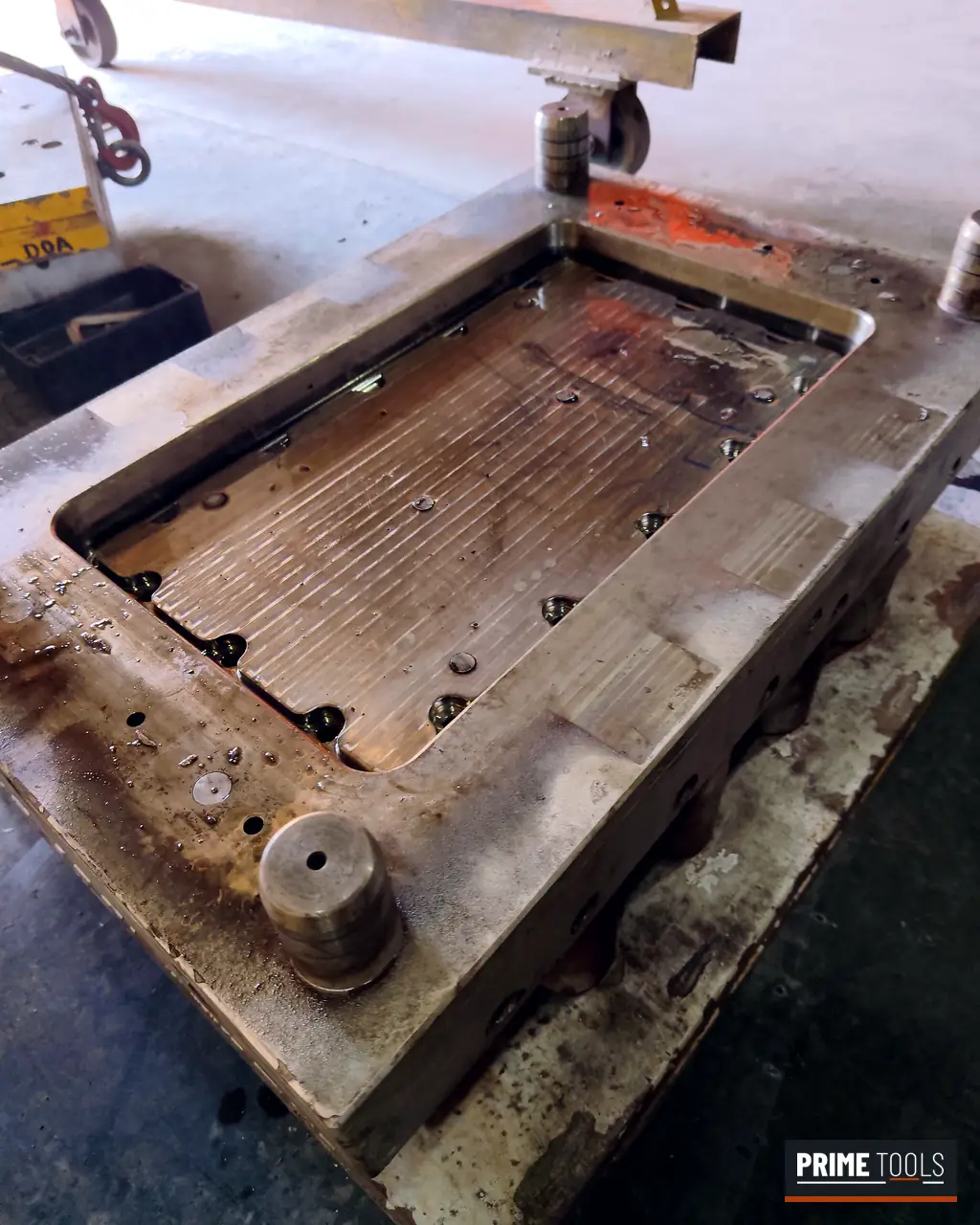
- Moulded gasket groove in the base or lid, so the gasket sits in the same place every time.
- Flat, rigid sealing faces: SMC’s stiffness helps keep the gasket compressed evenly.
- Enough screws, positioned so the lid clamps evenly.
- Proper cable glands in the entries.
- Drip edges on the lid.
How SMC boxes are moulded and what the mould needs
SMC junction and meter boxes are compression moulded: a charge of SMC is placed in a heated steel mould, pressed, cured and ejected. The base and lid are usually separate moulds, and small boxes can run as family or multi-cavity tools.
What makes a good box mould:
- Thin, even walls with ribs for rigidity without long cure times.
- Hardened shear edges around the perimeter for low flash and clean edges.
- Core pins for cable entries and knockouts, sized so they do not break under flow.
- Bosses for screws and inserts, with brass inserts moulded in where needed.
- Gasket groove and sealing face accurate to the design.
- Logo and marking inserts for the utility or brand.
- Even heating and good ejection so boxes come out flat and square.
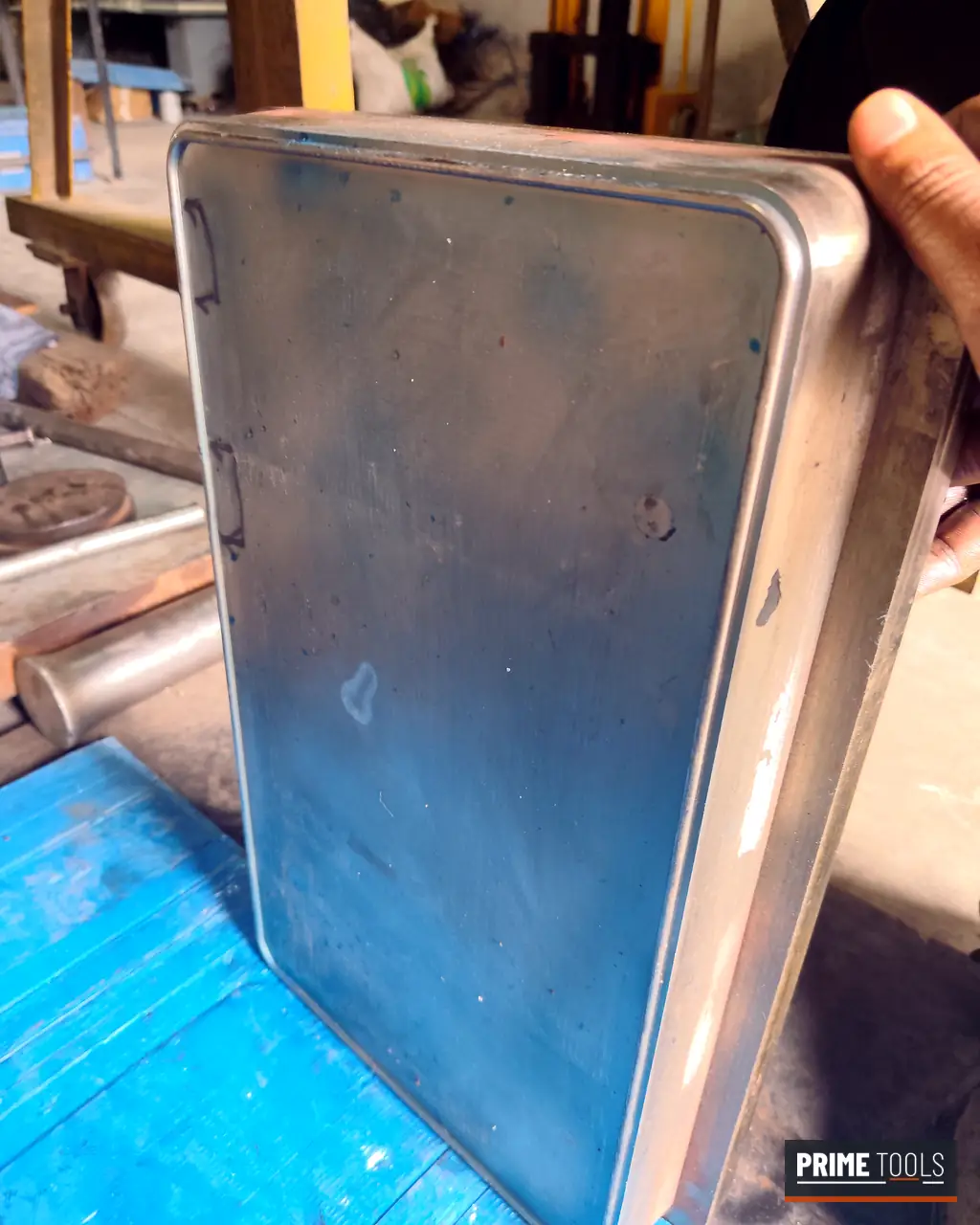
Our SMC moulds and junction and distribution boxes pages show more examples.
What drives junction box and meter box price
Buyers often search for “junction box price” or “meter box price”. The part price depends on size, wall thickness, material grade (FR, UV), number of inserts, gasket type, window material and order volume. For manufacturers, the mould cost depends on size, cavities, steel, and the number of core pins and inserts. Our free mould costing guide explains the main cost drivers.
Specifying an SMC meter box or junction box: a short checklist
When you write a specification or tender for SMC boxes, include:
- Material: SMC grade, flame rating (for example UL 94 V-0 or glow-wire temperature), UV stabilisation and colour.
- Ratings: IP rating for the complete assembly with gasket, and IK impact rating.
- Dimensions: internal space for the meter, MCB or terminals, and mounting arrangement.
- Window: polycarbonate grade, UV resistance and fixing method.
- Sealing: seal points for the utility, tamper-proof screws or locks.
- Cable entries: number, size, position and knockouts.
- Markings: utility logo, rating labels, moulded or printed.
- Testing: type test reports and sample approval.
For manufacturers, matching these requirements starts in the mould. Gasket grooves, seal points, entries, logos and inserts are all decided in the mould design, so getting the specification early saves modifications later. If an existing box mould needs a design change, such as a new utility logo or an added entry, a mould modification is usually much cheaper than a new tool. See our mould repair and modification service.
Free DFM review
Planning a mould for this part?
Send your 3D model or drawing, material and annual volume. Our engineers reply within one working day.
Frequently asked questions
What is an SMC junction box?
A junction box moulded from SMC, a glass-reinforced thermoset. It is heat resistant, flame retardant, insulating and suitable for outdoor use.
Which is better, SMC or ABS junction box?
For outdoor, hot or fire-sensitive locations, SMC is better. ABS is cheaper and fine for indoor, light-duty use.
What IP rating does a waterproof junction box need?
Typically IP65 or higher for outdoor use, IP66 for strong water jets and IP67 for temporary immersion.
Why are meter boxes made of SMC?
SMC resists UV, heat and fire, does not rust, insulates electrically and is hard to tamper with, which utilities need for outdoor meter installations.
What is the difference between single-phase and three-phase meter boxes?
A three-phase box is larger and holds a three-phase meter and related devices; a single-phase box holds a smaller single-phase meter and MCB.
Can you make moulds for junction boxes and meter boxes?
Yes. Prime Tools designs and builds SMC compression moulds for junction box and meter box bases and lids.

Written by the Prime Tools engineering team
Compression mould makers in MIDC Ahilyanagar, Maharashtra, since 2015. We design and build moulds for SMC, DMC/BMC, Bakelite, melamine and urea parts, and repair die casting dies. About us
Keep reading
Products
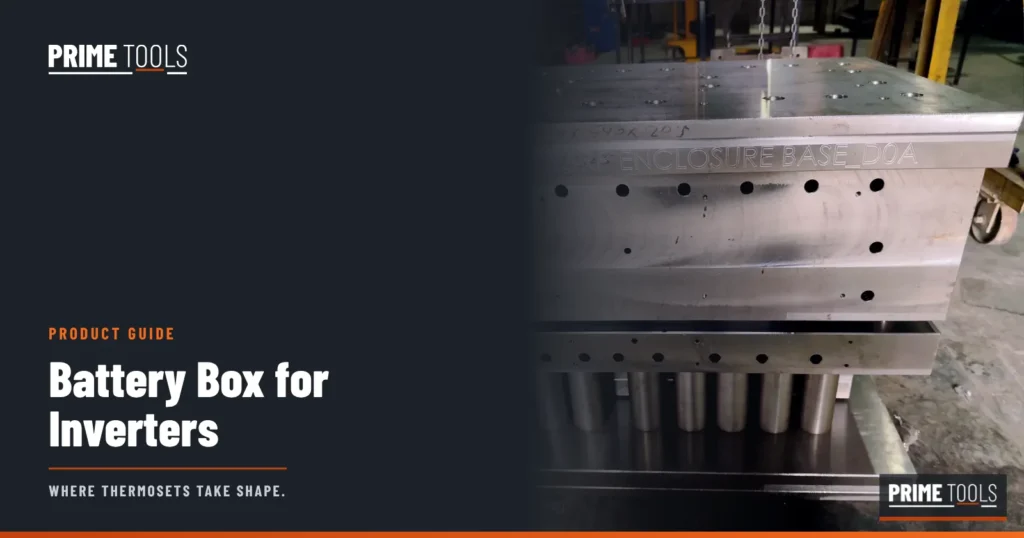
Battery Box for Inverters: Why SMC and BMC Are Used, and What to Look For
Inverter battery boxes compared: SMC/BMC, plastic and metal. Heat, acid and fire resistance, ventilation, and how SMC battery boxes are moulded.
5 min read · Read article →
Products
FRP vs GI vs SS Cable Trays: Types, Comparison and How to Choose
Cable tray types (perforated, ladder, raceway) and materials (FRP/GRP, GI, SS, aluminium) compared on corrosion, strength, weight, cost and where each is used.
6 min read · Read article →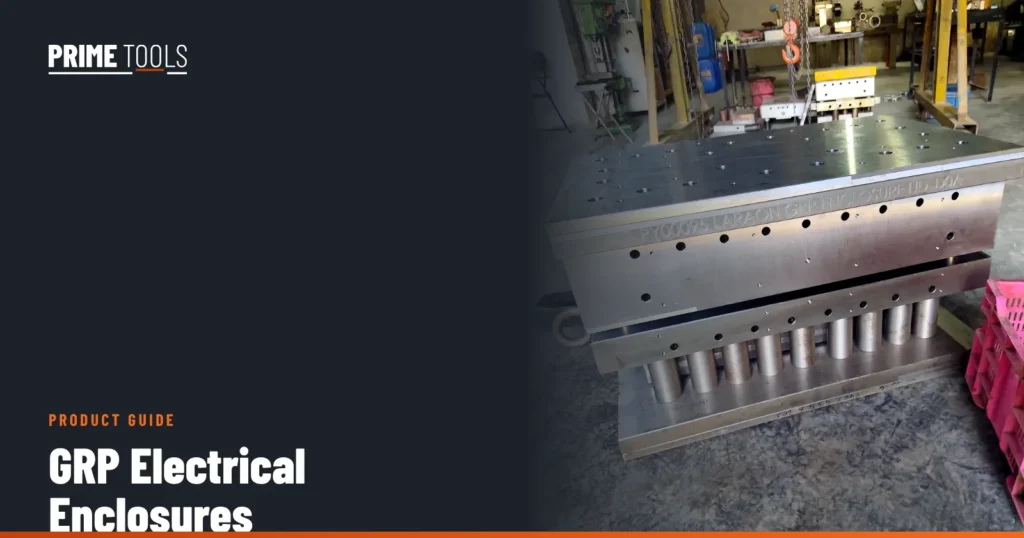
Products
GRP Electrical Enclosures: Why Utilities Choose SMC, and How They Are Made
GRP electrical enclosures explained: what GRP and SMC are, benefits over steel, IP and IK ratings, kiosk and cabinet types, and how GRP enclosures…
6 min read · Read article →