
FRP vs GI vs SS Cable Trays: Types, Comparison and How to Choose
An FRP cable tray is a cable support system made of fibre-reinforced plastic, usually glass-fibre polyester or vinyl ester, produced by pultrusion or moulding. FRP trays do not rust, are non-conductive and light, and are used in chemical plants, coastal areas, water treatment and solar farms. GI (galvanised iron) trays are cheaper and strong, and are the most common choice indoors and in dry areas. SS (stainless steel) trays give high corrosion resistance and strength but cost the most.
Cable trays are a high-search product in India. Prime Tools does not manufacture cable trays; we build moulds for thermoset (SMC/FRP) electrical products, including moulded fittings and covers used with FRP systems. This guide is an independent, engineering-level comparison to help buyers and specifiers choose.
Types of cable trays
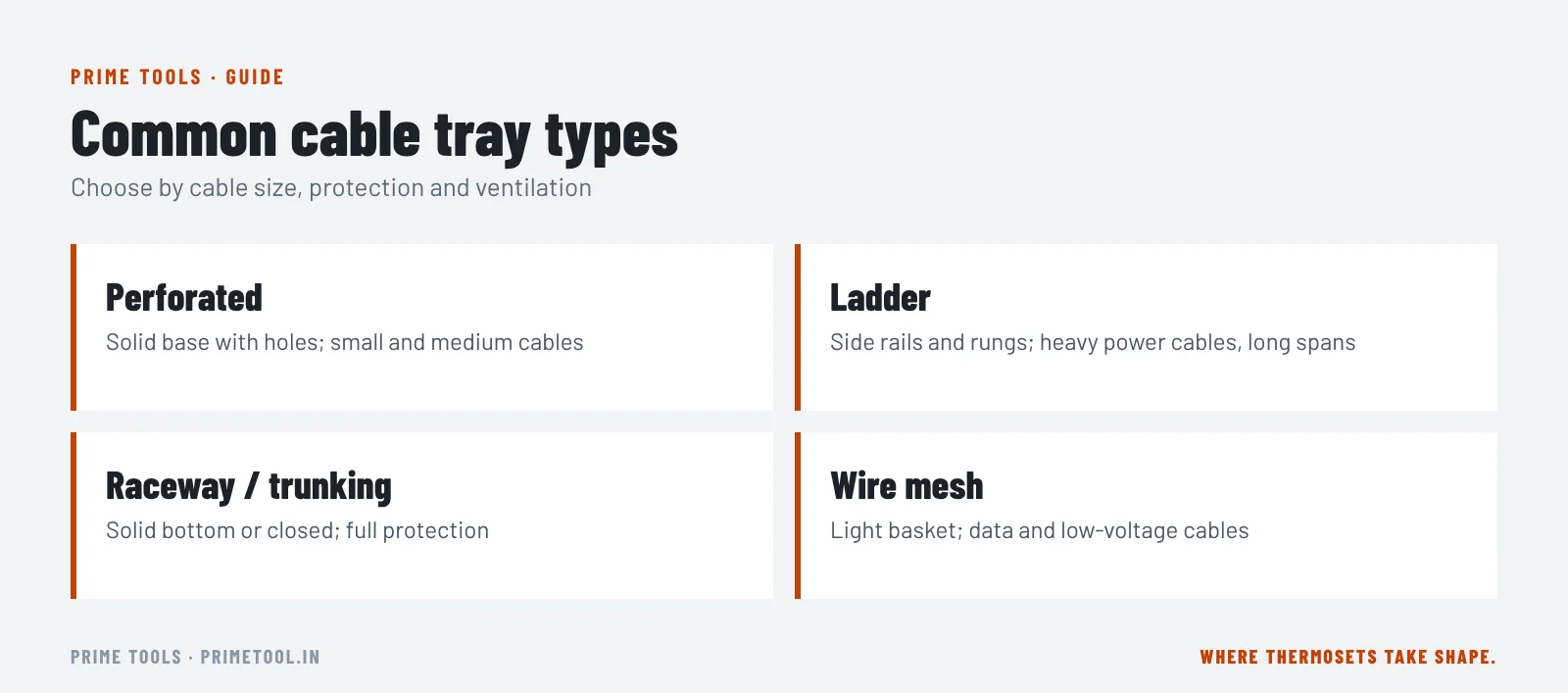
Perforated cable tray: a channel with a perforated base. Supports small and medium cables evenly while allowing ventilation and drainage. The most common type in buildings and factories.
Ladder cable tray: two side rails joined by rungs, like a ladder. Best for heavy power cables and long spans; excellent ventilation and easy cable fixing.
Raceway (solid-bottom) cable tray / trunking: a closed or solid-bottom channel, often with a cover. Protects cables from dust, sunlight and mechanical damage. Used where cables need full protection.
Wire mesh tray: a welded wire basket, light and flexible, mainly for data and low-voltage cables.
Cable tray materials compared
| FRP / GRP | GI (galvanised iron) | SS (stainless steel 304 / 316) | Aluminium | |
|---|---|---|---|---|
| Corrosion resistance | Excellent, including acids and salt | Good indoors; zinc wears outdoors | Excellent (316 best) | Very good |
| Electrical | Non-conductive | Conductive, earthed | Conductive, earthed | Conductive, earthed |
| Weight | Light | Heavy | Heavy | Light |
| Strength / span | Good (check load tables) | High | High | Medium |
| Fire behaviour | Needs fire-retardant grade | Does not burn | Does not burn | Does not burn |
| UV | UV-stable grade needed | Not affected | Not affected | Not affected |
| Installation | Easy cutting, no hot work | Cutting and touch-up of zinc | Harder to cut | Easy |
| Cost | Medium to high | Lowest | Highest | Medium |
| Typical use | Chemical, coastal, effluent, solar, metro | Buildings, factories, dry areas | Food, pharma, offshore, marine | Light-duty, weight-sensitive |
When to choose FRP cable trays
- Chemical and fertiliser plants, refineries and effluent treatment plants with acid or alkali fumes.
- Coastal and marine sites with salt-laden air.
- Water and sewage treatment with constant moisture and gases.
- Solar farms, where trays are outdoors for 25 years and non-conductive trays help safety.
- Metro, rail and tunnels, where low weight and corrosion resistance matter (with fire-rated grades).
- Cooling towers and humid process areas.
When to choose GI cable trays
- Indoor commercial and industrial buildings.
- Dry plant areas with no corrosive fumes.
- Projects where cost per metre is the main factor.
- Hot-dip galvanised (HDG) trays have a thicker zinc coating than pre-galvanised (GI sheet) trays and last much longer outdoors.
When to choose SS cable trays
- Food, dairy and pharmaceutical plants that need hygiene and washdown.
- Offshore and marine (use 316 grade).
- Highly corrosive areas where strength and fire behaviour of metal are required.
How FRP cable trays are made
Most FRP cable tray sections (side rails, rungs, channels) are made by pultrusion: glass rovings and mats are pulled through a resin bath and a heated die, giving a continuous profile that is cut to length. Fittings and covers (bends, tees, reducers, end caps, covers) may be compression moulded from SMC or hand laid-up, because their shapes are not constant profiles.
Moulded SMC fittings give consistent shape and wall thickness, two finished faces and fast production compared with hand lay-up. That is where compression moulds come in: each fitting needs a heated steel mould designed for the shape, ribs and fixing holes. See our compression moulds page.
Things to check when buying cable trays
- Load rating and span: check the manufacturer’s load tables for your cable weight and support spacing.
- Material grade: polyester vs vinyl ester resin for FRP; zinc thickness for GI; 304 vs 316 for SS.
- Fire rating: for FRP, ask for flame-retardant, low-smoke grades where required.
- UV stability: for outdoor FRP trays.
- Standards: ask which standard the tray is tested to (for example, NEMA VE 1 or IEC 61537 for load testing).
- Fittings availability: bends, tees and covers from the same system.
- HSN code: cable trays are usually classified by material (metal or plastic). Confirm the right HSN code with your tax adviser for invoicing.
Cable tray price factors
Price per metre depends on material, width and height, thickness, type (ladder trays usually cost more than perforated of the same width), finish (HDG costs more than pre-galvanised), covers and fittings, and quantity. FRP is usually priced higher than GI but often wins on total cost in corrosive areas, where GI would need replacing.
Installation tips that affect tray life
- Support spacing: follow the load table. Over-spanning causes sag in any material, and FRP is more flexible than steel.
- Expansion: long outdoor runs need expansion joints; FRP and steel expand at different rates.
- Cutting and sealing FRP: seal cut edges of FRP trays with resin so moisture cannot wick into the fibres.
- Dissimilar metals: avoid steel fasteners on aluminium trays and plain steel fasteners on SS trays, to prevent galvanic corrosion. Use stainless or FRP fasteners in corrosive areas.
- Covers outdoors: covers protect cables from UV and falling debris and reduce heating from direct sun.
- Earthing: metal trays must be bonded and earthed; FRP trays are non-conductive but cable earthing rules still apply.
Total cost of ownership
The cheapest tray per metre is not always the cheapest over the plant’s life. In a coastal or chemical plant, pre-galvanised trays can corrode within a few years and need replacing, with shutdown and labour costs. FRP or SS trays cost more upfront but can last the life of the plant. In dry indoor areas, GI trays last for decades and are hard to beat on cost. Match the material to the environment, not to the price list.
Free DFM review
Planning a mould for this part?
Send your 3D model or drawing, material and annual volume. Our engineers reply within one working day.
Frequently asked questions
What is an FRP cable tray?
A cable tray made from fibre-reinforced plastic. It is corrosion-free, non-conductive and lightweight, and suits chemical, coastal and outdoor installations.
Which is better, FRP or GI cable tray?
FRP is better in corrosive, wet or coastal environments and where non-conductive trays are needed. GI is cheaper and fine indoors and in dry areas.
What is the difference between perforated and ladder cable trays?
A perforated tray has a solid base with holes and suits small and medium cables. A ladder tray has rungs and suits heavy power cables over long spans.
What is a raceway cable tray?
A solid-bottom or closed cable tray (trunking) that fully protects cables, often with a cover.
Are FRP cable trays fire resistant?
FRP trays can be made with fire-retardant, low-smoke resin systems. Check the fire test data for the grade you buy.
Does Prime Tools make cable trays?
No. We build compression moulds for thermoset products, including SMC fittings and covers. Contact us if you need a mould for an SMC part.

Written by the Prime Tools engineering team
Compression mould makers in MIDC Ahilyanagar, Maharashtra, since 2015. We design and build moulds for SMC, DMC/BMC, Bakelite, melamine and urea parts, and repair die casting dies. About us
Keep reading
Products
Battery Box for Inverters: Why SMC and BMC Are Used, and What to Look For
Inverter battery boxes compared: SMC/BMC, plastic and metal. Heat, acid and fire resistance, ventilation, and how SMC battery boxes are moulded.
5 min read · Read article →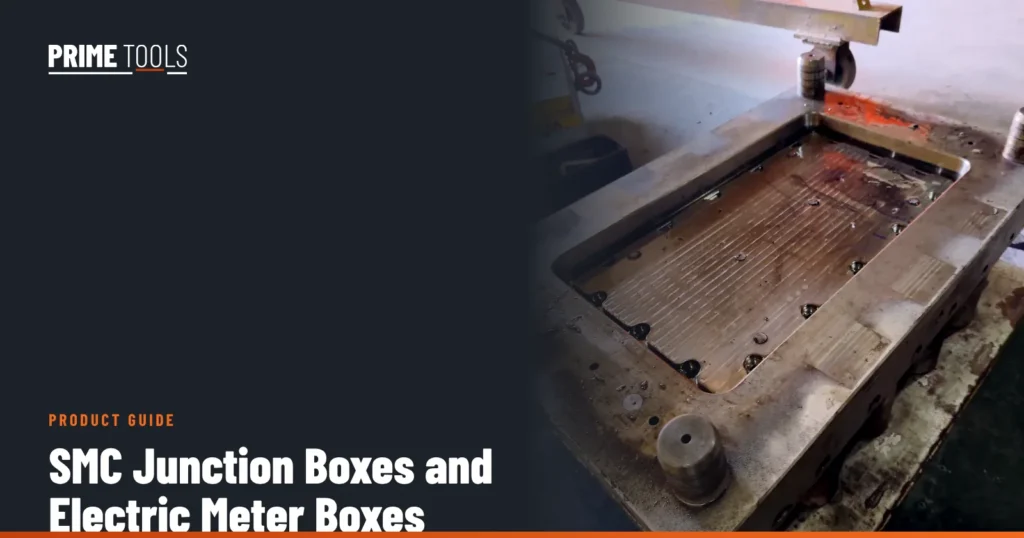
Products
SMC Junction Boxes and Electric Meter Boxes: Materials, IP Ratings and Mould Design
SMC junction box, FRP, ABS and metal junction boxes and meter boxes compared: IP ratings, single and three phase boxes, and SMC box moulds.
6 min read · Read article →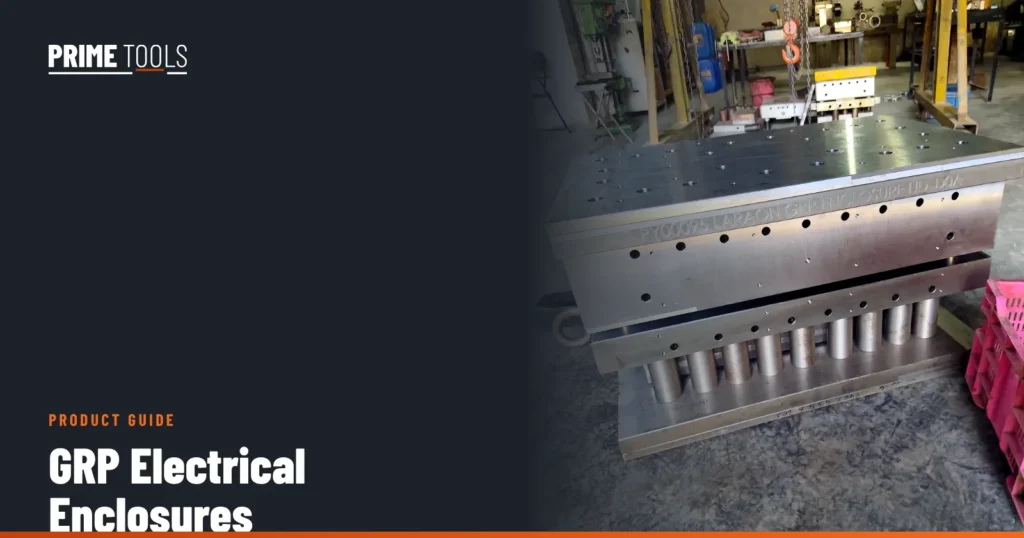
Products
GRP Electrical Enclosures: Why Utilities Choose SMC, and How They Are Made
GRP electrical enclosures explained: what GRP and SMC are, benefits over steel, IP and IK ratings, kiosk and cabinet types, and how GRP enclosures…
6 min read · Read article →