
Enclosure Box Guide: Types, Materials, IP Ratings and Sizes
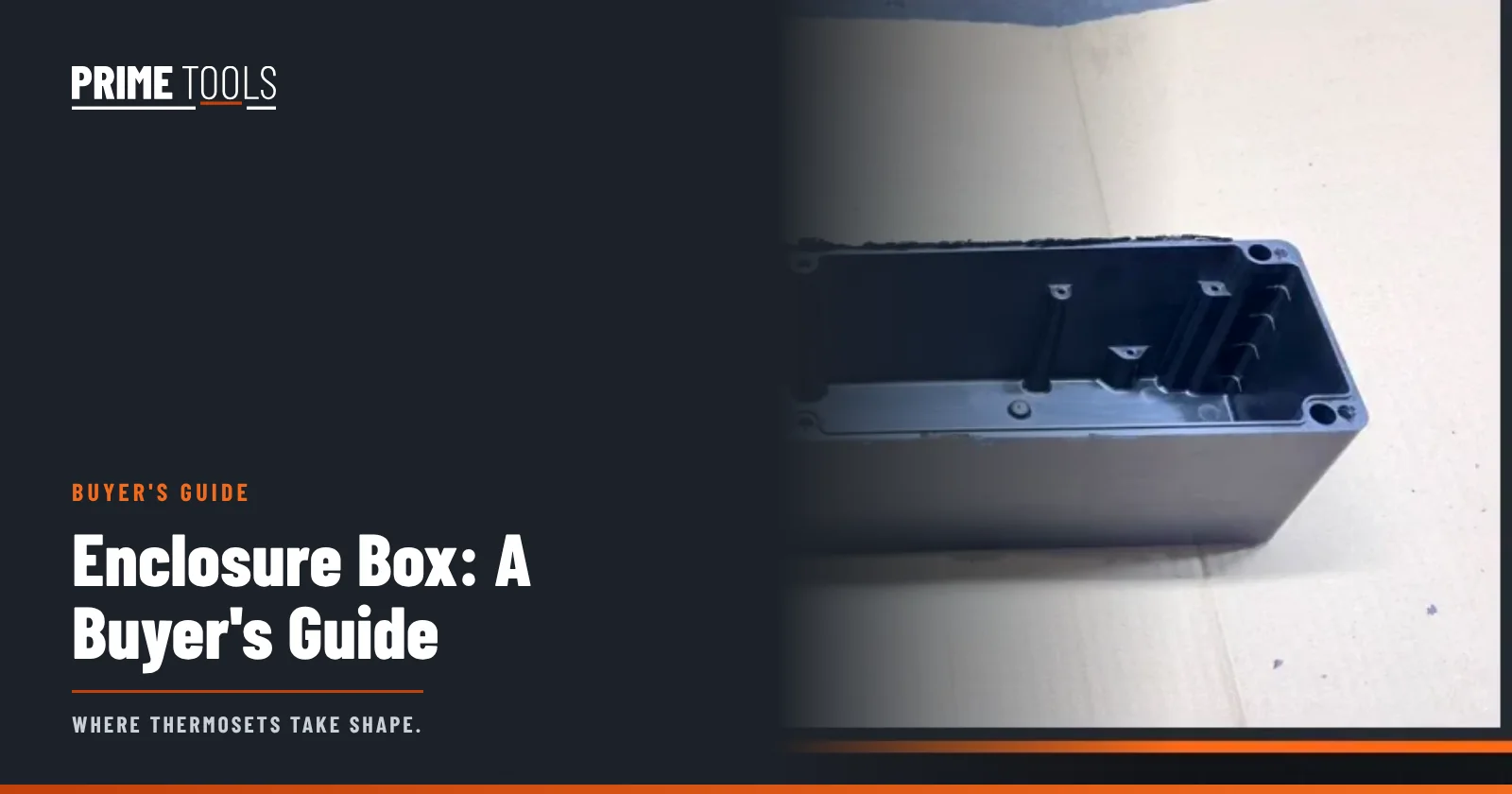
An enclosure box, often called an electrical enclosure box, is the protective shell around electrical or electronic equipment. It guards wiring, breakers, meters, circuit boards and controls against dust, rain, knocks, heat and sunlight, and it stops people from touching live parts. Picking the right one comes down to four questions: where it will sit (indoors or out), how much protection it needs (its IP and IK rating), what it is made of (ABS, polycarbonate, SMC, aluminium or steel) and how much room the parts, cables and glands need inside.
Prime Tools is an enclosure mould manufacturer in MIDC Ahilyanagar, Maharashtra. We design and build the compression moulds that factories use to produce SMC, BMC and DMC enclosure boxes, junction boxes, meter boxes, lids and covers. Every week we look at box drawings, trial new moulds and see which details make a box seal for years and which make it leak after one monsoon. This guide shares that shop-floor view with buyers, panel builders and box manufacturers.
What is an enclosure box?
Think of an enclosure box as a small building for electrical parts. Its walls keep out water, dust and insects. Its lid and gasket form the door seal. Inside, a mounting plate or DIN rail holds the equipment, and glands or knockouts let cables in without letting water in with them.
Indian buyers use many names for the same idea: junction box, DB box, distribution board, MCB box, meter box, panel box, PCB box, project box or simply electrical box. The name usually tells you what goes inside, and that in turn decides the size, the number of cable entries and the rating you need.
Main types of enclosure box
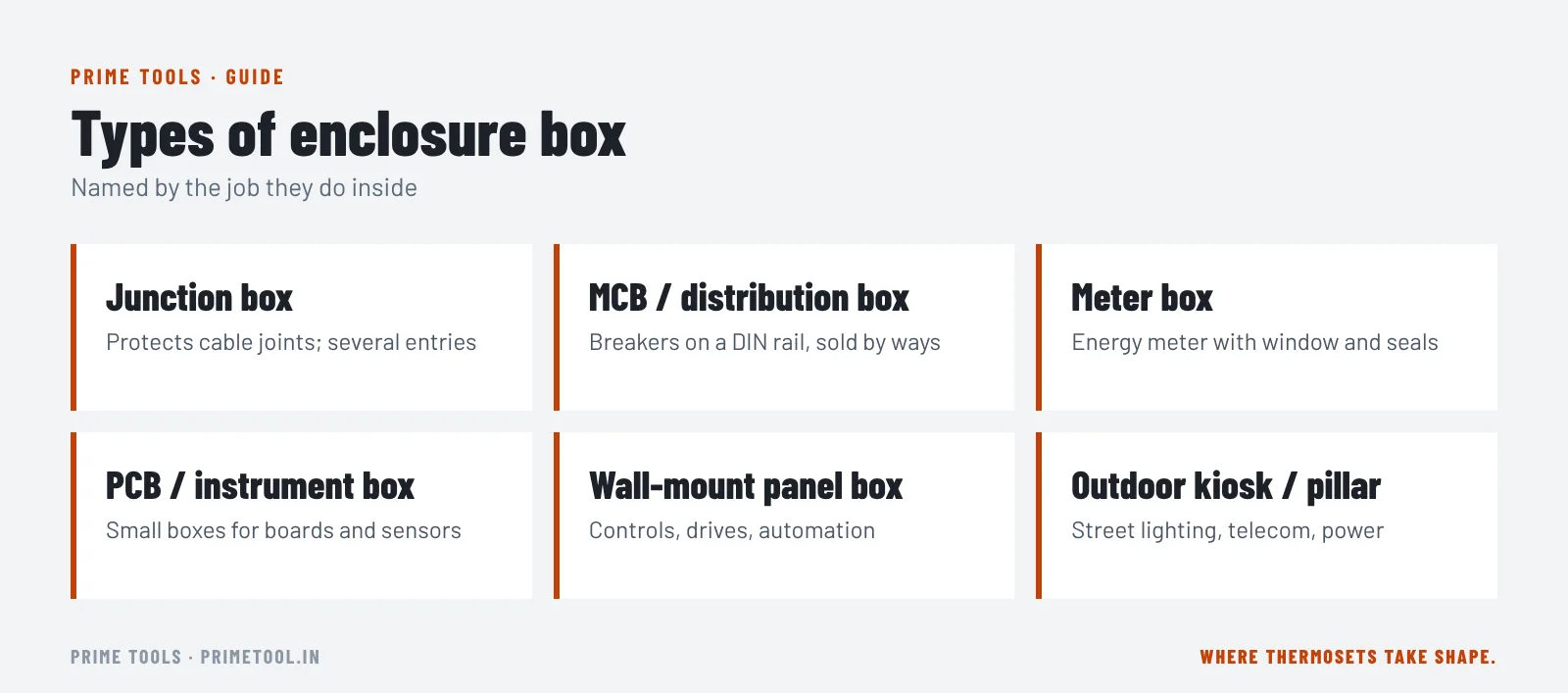
- Junction box. A compact box where cables are joined or branched. It needs several entries and, outdoors, usually IP65. Our article on SMC junction boxes and meter boxes covers moulded versions in detail.
- MCB box or distribution box. Holds circuit breakers, RCCBs and isolators on a DIN rail. It is sold by the number of modules (“ways”), in single-phase and three-phase layouts, with clear or solid doors.
- Electric meter box. Houses a utility energy meter behind a reading window, with seal points to stop tampering. Most outdoor meter boxes in India are SMC. See our full electric meter box guide.
- PCB or instrument box. A small housing for circuit boards, sensors and controllers, often ABS with moulded screw pillars.
- Wall-mounted panel box. A larger hinged cabinet for control panels, drives and automation, usually steel or SMC.
- Feeder pillar, kiosk or pole box. Big outdoor housings for street lighting, telecom and power distribution, where sun, rain and vandalism are daily threats. Our guide to GRP electrical enclosures explains these.
Enclosure box materials compared
For any electrical enclosure box, material sets three things at once: how long the box survives on site, how safe it is around live parts, and most of its cost.
| Material | Where it works best | Main limitation |
|---|---|---|
| ABS plastic | Indoor electronics, light duty, easy drilling | Fades and turns brittle in direct sun; softens with heat |
| Polycarbonate (PC) | Tough indoor and sheltered outdoor boxes, clear covers | Must be UV-stabilised for sun; dearer than ABS |
| SMC / GRP (glass-fibre polyester) | Outdoor utility boxes, meter boxes, feeder pillars, industrial housings | Heavier than ABS; economical only when moulded in volume |
| Die-cast aluminium | Rugged compact boxes, heat sinking, EMI shielding | Conductive, so it needs earthing; higher price |
| Powder-coated mild steel | Indoor panels and large cabinets on a budget | Rusts quickly once the coating is scratched |
| Stainless steel (304/316) | Food, pharma, marine and chemical sites | Costliest option; heavy |
Plastic enclosure box: ABS or polycarbonate?
Most people searching for a plastic enclosure box end up choosing between ABS and polycarbonate. ABS is low cost and simple to cut, which makes it ideal for indoor gadgets and control units. Polycarbonate is far more impact resistant and copes with higher temperatures, and its UV-stabilised and transparent grades suit outdoor junction boxes. Under strong Indian summer sun, an unstabilised plastic box can crack within a few years, so outdoors pick UV-stable polycarbonate or SMC.
Metal enclosure box
A metal enclosure box makes sense when you need high strength, fire resistance, screening from electrical noise or very large sizes. Powder-coated mild steel keeps cost down for indoor panels. Stainless steel handles washdown and corrosive air. Die-cast aluminium suits small, rugged boxes that must spread heat. Whatever the metal, the box has to be earthed.
SMC enclosure box
An SMC enclosure box is pressed from sheet moulding compound, a polyester resin filled and reinforced with chopped glass fibre. It cannot rust, it insulates, it keeps its shape across a wide temperature range, it resists UV, and fire-retardant grades are standard for electrical work. These properties are why Indian power utilities specify SMC for meter boxes, junction boxes and feeder pillars. For an outdoor electrical enclosure box, SMC usually gives the lowest cost over its life. Our article on the SMC process explains the material in more depth.
IP ratings: how well is the box sealed?
An IP (Ingress Protection) code under IEC 60529 has two digits. The first rates protection against solid objects and dust, up to 6 for dust-tight. The second rates protection against water, up to 9.
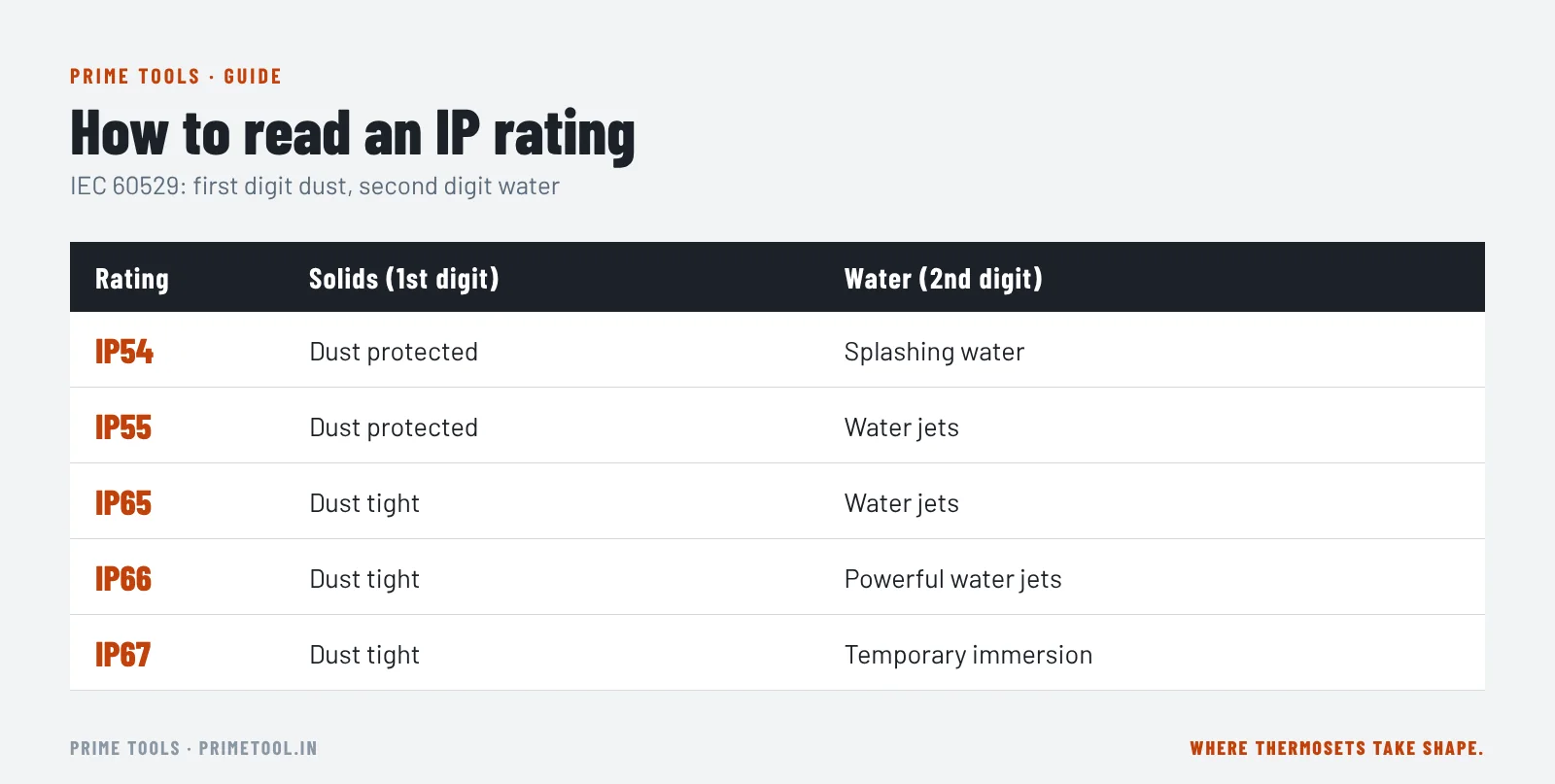
- IP54: limited dust entry and protection from splashes. Suitable for sheltered spots.
- IP65: fully dust-tight and safe against water jets. The common choice for a waterproof enclosure box outdoors.
- IP66: dust-tight and safe against powerful jets, such as hose-down floors and driving monsoon rain.
- IP67: dust-tight and able to survive short immersion, for pits and low ground that may flood.
The rating printed on the label only holds on site if the box is fitted properly. Use matching glands, keep the gasket clean and in its groove, tighten lid screws in a cross pattern, and seal any hole you add.
IK ratings: resistance to impact
IEC 62262 grades impact protection from IK00 to IK10. IK08 (5 joules) covers most factory and commercial sites. IK10 (20 joules) is for places where boxes get kicked, hit or vandalised, such as roadside pillars and public areas. Well-moulded SMC and polycarbonate reach these levels without denting.
How to size an enclosure box
Undersized boxes cause more site trouble than any other mistake. Use these steps:
- List every part that goes inside, such as breakers, terminals, meters, relays and power supplies, with its footprint on the plate or rail.
- Allow wiring room so cables can bend at their minimum radius and reach terminals neatly.
- Count the cable entries and decide which face they use; outdoors, entries normally go on the bottom.
- Plan for heat from drives, power supplies and meters. Give the air space to circulate, add vents, or move up a size.
- Keep 20-30% spare space for future additions.
- Check lid and door clearance for breaker handles and meter displays.
Catalogue sizes run from palm-sized project boxes of about 100 mm to wall cabinets near one metre tall. A standard size is nearly always cheaper and quicker to get than a custom box.
What decides enclosure box price?
Two boxes of the same outside size can differ in price several times over. Here is why:
- Resin or metal: ABS sits at the bottom of the range, polycarbonate and SMC in the middle, aluminium and stainless at the top.
- Size and wall thickness: more material, larger moulds or heavier sheet.
- Sealing and impact class: a higher IP or IK grade needs a better gasket, a stiffer lid and type testing.
- Hardware: plates, rails, hinges, locks, windows, glands and earth points each add to the bill.
- Special grades: UV-stabilised and fire-retardant materials cost more but last far longer outdoors.
- Order volume: for moulded boxes, the mould cost is spread over every piece, so the unit price falls sharply as quantity rises.
Ask every supplier to quote the same grade, rating, wall thickness and fittings, or the comparison means little. For a price-by-material breakdown, see our junction box price guide.
Free DFM review
Planning a mould for this part?
Send your 3D model or drawing, material and annual volume. Our engineers reply within one working day.
How an SMC enclosure box is moulded
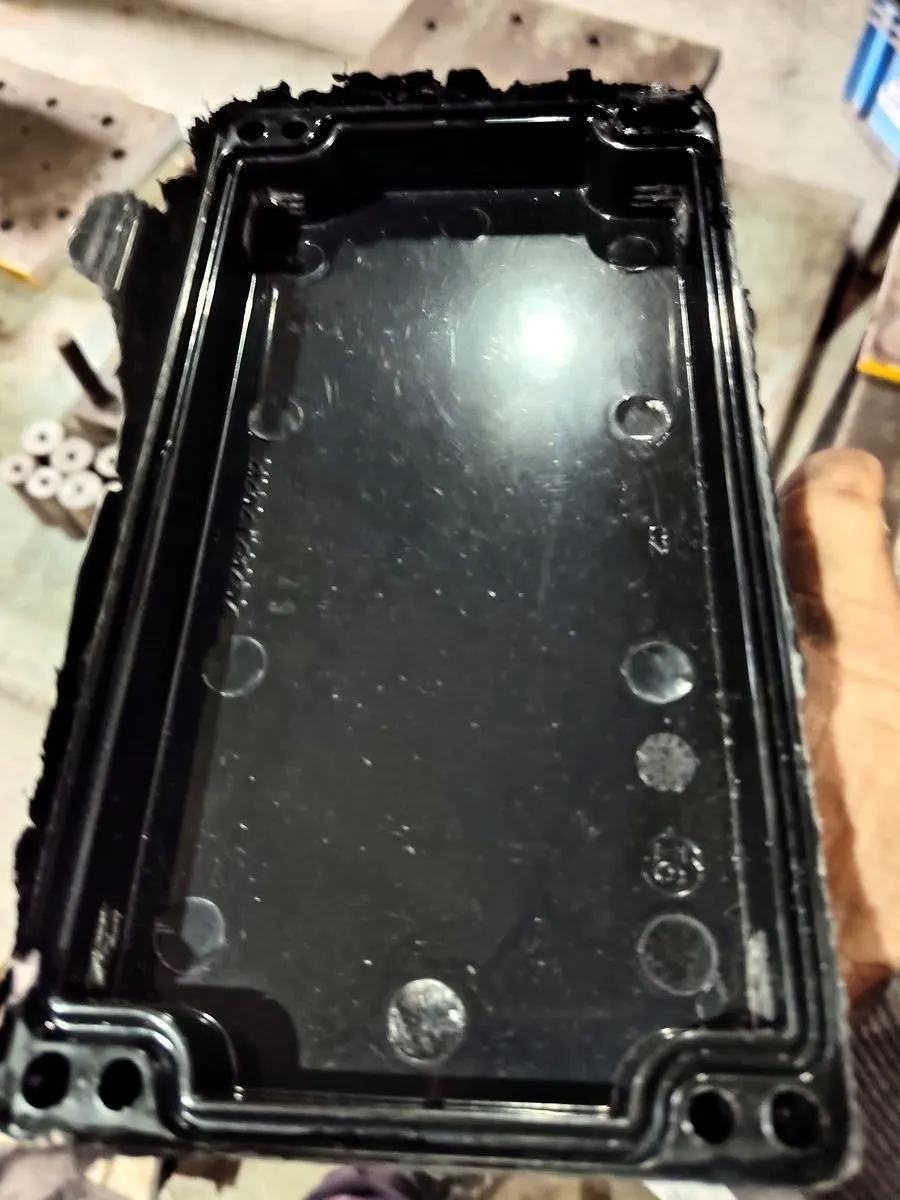
SMC boxes are made by compression moulding. A weighed charge of SMC sheet goes into a steel mould heated to roughly 140-160 °C. A hydraulic press closes the mould, the material flows into every corner of the cavity, and it cures in a few minutes. The box comes out with its sealing groove, ribs, bosses, entry positions and logo already in place, ready for deflashing and assembly.
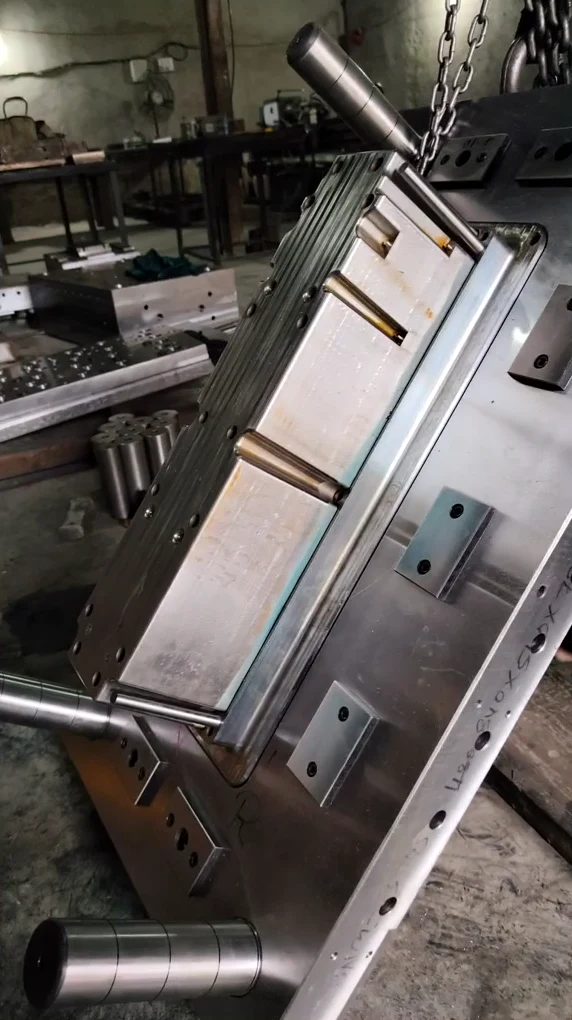
The quality of the box is set by the mould. When the parting faces are flat, the walls are uniform, the draft is right and the shear edges are hardened, the press turns out boxes whose lids close tight and whose surface stays clean for years. A poor mould gives thick flash, warped lids, weak bosses and leaks. Our SMC enclosure mould case study follows one mould from drawing to approved parts, and our guide to compression molding explains the full process.
Prime Tools: enclosure box mould manufacturer
Prime Tools is a compression mould maker and enclosure mould manufacturer based in MIDC Ahilyanagar, Maharashtra, India. We do not sell finished boxes. We build the moulds that box manufacturers use to produce them, including:
- SMC electrical enclosure box moulds for industrial and outdoor utility boxes.
- Meter box moulds for single-phase, three-phase and CT meter boxes, base and cover.
- Junction box moulds in a range of sizes, with gasket grooves and entry bosses.
- Lid, cover and door moulds, including window frames and hinge features.
- BMC and DMC moulds for switchgear housings and smaller electrical parts.
How we work with box manufacturers:
- Free DFM review of your box drawing or 3D model: wall thickness, draft, ribs, bosses, sealing faces and ejection, before any steel is cut.
- 3D mould design shared with you for approval.
- In-house machining on VMC and EDM in our own tool room, with hardened shear edges and polished, plated cavities.
- Trial on presses up to 400 tonnes, with sample parts and a trial video before dispatch.
- After-sales support for repairs, spare inserts and design changes.
A typical new compression mould takes 6 to 8 weeks after design approval. We supply manufacturers across India and export to the Middle East. See our compression moulds, or send us your box drawing for a free review.
Quick checklist before you buy
- Indoors or outdoors? Direct sun, rain, chemicals or heat?
- IP rating (IP65 or higher outdoors) and IK rating?
- UV-stable material for outdoor sites?
- Fire-retardant grade needed by your standard or customer?
- Inside size with room for wiring, glands, heat and spares?
- Mounting plate or DIN rail, hinges, lock, window?
- Earthing for metal boxes, insulation for live parts?
- Standard catalogue box, or enough volume to justify your own moulded design?
Frequently asked questions
What is an enclosure box used for?
It houses electrical and electronic parts, such as cable joints, breakers, meters and circuit boards, and protects them from dust, water, impact and sunlight while keeping people away from live parts.
Which material is best for an outdoor enclosure box?
Go for UV-stable polycarbonate on small boxes and SMC on anything large or exposed. Utilities in India pick SMC for meter cabinets and street pillars because it survives decades of heat and monsoon.
What does IP65 mean on an enclosure box?
The first digit, 6, says no dust can get in. The second, 5, says a jet of water sprayed from any angle will not reach the parts. Most outdoor boxes in India are bought at this level.
What is an MCB enclosure box?
It is the box that carries a row of breakers, RCCBs and isolators clipped onto a DIN rail. Buyers order it by module count, for example 4-way or 8-way, in plastic or sheet metal.
Plastic or metal enclosure box: which is better?
Plastic (ABS, polycarbonate or SMC) is lighter, insulating and rust-free. Metal is stronger, fire-resistant and screens electrical noise, but it must be earthed and kept from corroding. The site and the contents decide.
Why do enclosure box prices vary so much?
A quote moves with the resin grade, box dimensions, wall section, sealing class, additives, hardware and how many pieces you order. Line up offers only when each one describes the same box.
Is Prime Tools an enclosure box manufacturer?
No. Prime Tools is an enclosure mould manufacturer. We build the compression moulds that manufacturers use to make SMC, BMC and DMC enclosure boxes, meter boxes and junction boxes. If you are planning a new box, we will review your design for free.

Written by the Prime Tools engineering team
Compression mould makers in MIDC Ahilyanagar, Maharashtra, since 2015. We design and build moulds for SMC, DMC/BMC, Bakelite, melamine and urea parts, and repair die casting dies. About us
Keep reading
Products
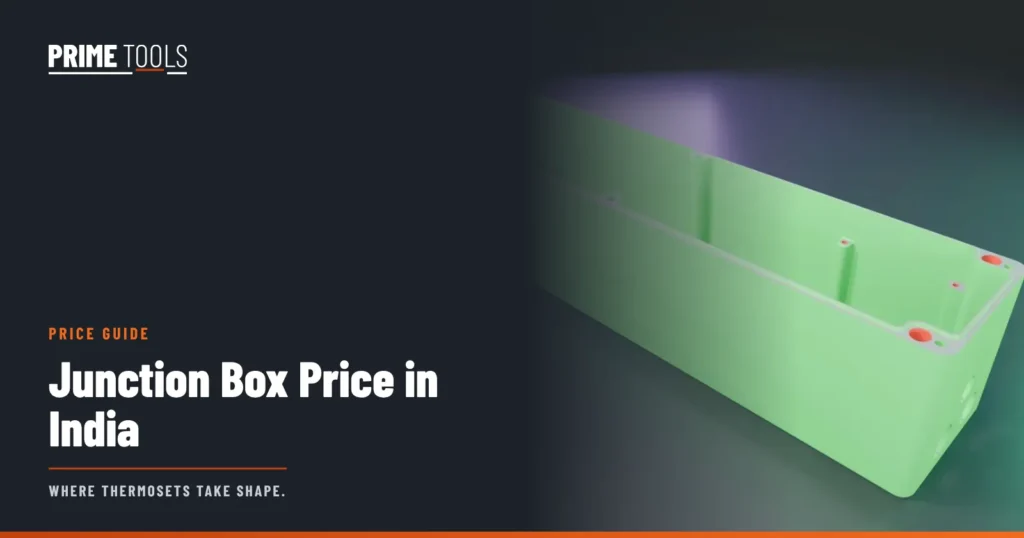
Junction Box Price in India: PVC, ABS, SMC and Metal
Junction box price in India compared by material: PVC, ABS, polycarbonate, SMC/FRP, aluminium, mild steel and stainless steel, with typical price ranges and what…
6 min read · Read article →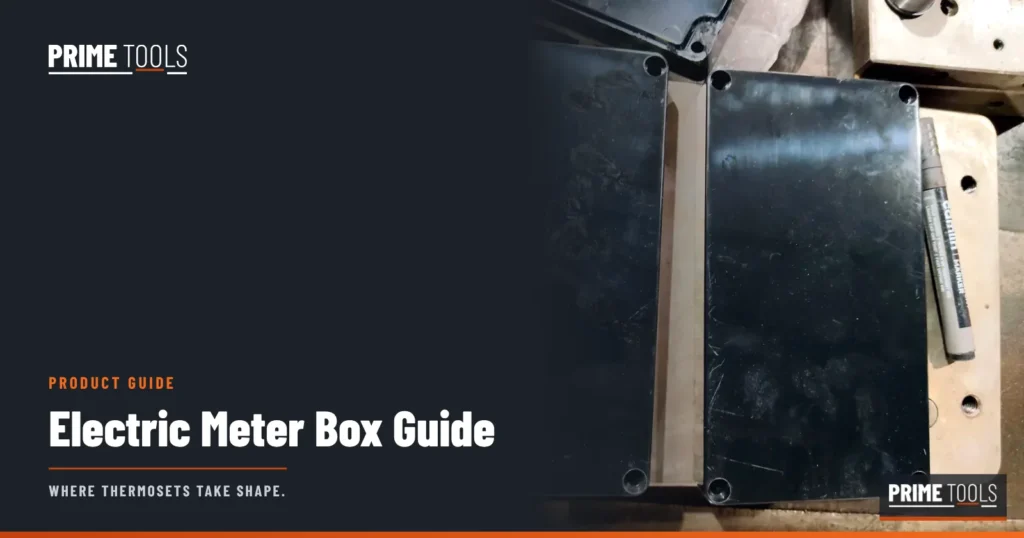
Products
Electric Meter Box: Types, Materials and Specifications
Electric meter box guide for India: single phase, three phase and CT meter boxes, SMC vs polycarbonate vs metal, DISCOM specifications, IP rating, installation…
7 min read · Read article →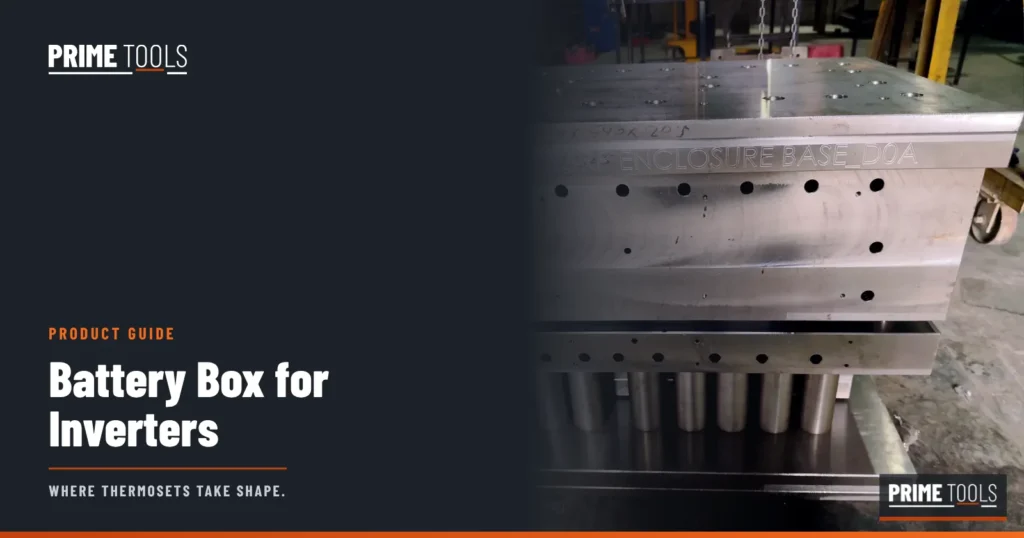
Products
Battery Box for Inverters: Why SMC and BMC Are Used, and What to Look For
Inverter battery boxes compared: SMC/BMC, plastic and metal. Heat, acid and fire resistance, ventilation, and how SMC battery boxes are moulded.
5 min read · Read article →